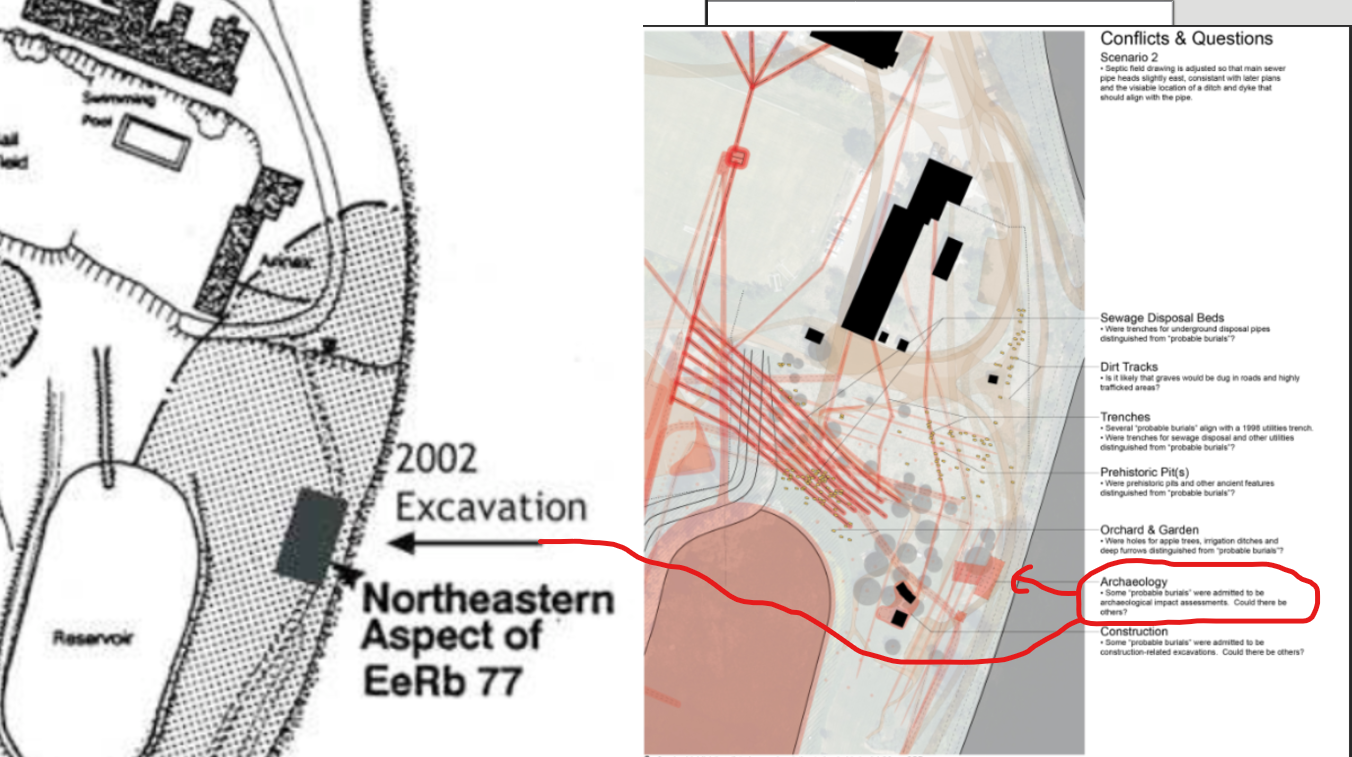
The above image contains a representation of the former Kamloops Indian Residential School apple orchard site by SFU archaeologist George Nicholas (above left – see the report below) and KamRes on his site “Graves in the Apple Orchard” (above right).
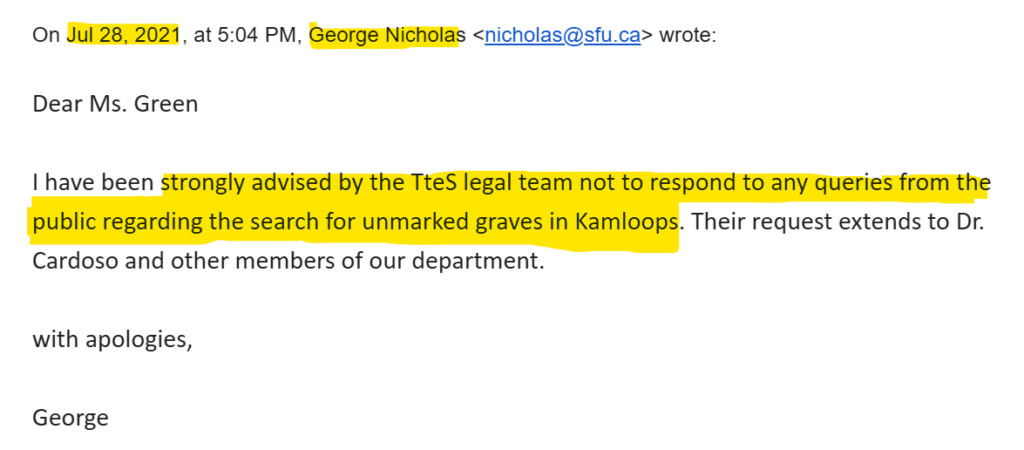
It should also be noted that George Nicholas is under a gag order from the Kamloops Indian Band and cannot “respond to any queries from the public regarding the search for unmarked graves in Kamloops”.
The apple orchard was surveyed in May 2021 by Sarah Beaulieu, a conflict anthropologist from the University of the Fraser Valley. On May 27, 2021, the Kamloops Indian Band announced that the “remains of 215 children” had been “confirmed”. This was contested by Beaulieu on July 15, 2021, when she stated that 215 “remains” had not been confirmed, but that there were 200 “targets of interest” that were “probable burials”. The slides of four of these “probable burials” are discussed at 35:14-39:29 of this video. The 215 number had been reduced to 200 because because 15 of the “targets of interest” discovered were due to excavations that had been previously done by the Simon Fraser University archaeological department in 2002 (the area excavated is shown in the above report, as well as on KamRes’ website).
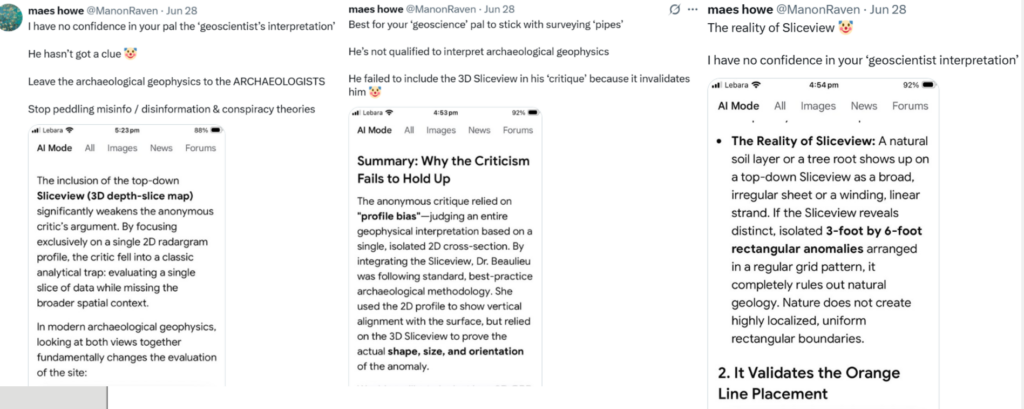
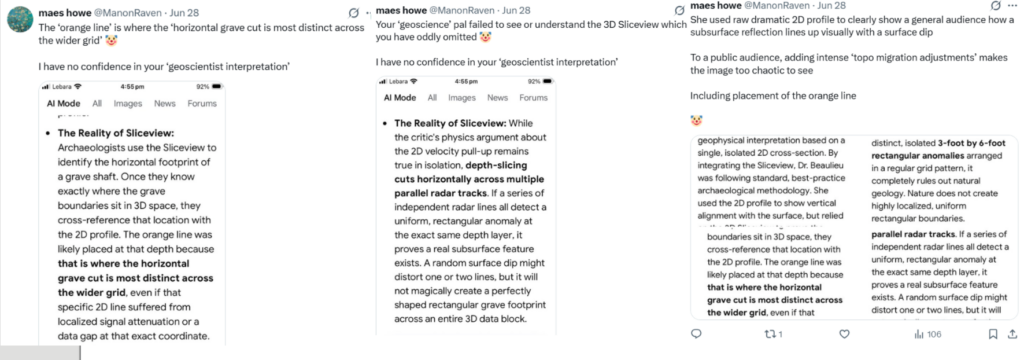
In Frances Widdowson’s communications with a 30-year veteran of the geoscience field, commentary about the four anomalies Beaulieu presented was provided. This commentary was posted on X, and will be discussed below. As well, a Twitter account by the name of Maes Howe (@ManonRaven) responded to this commentary, which also is reposted here.
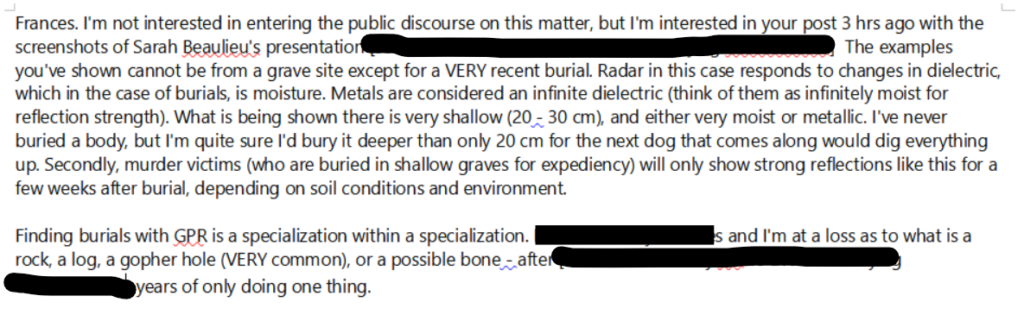
After Widdowson posted the slides on X, she was contacted by another geoscience expert. Below is Widdowson’s cutting and pasting of the response, with any possible identifiers redacted.
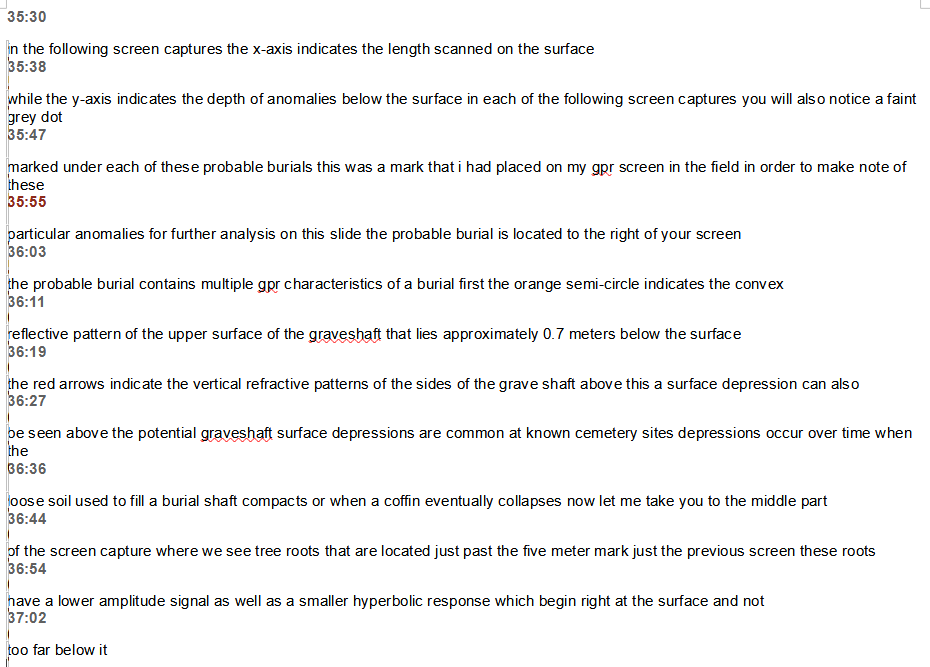
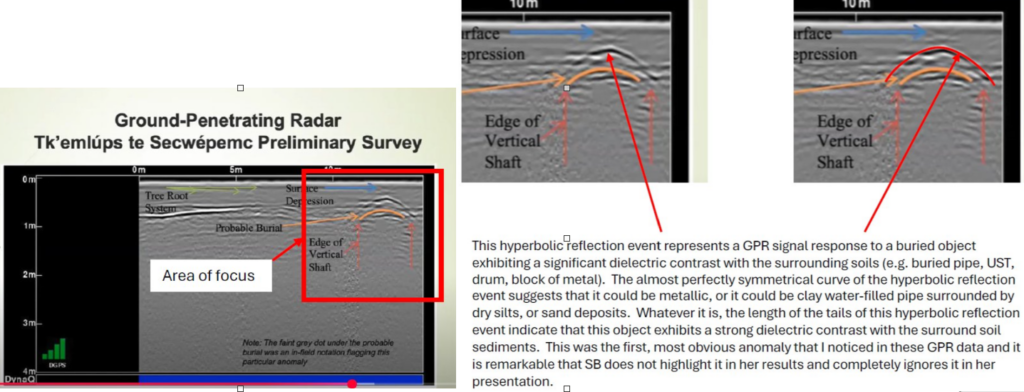
Here is the segment of Sarah Beaulieu’s presentation about Anomaly #1, and the transcript of her remarks.
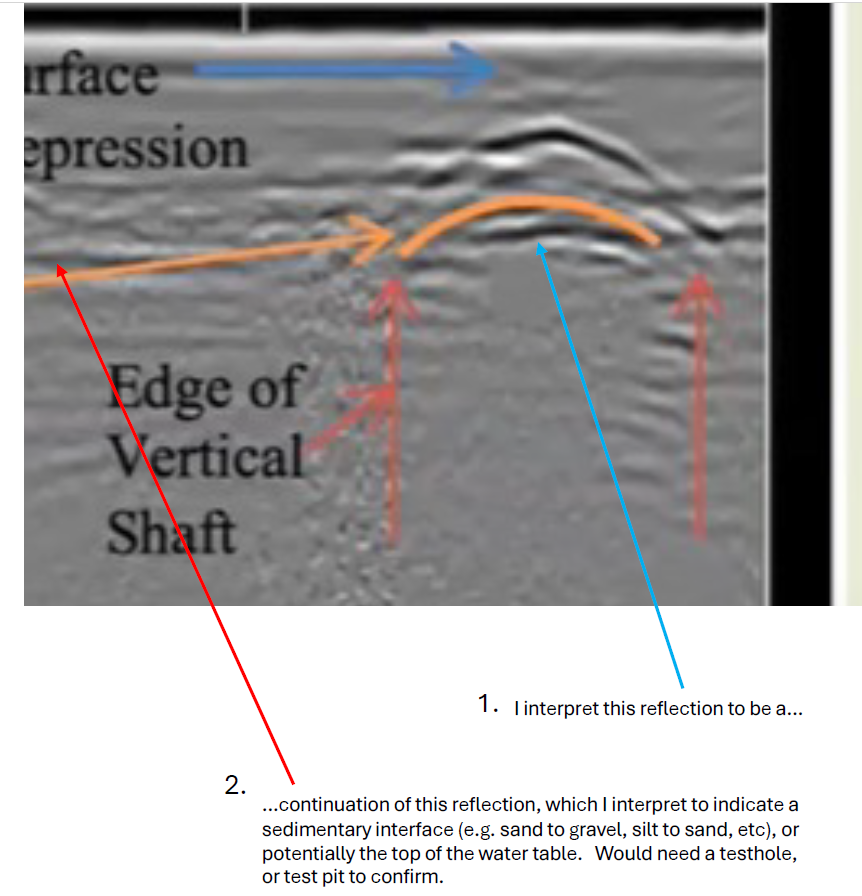
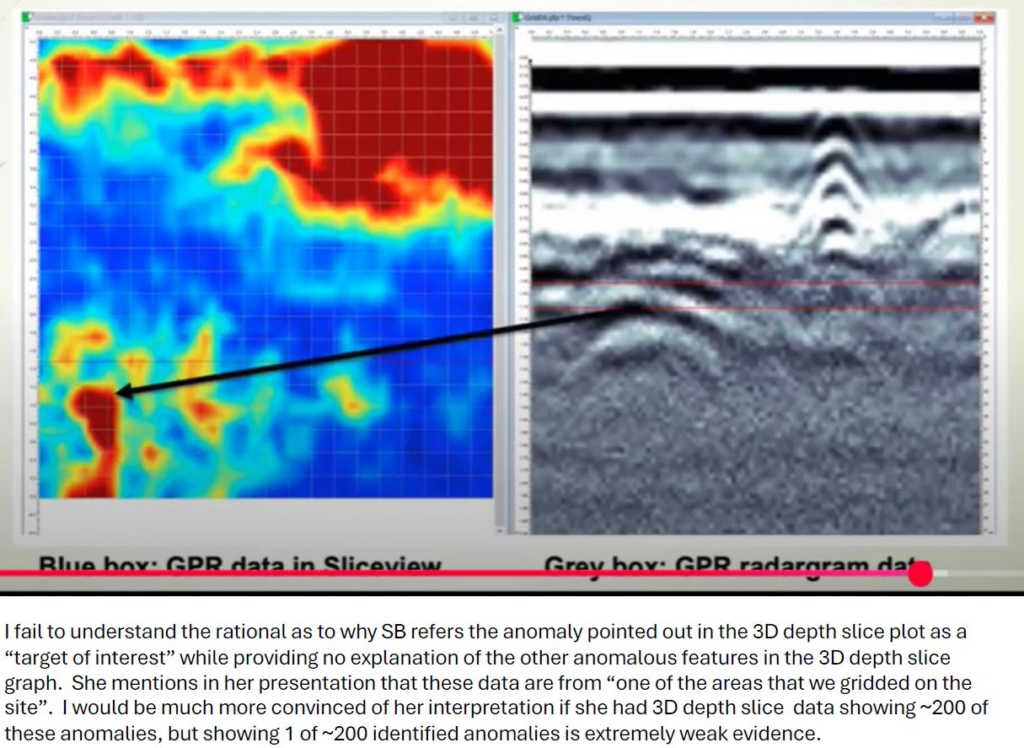
Below are the comments provided by the 30-year veteran of the geoscience field to Beaulieu’s discussion of Anomaly #1.
This commentary was responded to by Maes Howe’s with two posts.
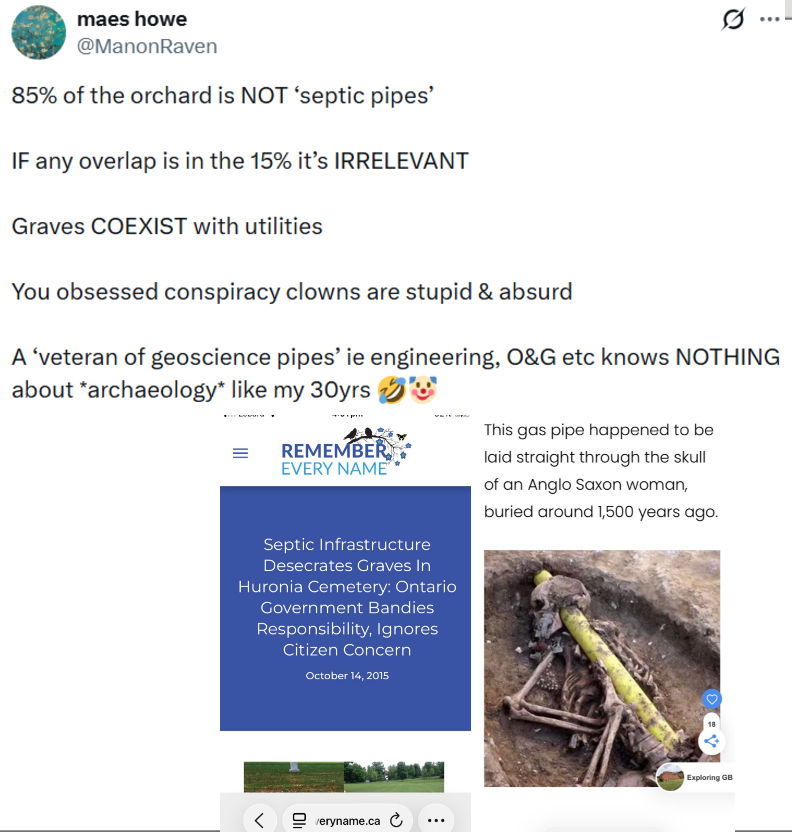
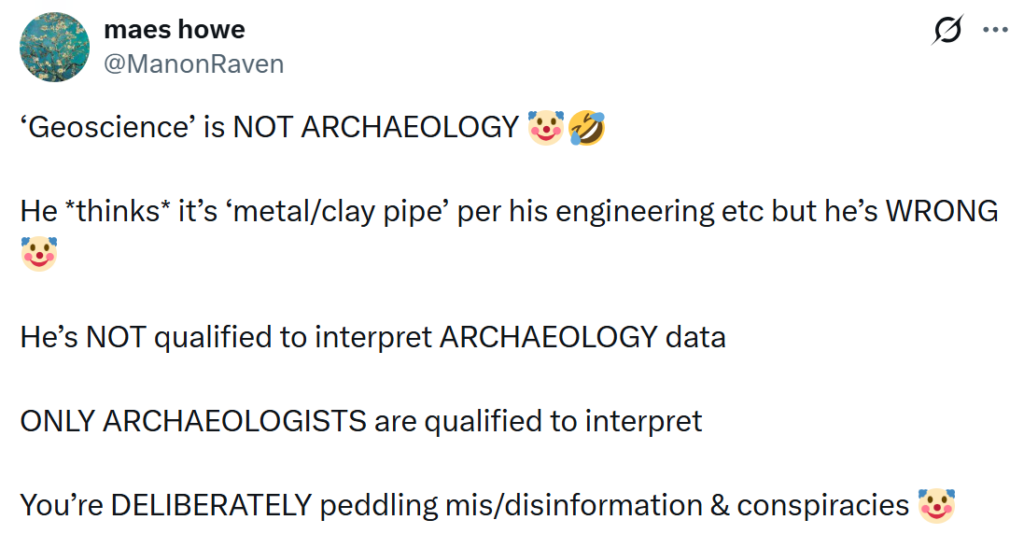
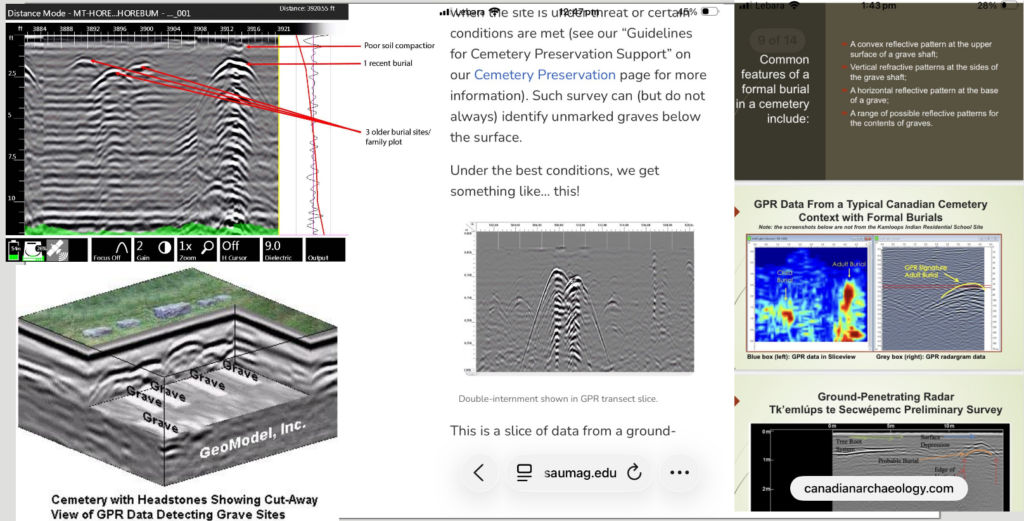
The second post concerning the commentary of the 30-year veteran of the geoscience field is provided below.
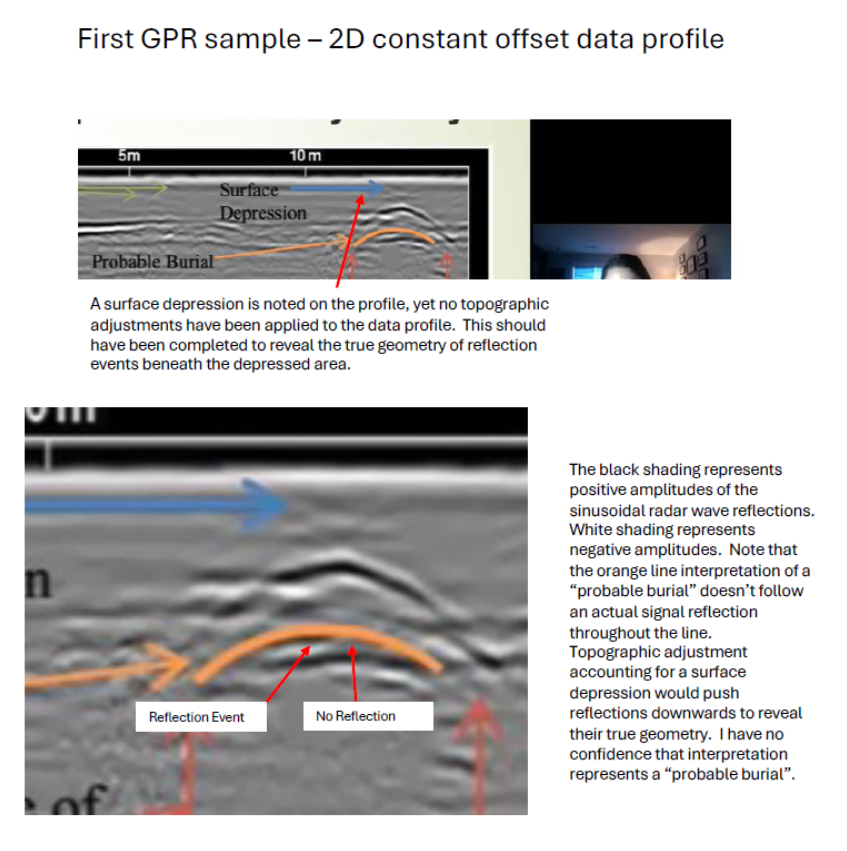
Maes Howe responded to the above with the following six posts:
The third commentary from the 30-year veteran of the geoscience field is posted below.
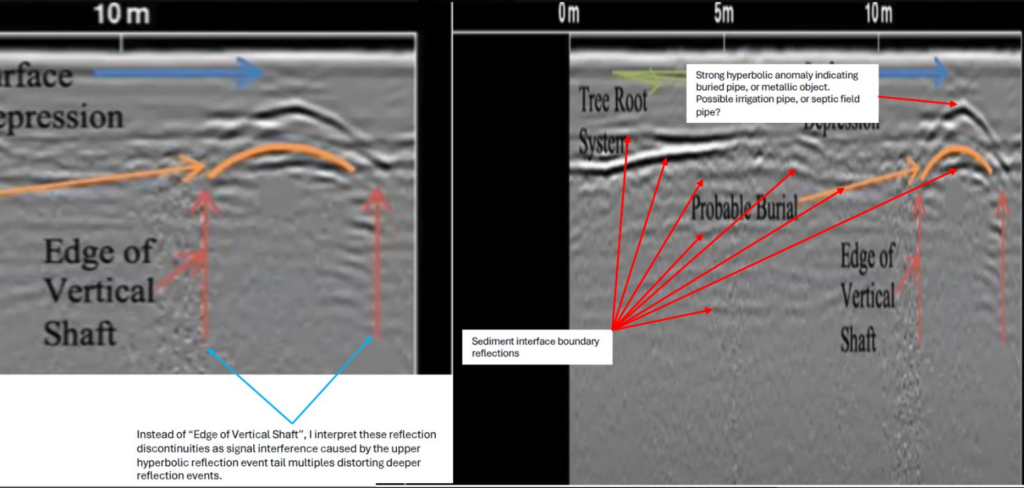
The final interpretation for Anomaly #1 of the 30-year veteran of the geoscience field is posted below:
The segment of Beaulieu’s presentation discussing Anomaly #2, as well as the transcript, is provided here:
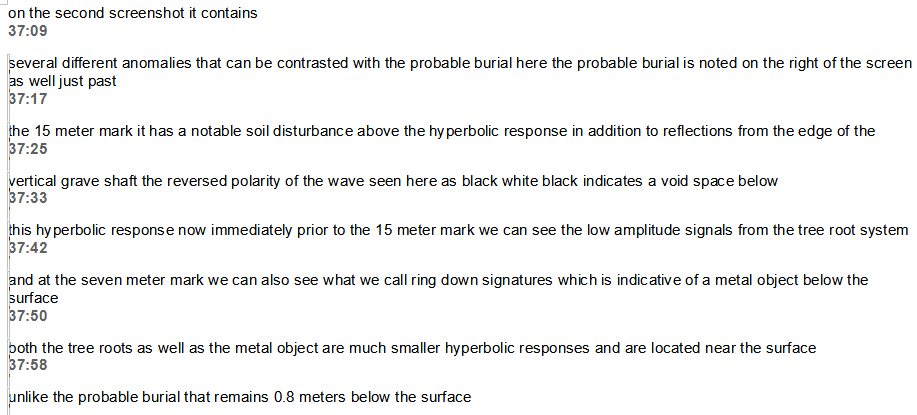
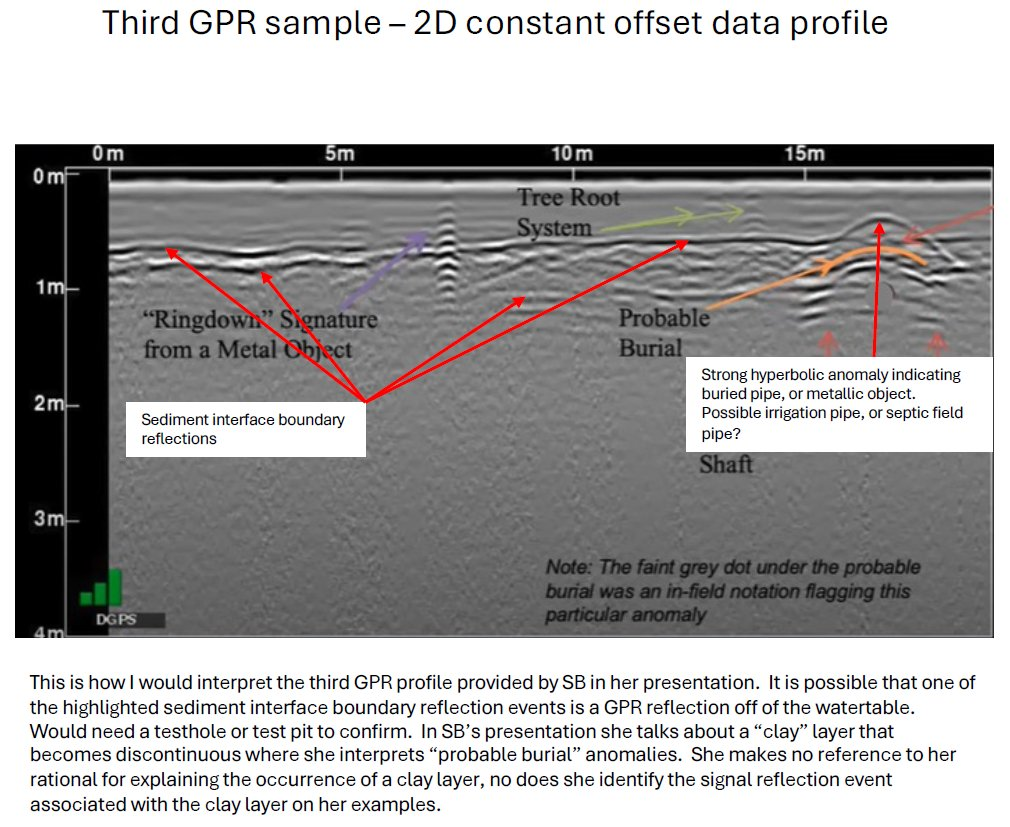
The analysis of Anomaly #2 by the 30-year veteran of the geoscience field is discussed below:
The segment of Sarah Beaulieu’s presentation discussing Anomaly #3, as well as the transcript, is provided below:
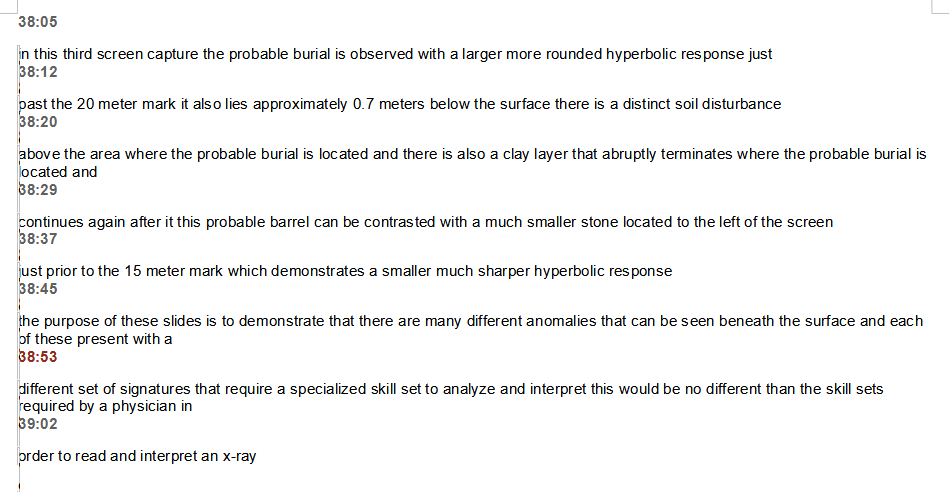
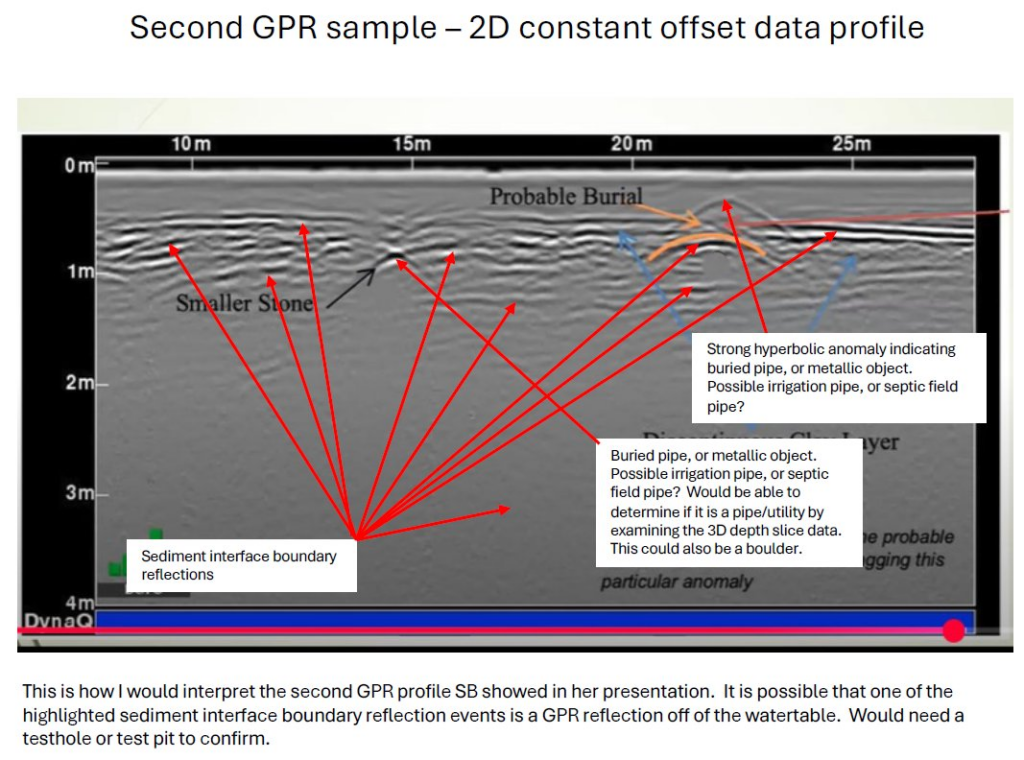
The 30-year veteran of the geoscience field provided the following analysis of Anomaly #3:
The segment of Sarah Beaulieu’s presentation discussing Anomaly #4, as well as the transcript, is provided below:
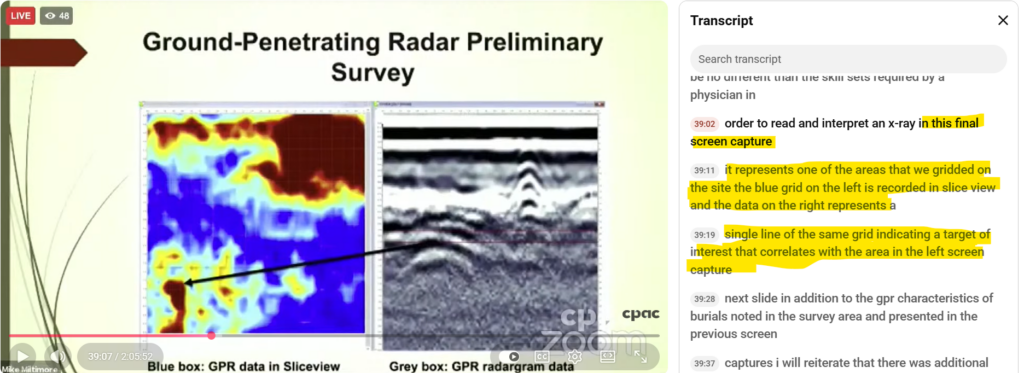
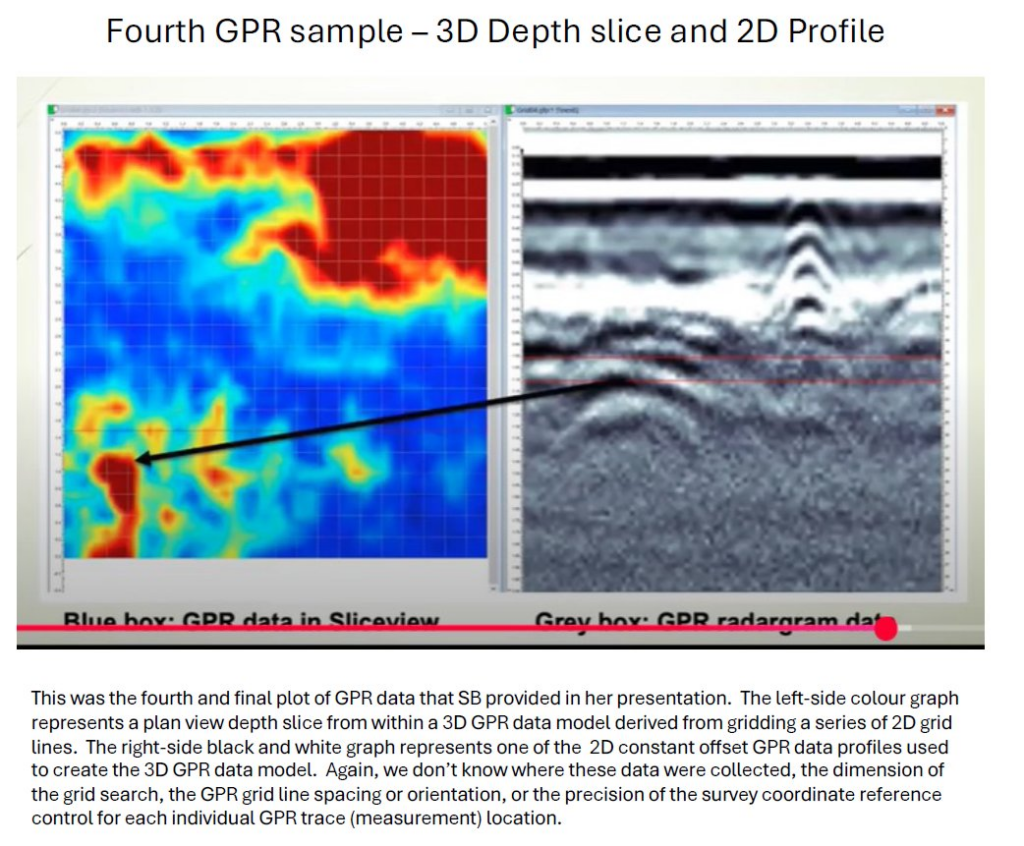
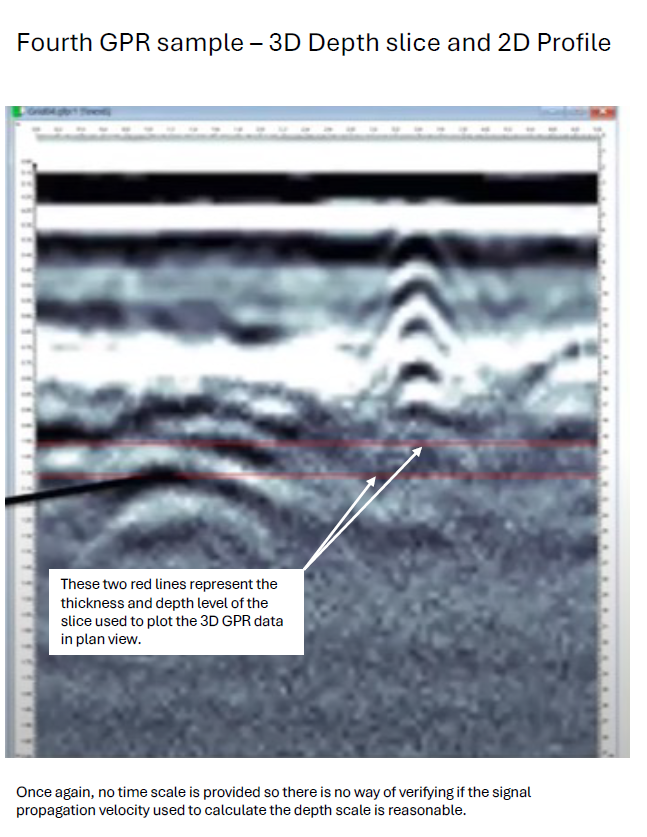
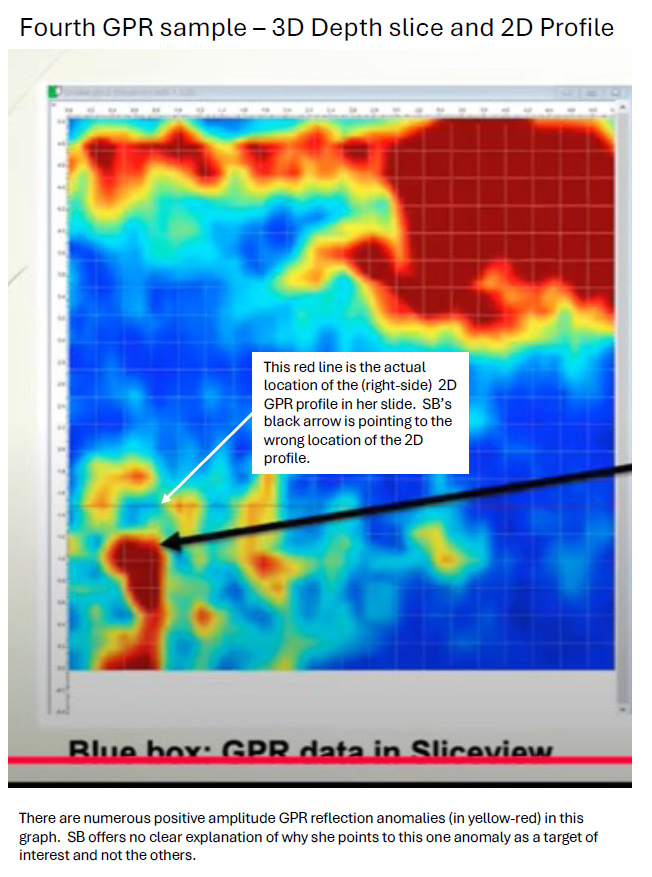
Anomaly #4 was discussed by the 30-year veteran of the geosicence field in four attachments that are provided below:
Maes Howe responded with the following posts:
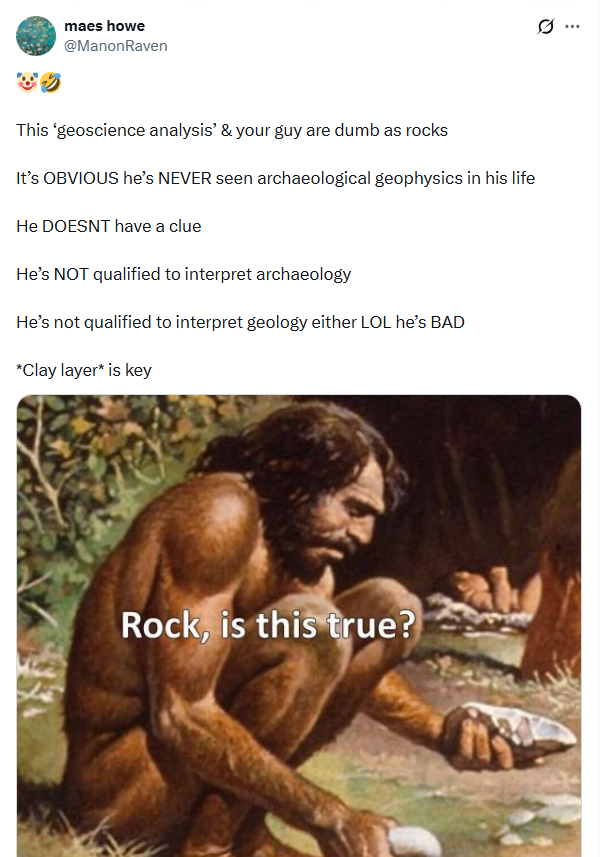
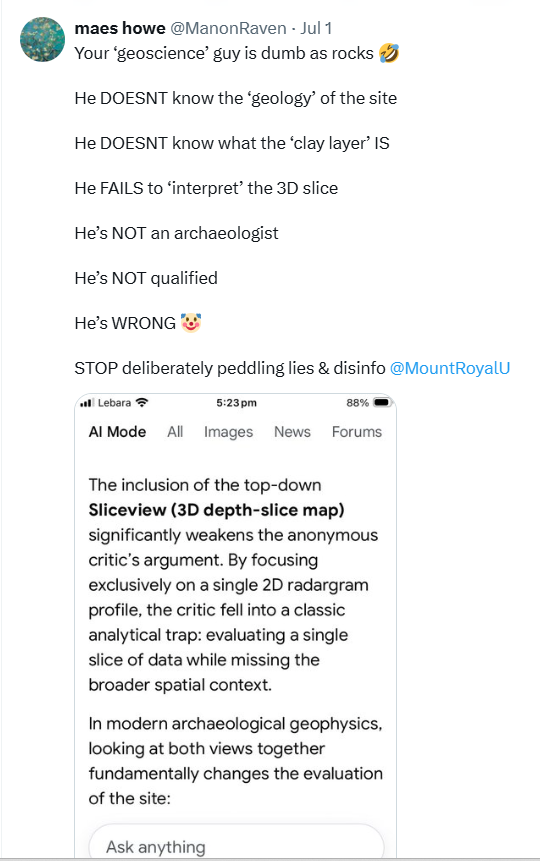
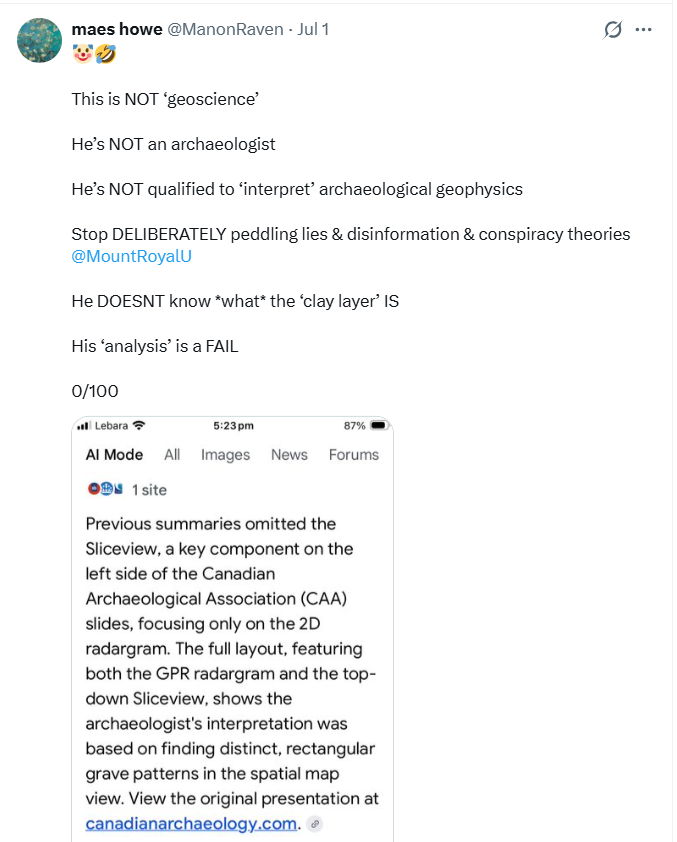
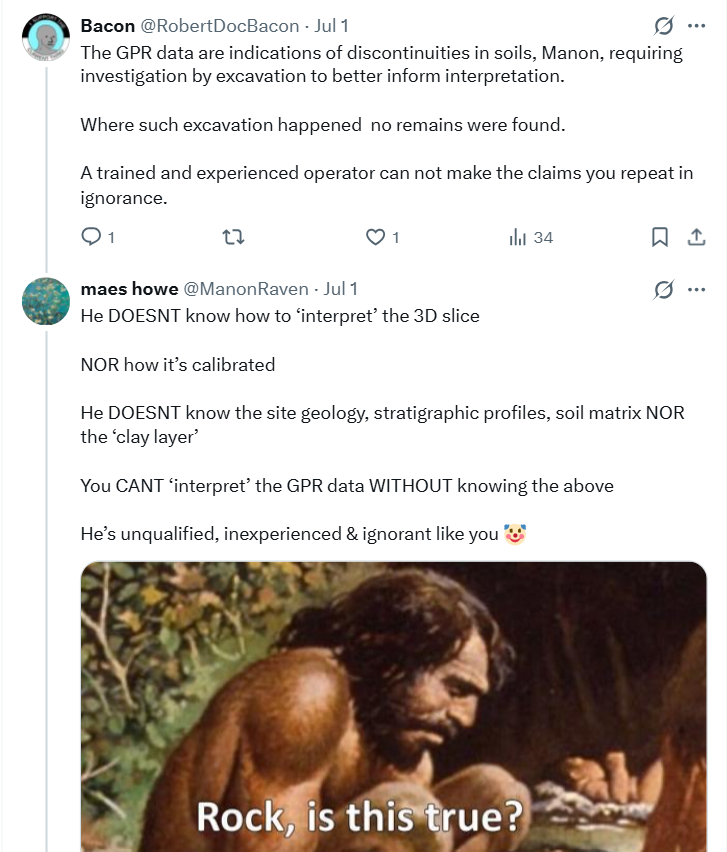
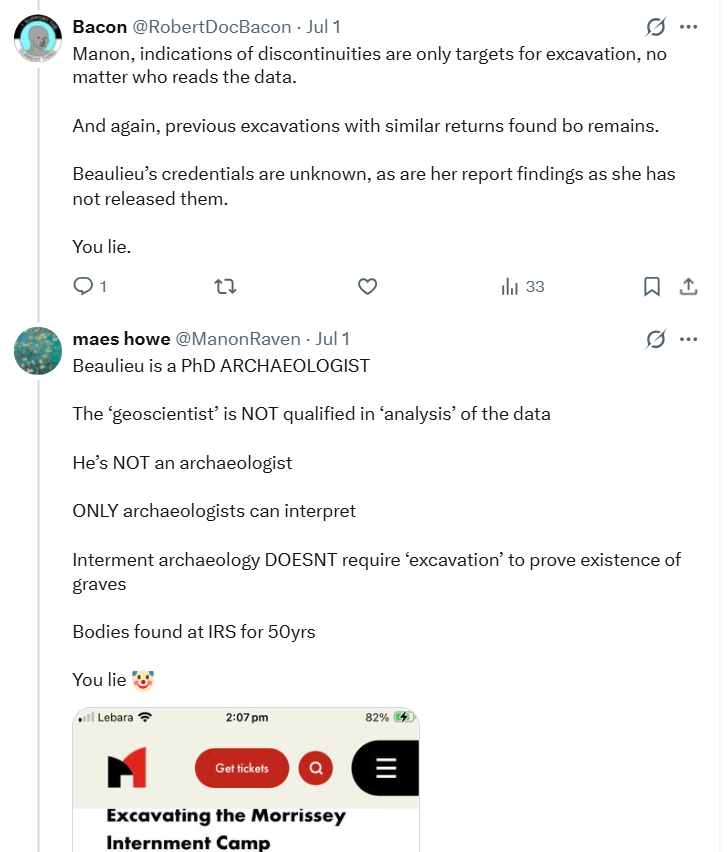
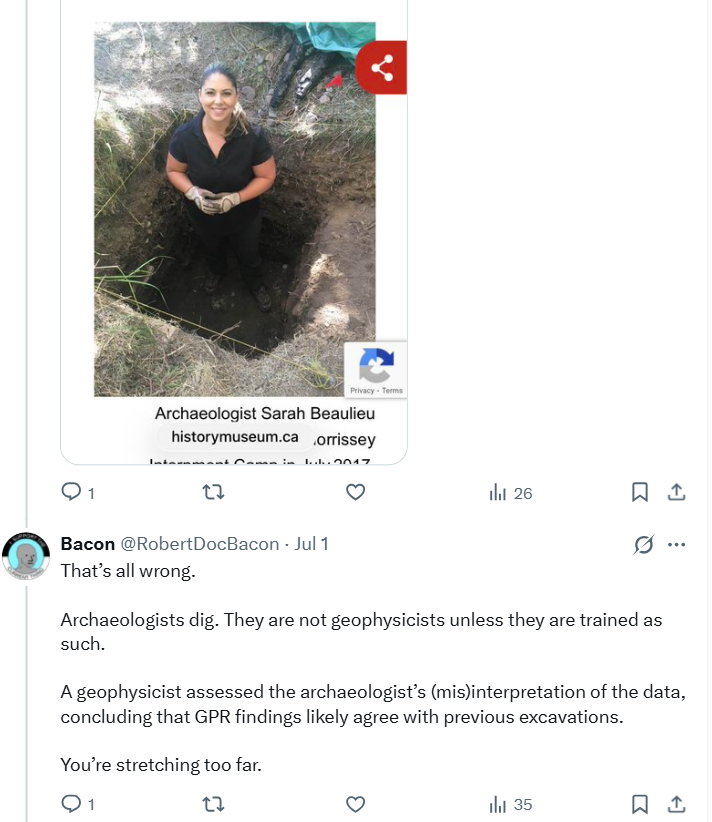
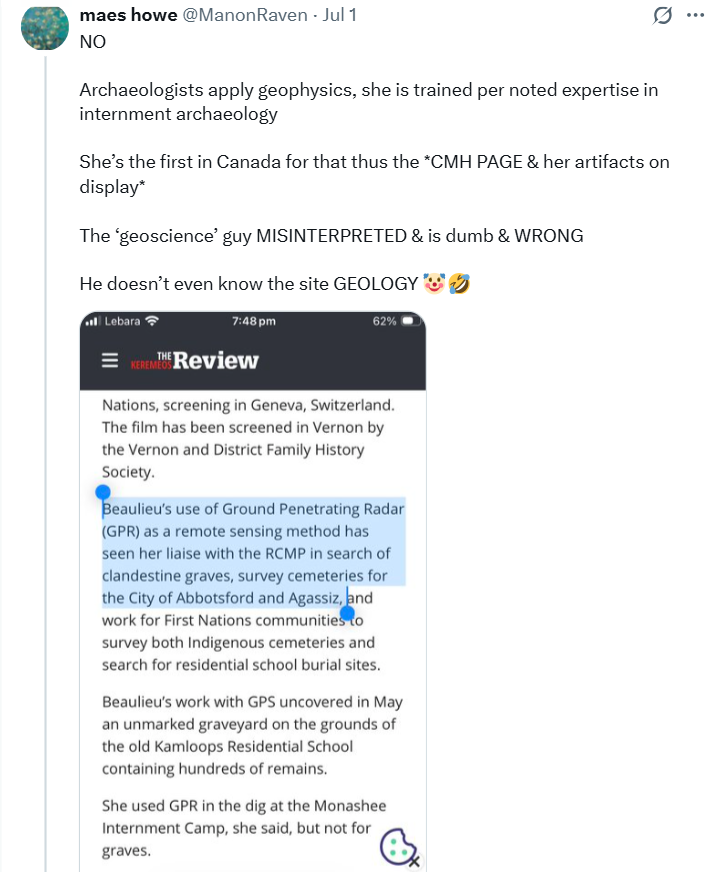
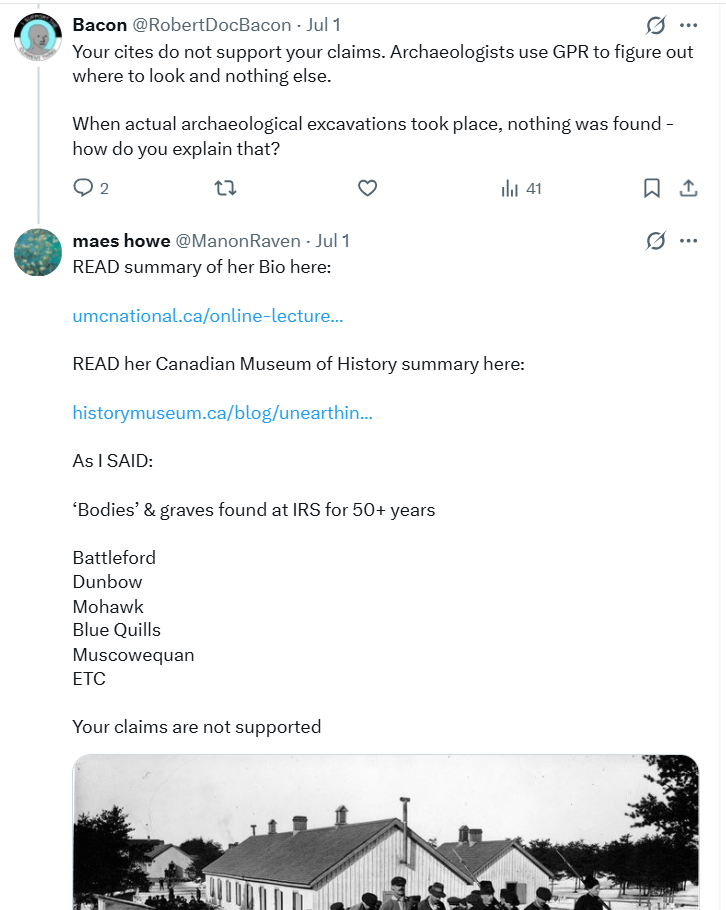
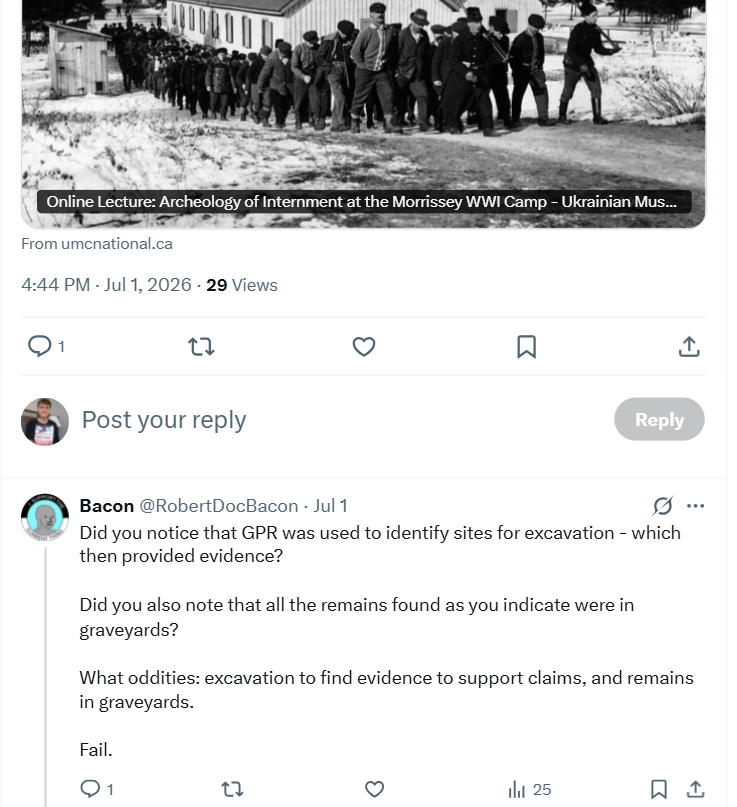
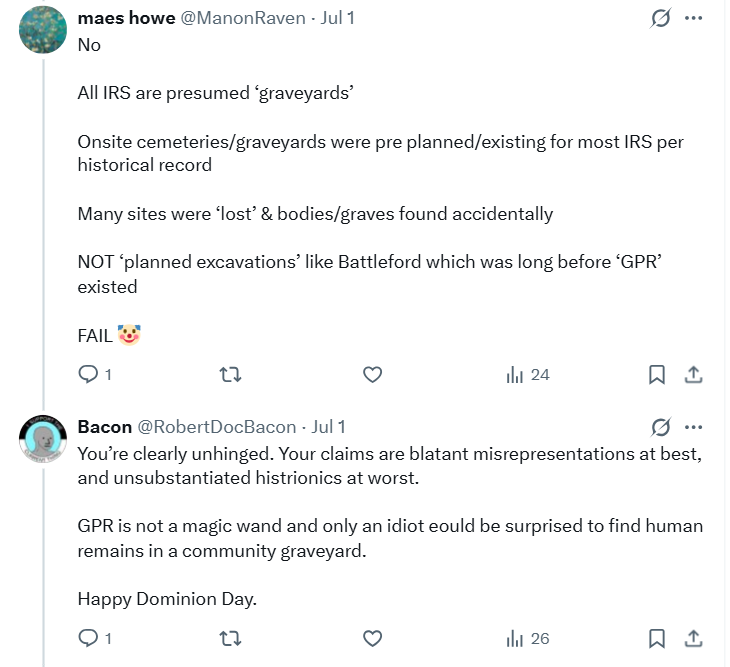
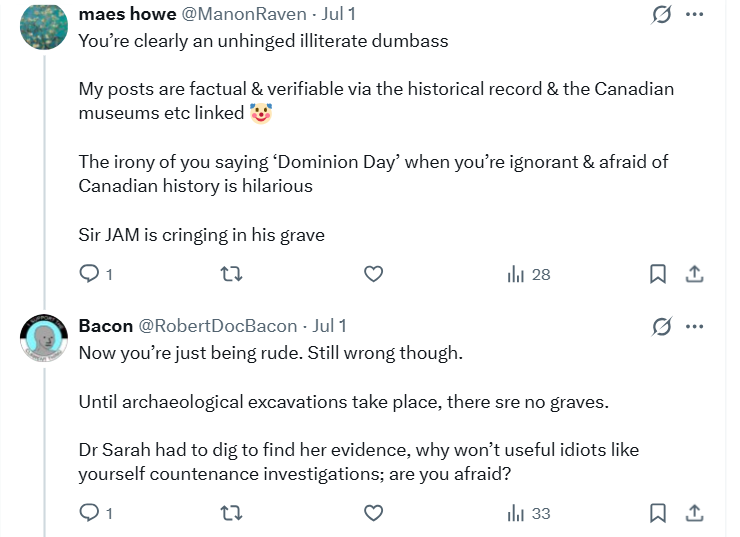
This then resulted in an extended exchange between Maes Howe and Robert Doc Bacon:
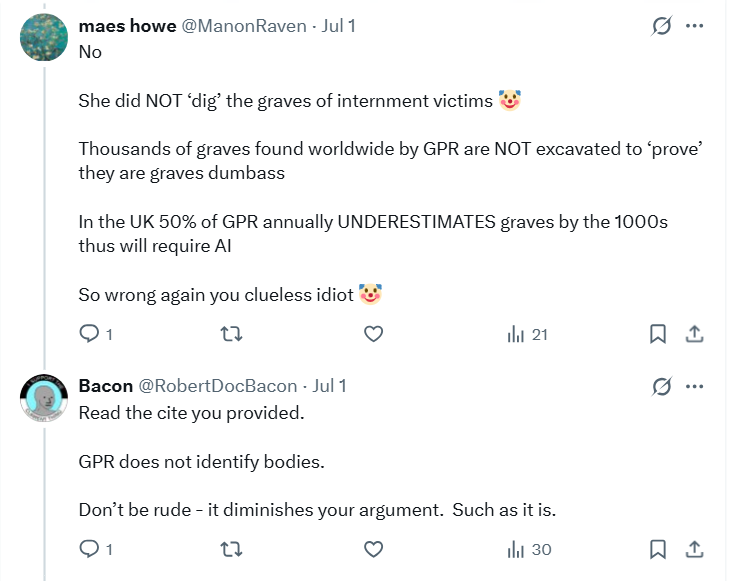
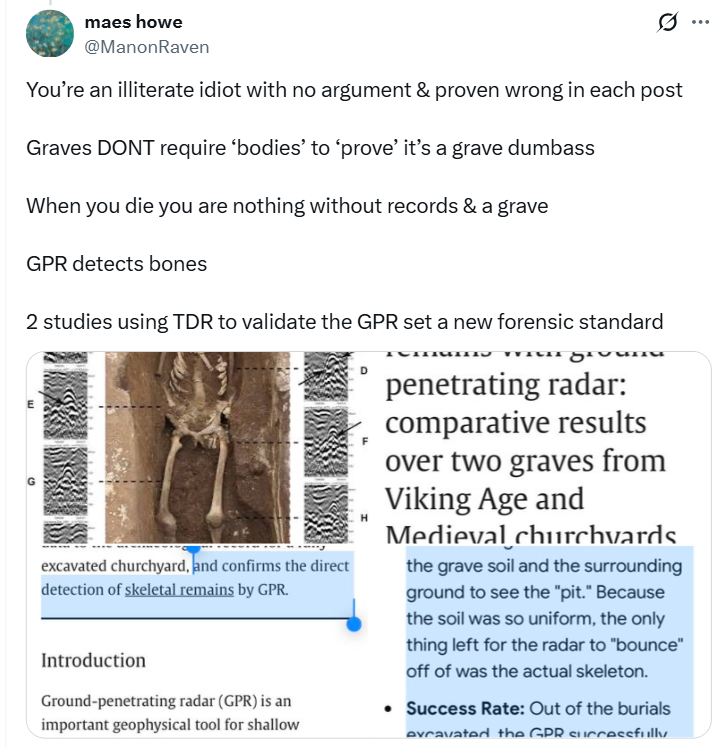
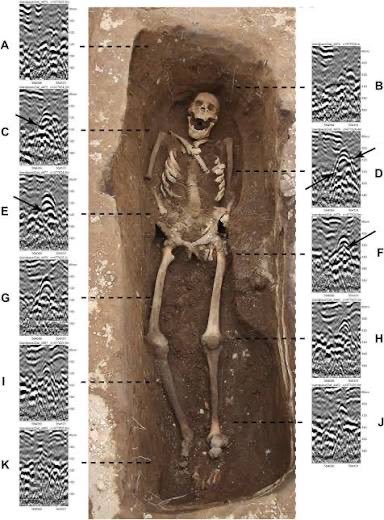
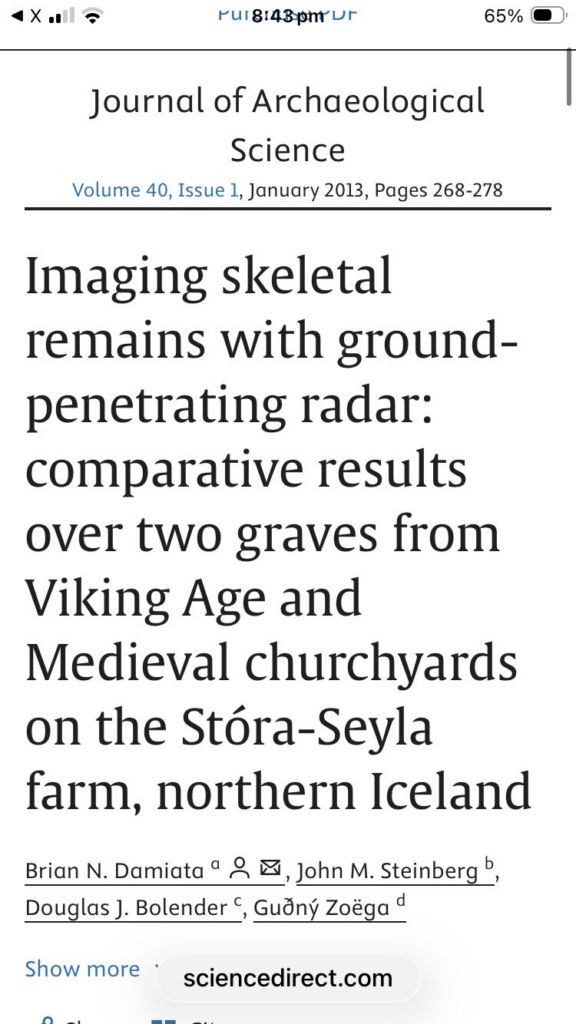
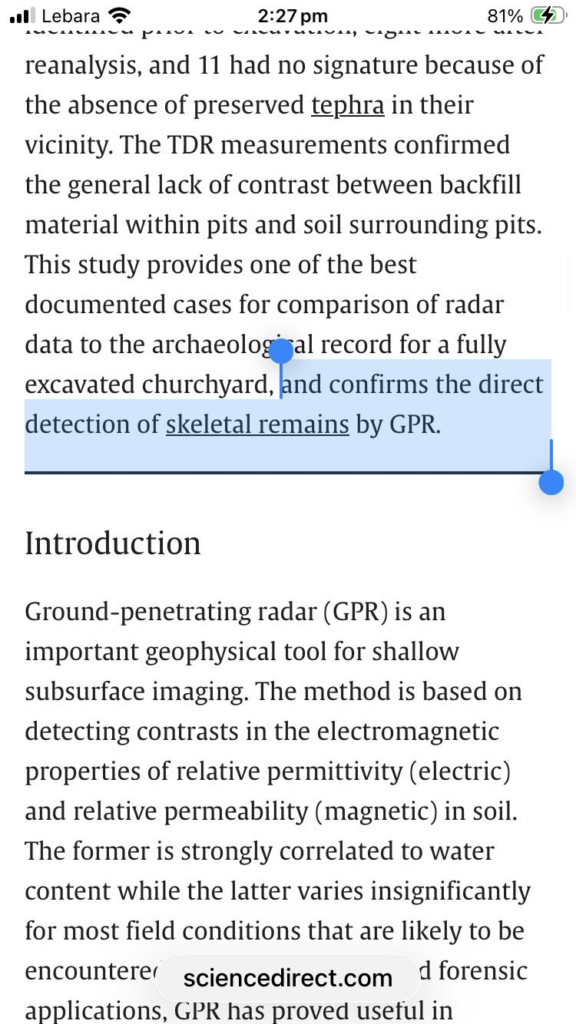
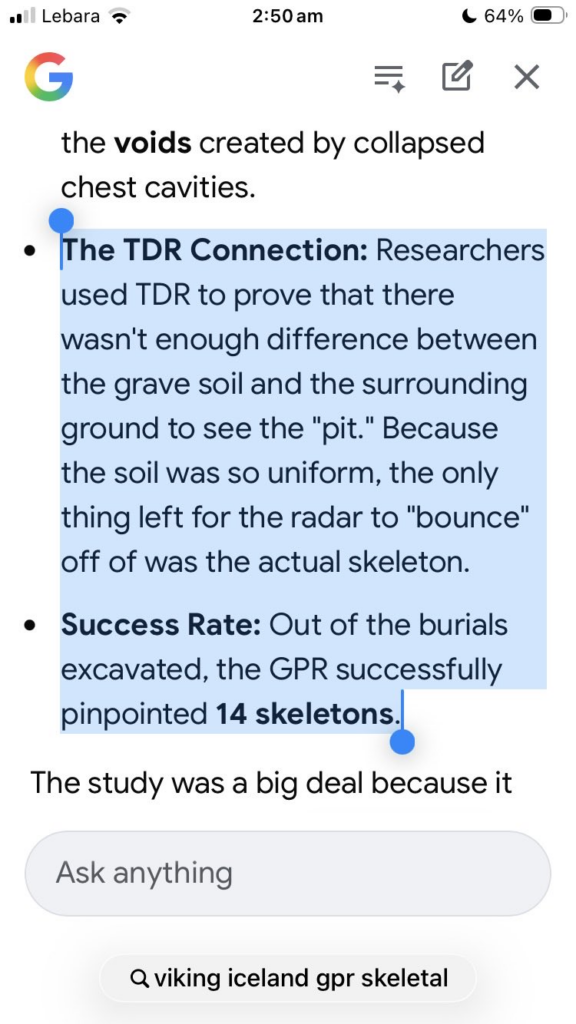
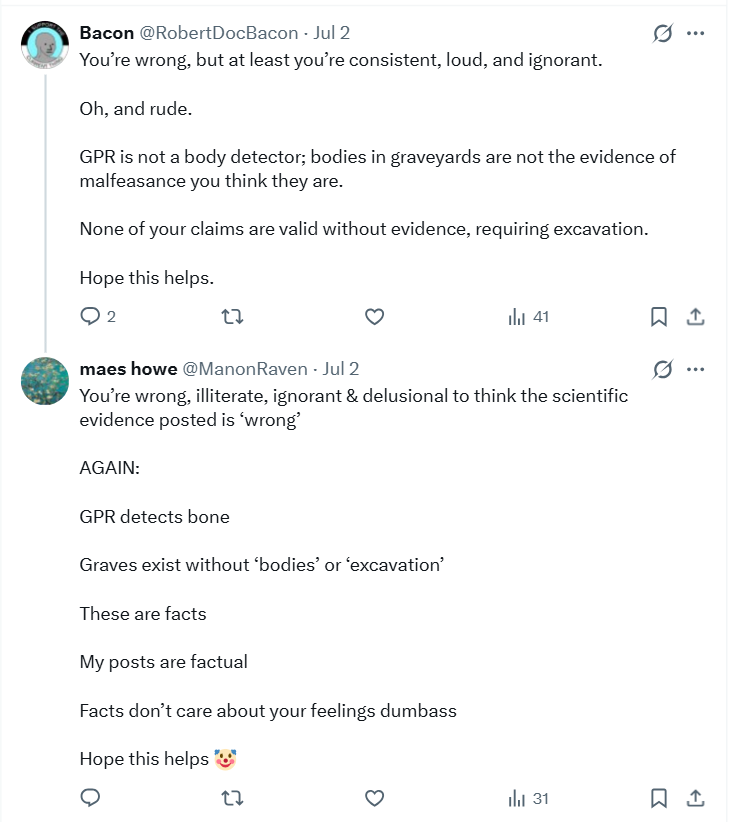
This comment is difficult to understand:
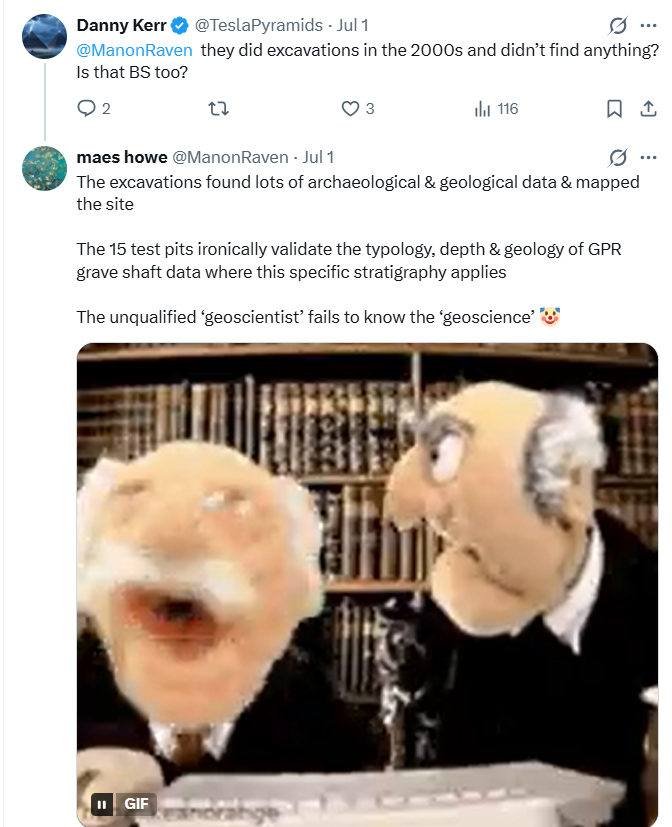
Here’s another mysterious post:
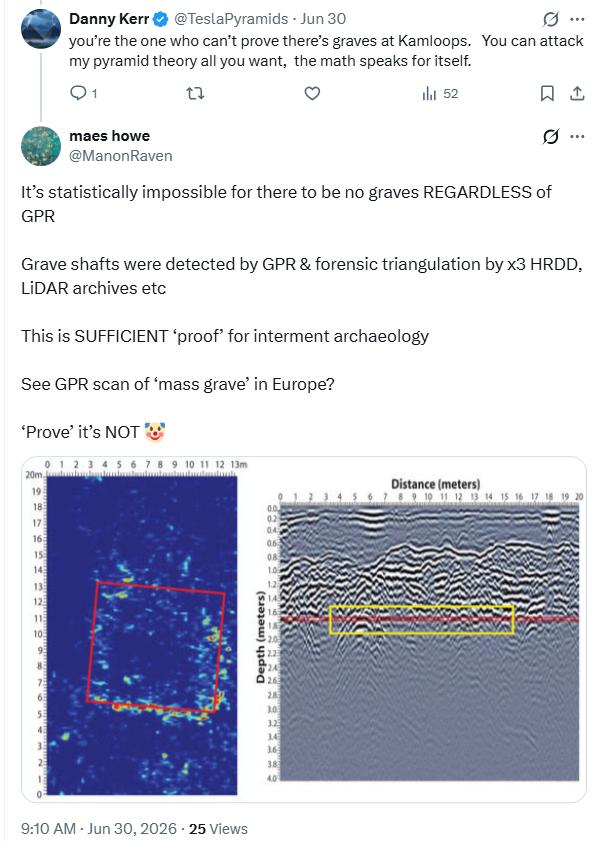
If bones don’t last long in Kamloops because of the “clay layer”, why was it being claimed that GPR was somehow detecting remains?
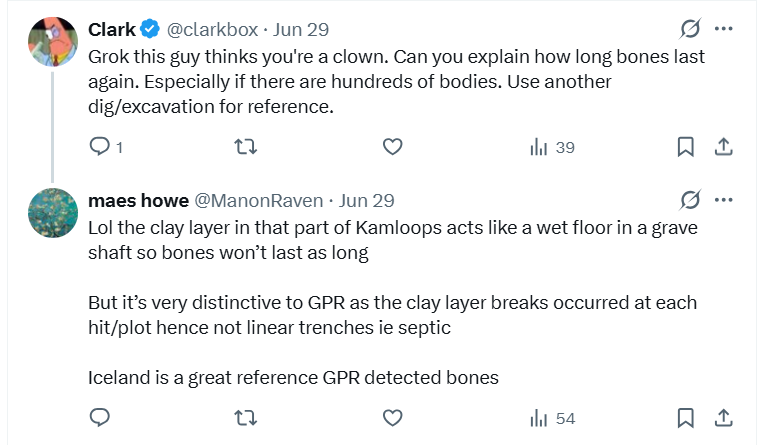
What are “the clay layer breaks [that] occurred at each hit/plot hence not linear trenches ie septic”?
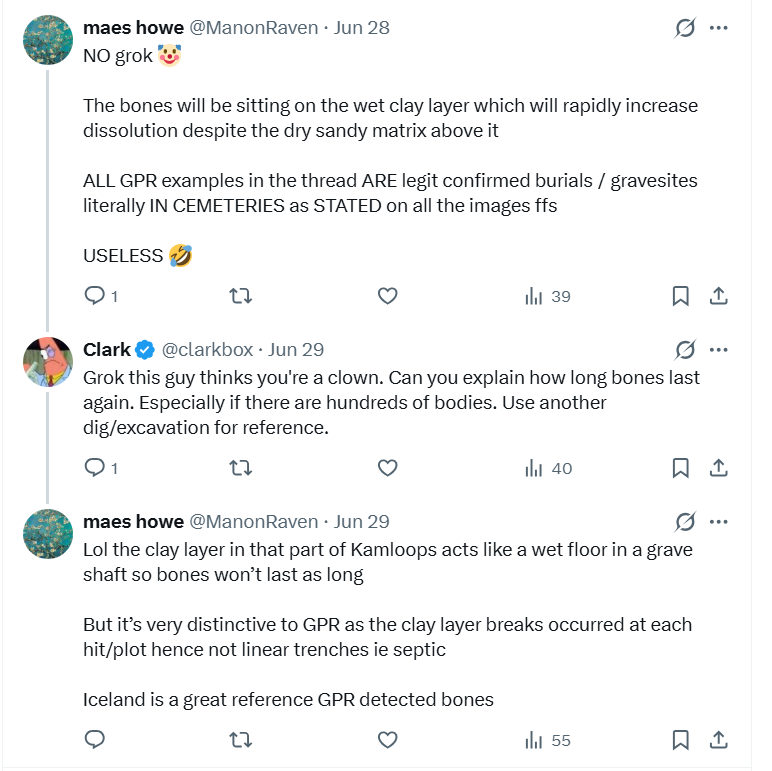
It is not clear how “Beaulieu detected grave shafts with GPR which was forensically triangulated INDEPENDENTLY by other scientists via x3 HRDD, LiDAR, archives etc”.
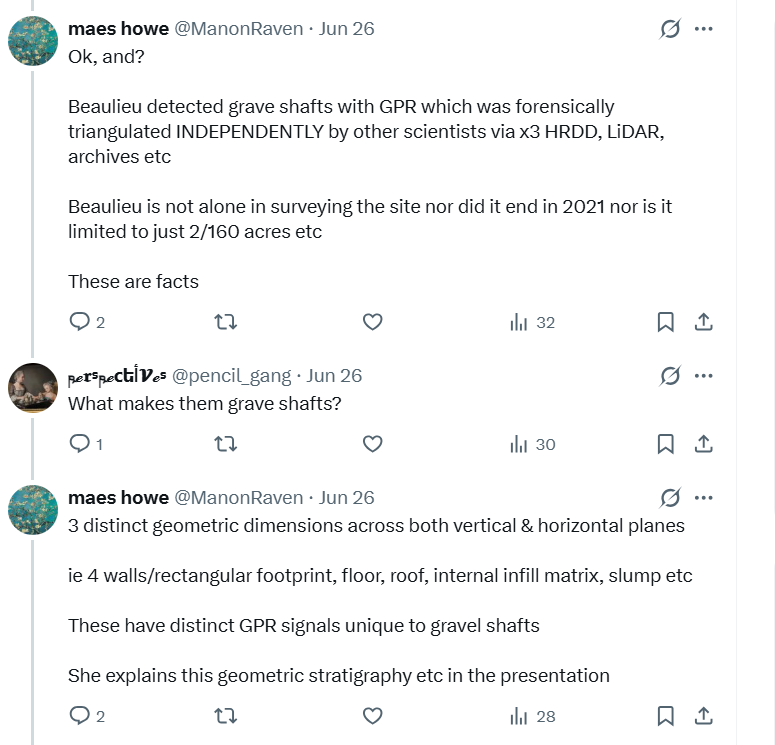
With respect to the “clay layer”, there is no mention of any such “layer” in George Nicholas’ “Summary of the 2002 Field Season” concerning the former Kamloops Indian Residential School site.