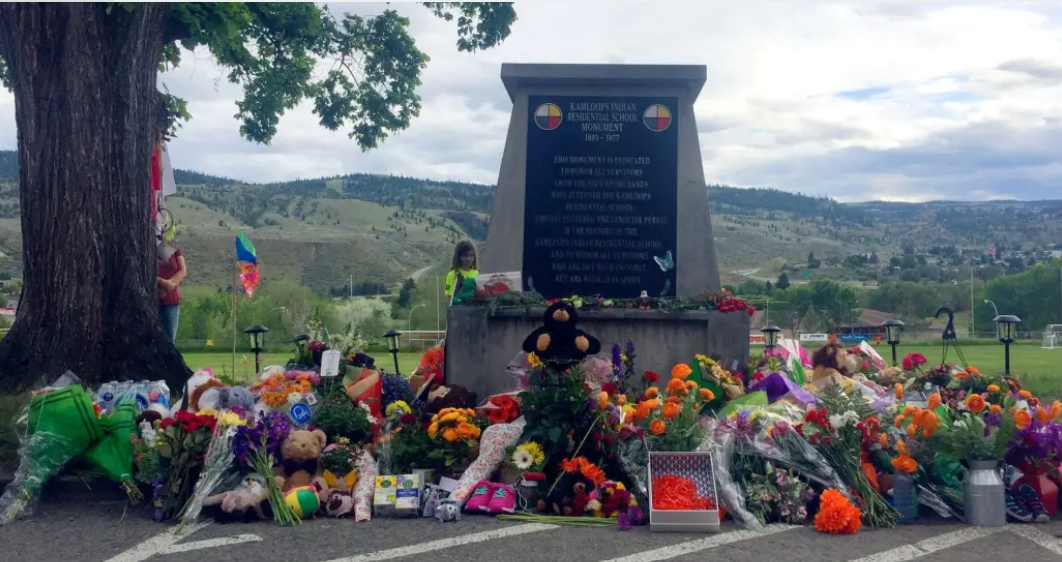
1. There is NO EVIDENCE that the old apple orchard is an abandoned cemetery. There is a cemetery on the reserve across from the Catholic Church with many graves that are now “unmarked” because the markers have deteriorated. Chris Champion speculated in June 2021 about the possibility of there being a cemetery at the former school (https://dorchesterreview.ca/…/from-katyn-to-kamloops…), as this would need to be ruled out in the case of burials being substantiated, but this was before Sarah Beaulieu’s presentation and research into this subject being initiated.
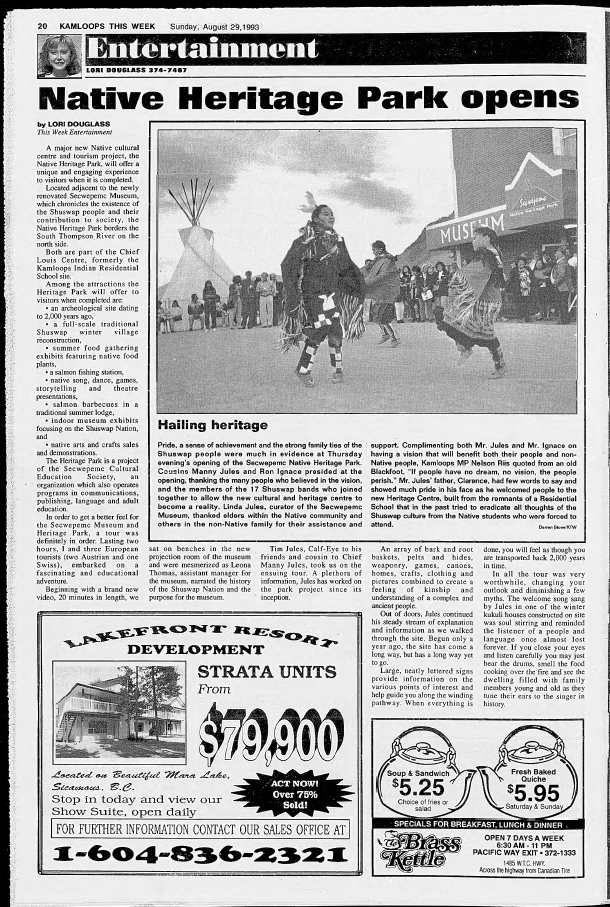
2. The band built a tourist attraction next to the orchard in the 1990s, which indicates that they did not believe it was a “crime scene” or an abandoned cemetery in the 1990s.
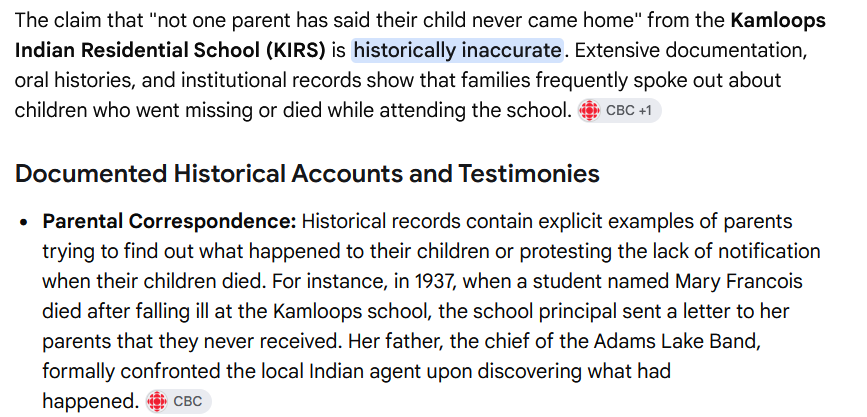
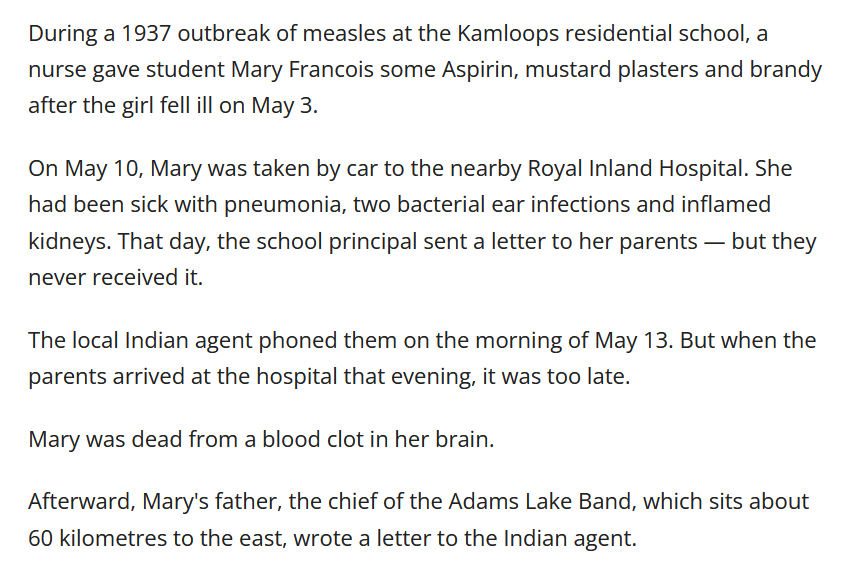
3. Not one parent has said that their child never came home from the Kamloops Indian Residential School.
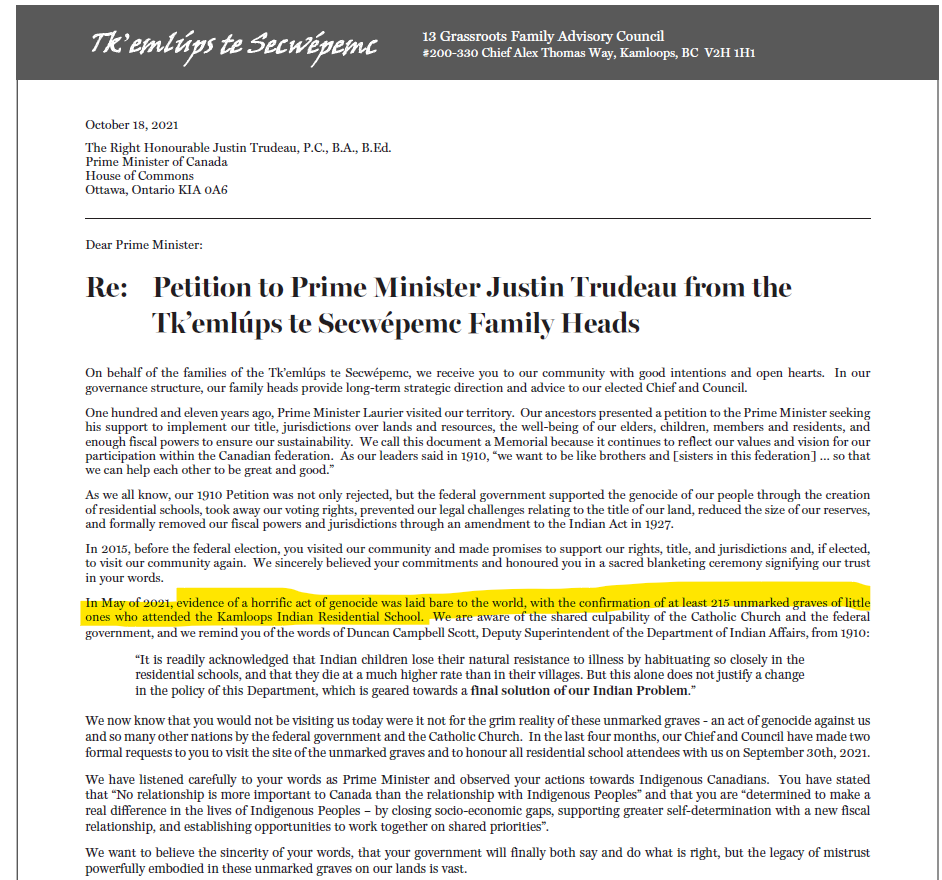
4. Chief Rosanne Casimir, AFN Grand Chief RoseAnne Archibald, UBC Residential School History and Dialogue Centre Director Mary Ellen Turpel-Lafond, and Manitoba Chief David Monias said that the orchard was a “crime scene” that should be criminally investigated. Casimir said that the RCMP and the Coroner had been contacted to help with the investigation. The RCMP also accepted that the matter should be investigated, but out of “cultural sensitivity”, it maintained that the Kamloops Indian Band should take the lead. On October 18, 2021, three months after it was known that no remains had been found, the “13 family heads” submitted a petition to Prime Minister Trudeau with the following words: “In May of 2021, evidence of a horrific act of genocide was laid bare to the world, with the confirmation of at least 215 unmarked graves of little ones who attended the Kamloops Indian Residential School”.
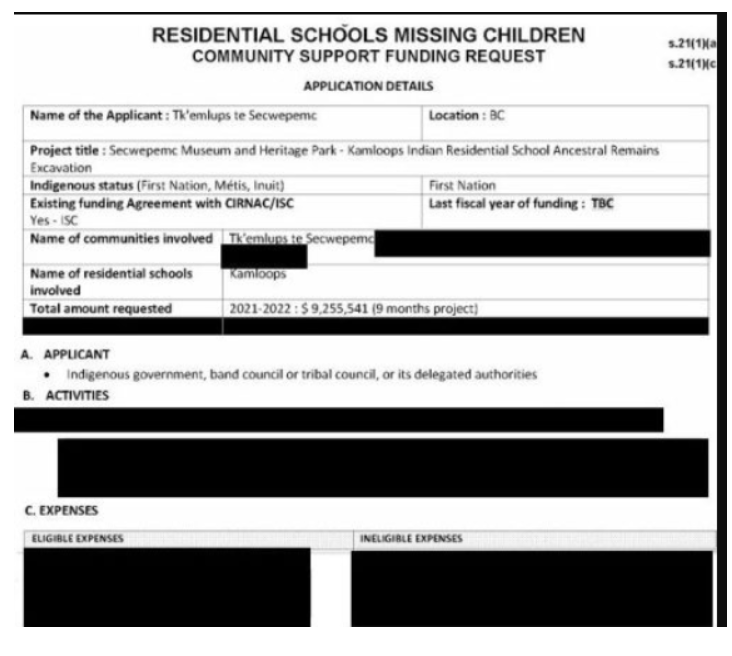
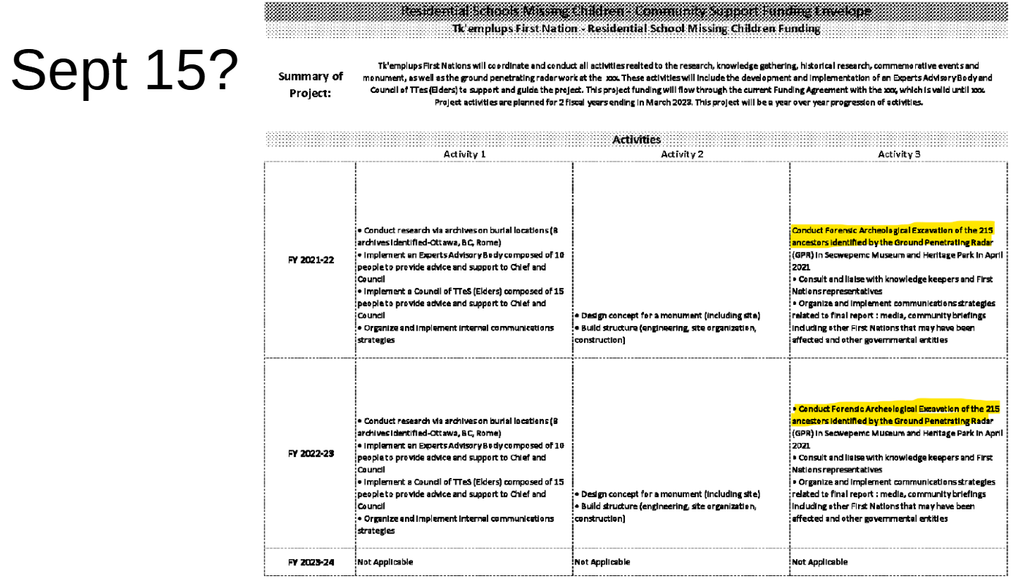
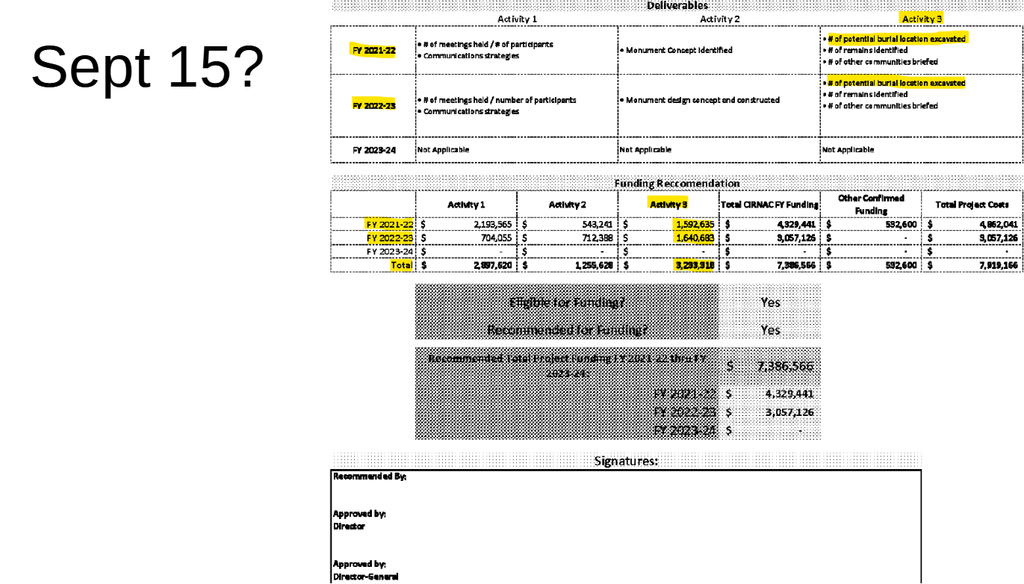
5. The band received $3.2 million (out of a total of 12.1 million) for forensics and DNA analysis to be done between 2021 and 2023. The application for 9 million dollars to the federal government in July 2021 had in its title “Kamloops Indian Residential School Ancestral Remains Excavation” (the Kamloops Indian Band refers to “The 215” as their “ancestors”). Excavation, which is required before any forensics and DNA analysis can proceed, was never done.
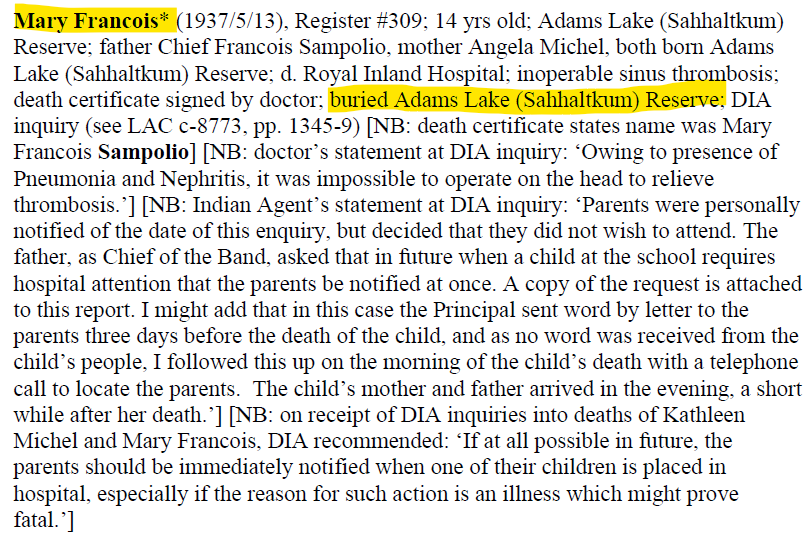
6. The NCTR had 51 names on its registry of children who died who are associated with KIRS. Two of the names were replications and so there were actually 49. Two children actually died at the school (from accidents); the others died in hospital or in their home communities. A good picture of 35 out of 49 deaths is known, and the remaining 14 can be investigated more fully if the families apply to Vital Statistics for the records. For an analysis of this see Jacques Rouillard’s article – https://dorchesterreview.ca/…/in-kamloops-not-one-body…
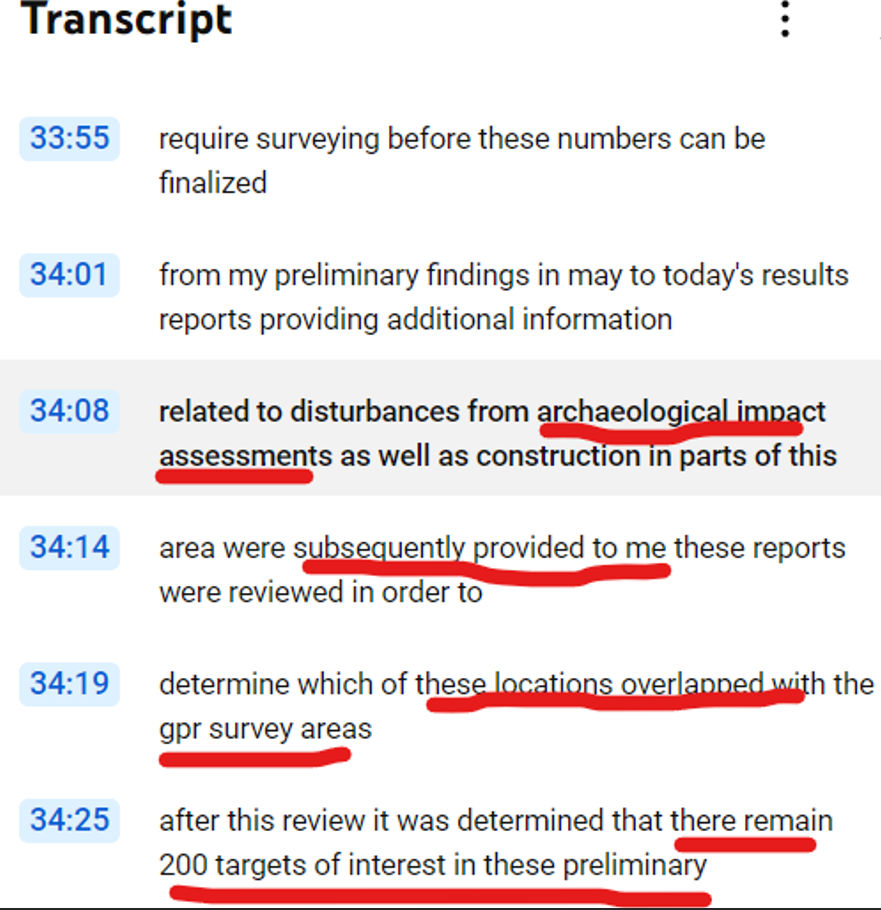
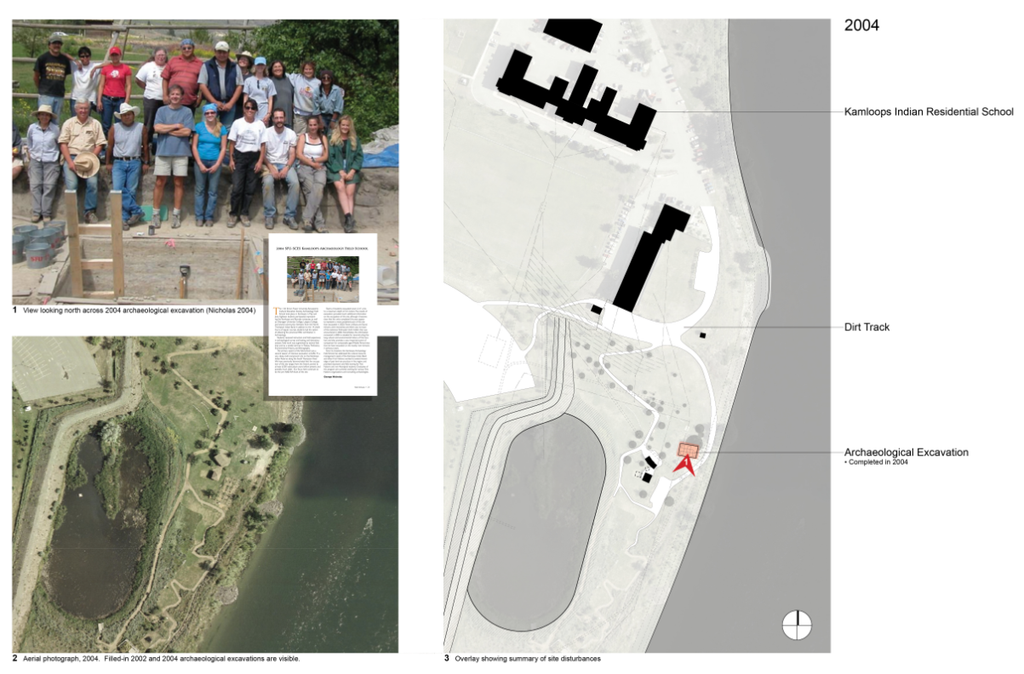
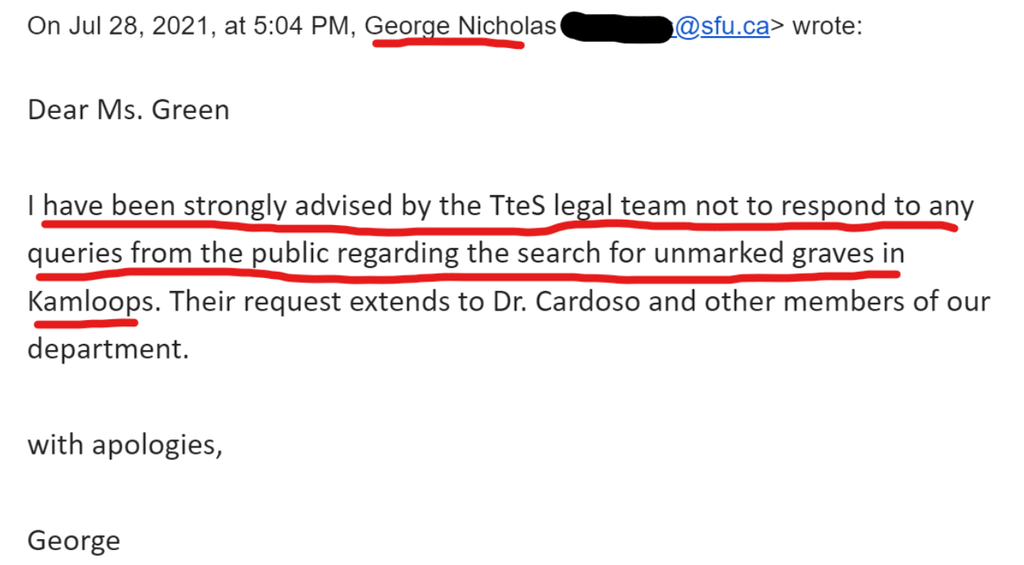
7. George Nicholas was in charge of the Simon Fraser University archaeological dig in 2002 when excavations where done in part of the area surveyed by Dr. Sarah Beaulieu. This area is where 15 of the “remains” were confirmed by the Kamloops Indian Band. This is what resulted in Beaulieu downgrading the “215 remains” number to 200 “targets of interest”. This should have resulted in a recognition that Beaulieu had made 15 false positives, which would have required a re-evaluation of all of the other 200 “targets of interest”. When Nina Green contacted Nicholas in July 2021 (after Sarah Beaulieu’s presentation), he said that the lawyer for the Band had told the archeology department not to talk about the Kamloops case (i.e. a gag order was placed on this publicly funded academic department).
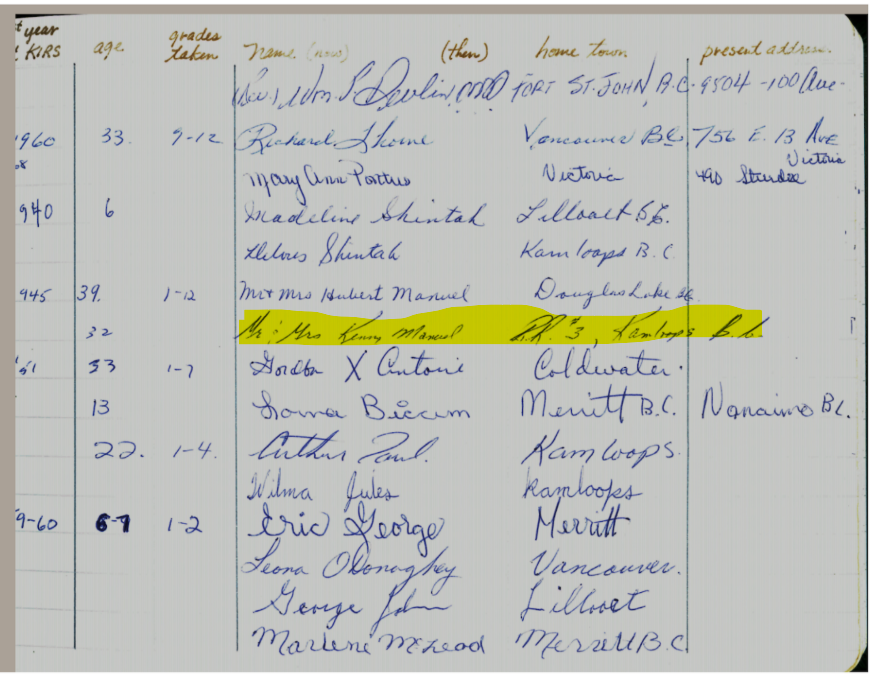
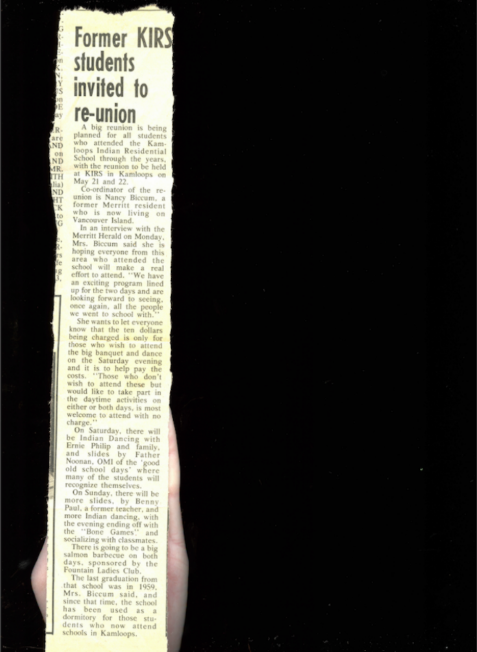
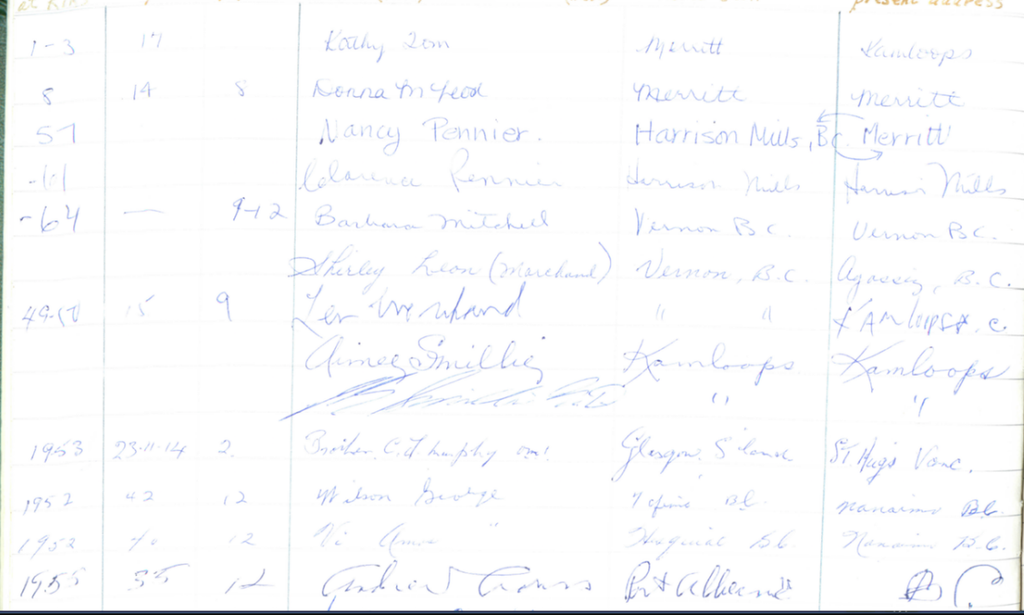
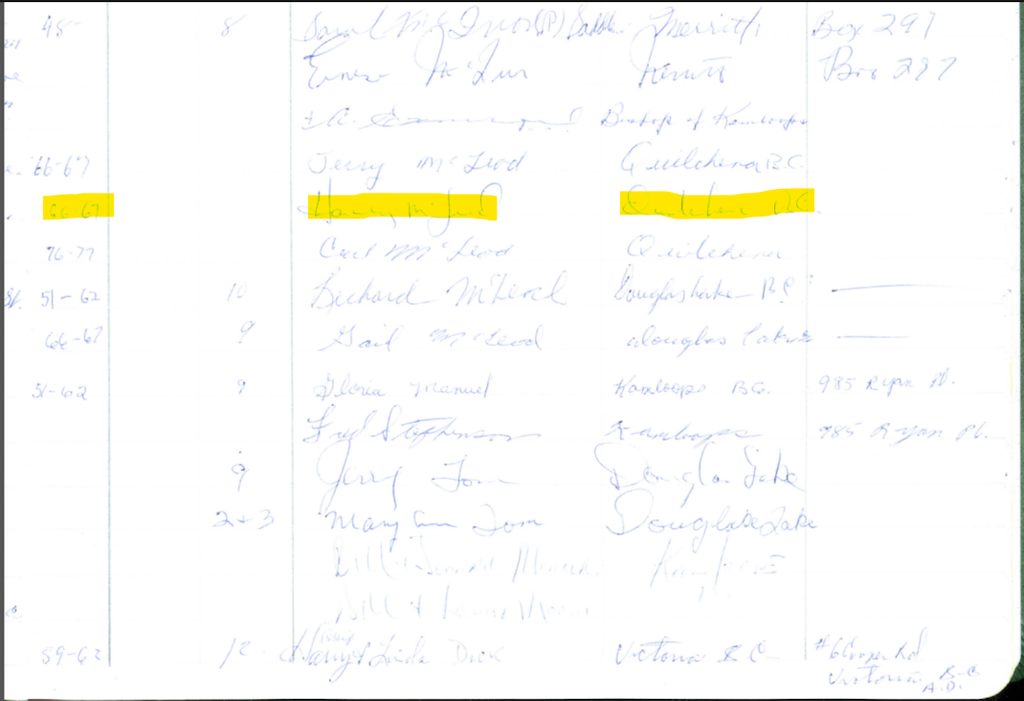
8. Many people attended a reunion for the Kamloops Indian Residential School in 1977 to talk about the good old days. One of the people attending was Chief Harvey McLeod, who testified in January 2022 that he recalled talk of children being secretly being buried in the apple orchard and children being forced to help bury the dead (including babies) and at least one account involving a baby and a furnace.
9. The RCMP did a comprehensive investigation of residential schools in the 1990s and no one said anything about clandestine burials. This was in spite of the fact that Charlene Belleau was acting as the liaison to convince people to come forward and talk to the police.
https://frontiercentre.org/wp-content/uploads/RCMP-ResSchool-TaskForce-Report.pdf
10. The Royal Commission on Aboriginal Peoples held a hearing in 1993 in the building of the former Kamloops Indian Residential School. No one said anything about clandestine burials.
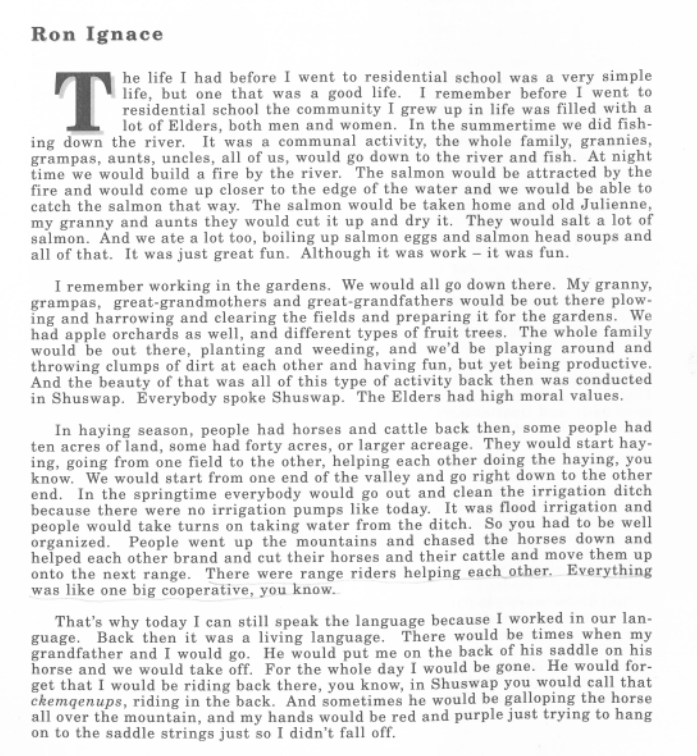
11. Agnes Jack interviewed several people in her book Behind Closed Doors, which came out in 2000, and no one said anything about clandestine burials. Ron Ignace was one of the people interviewed in the book. After the 2021 Kamloops Indian Band announcement, he talked about knowing about clandestine burials for years.
https://irsssurvivors.library.utoronto.ca/items/show/1007
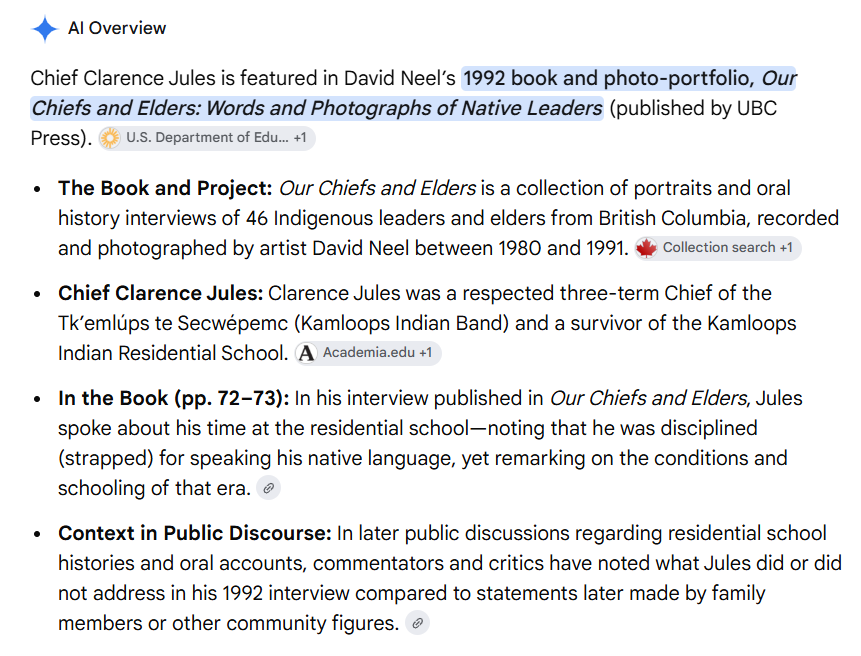
12. Clarence Jules, the father of Manny Jules, never said anything about clandestine burials in David Neel’s book Our Chiefs and Elders: Words and Photographs of Native Leaders (1992), pp. 72-3. Manny Jules, after the Kamloops Indian Band’s announcement about the 215 remains, said that he had been hearing his parents talk about these burials for years.
13. Jeanette Jules testified at the TRC hearing in 2013 in Kamloops. She never mentioned anything about clandestine burials. In May 2022, Jeanette Jules made a speech saying that children were buried on the former Kamloops Indian Residential School grounds and “in the mountains”.
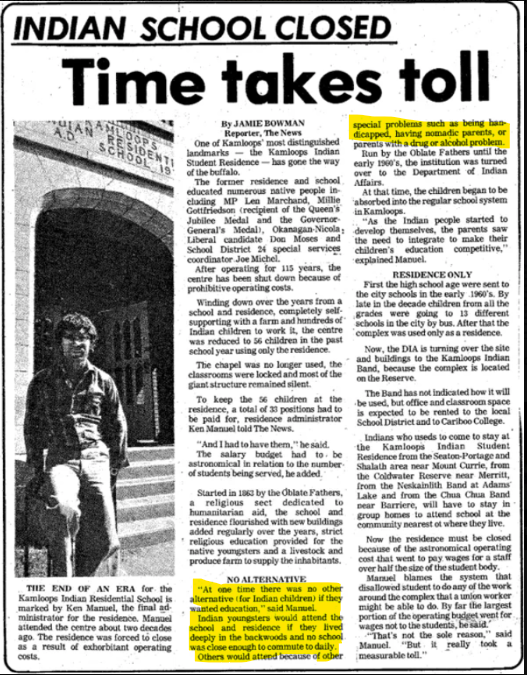
14. When testifying before the Senate in March 2026, Rosanne Casimir was not able to state the name of one child who she believed made up Le Escwiwey (“The missing”/”The 215”) buried in the apple orchard in spite of years of archival research.
15. In October 2026, Kathy Manuel said that her husband, Ken Manuel, had spoken about the bodies buried at the Kamloops Indian Residential School for 40 years. Ken Manuel was the last administrator for the school. In 1978, he never mentioned anything about burials. Instead, he was positive about the school and stated that “at one time there was no other alternative (for Indian children) if they wanted education…Indian youngsters would attend the school and residence if they lived deeply in the backwoods and no school was close enough to commute to daily. Others would attend because of other special problems such as being handicapped, having nomadic parents, or parents with a drug or alcohol problem”. Mr and Mrs Kenny Manuel also attended the reunion in 1977 to talk about “the good old days”.