![UBC’s Connection to [Activist] Anthropology and Archaeology](https://wokeacademy.info/wp-content/uploads/2026/01/ubc-anthropology-martindale.png)
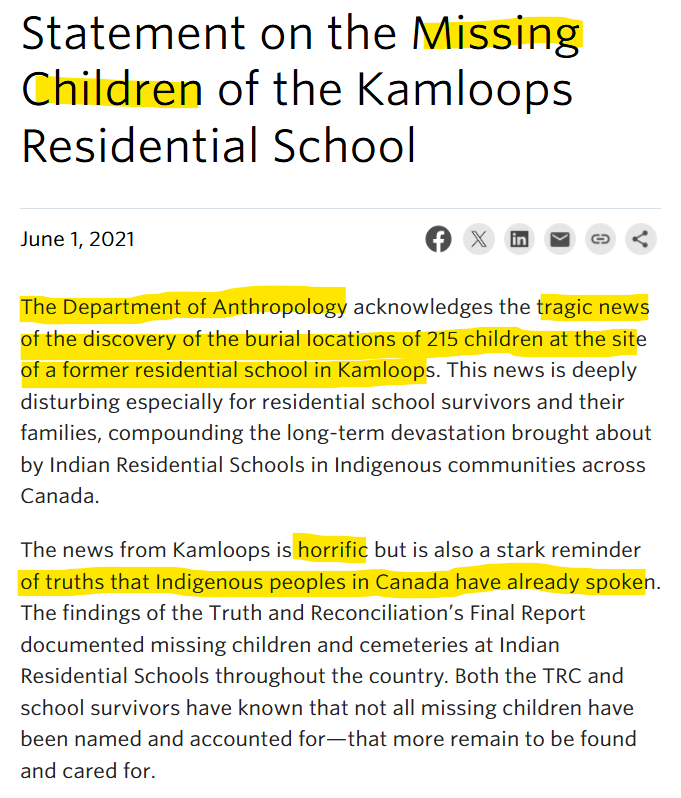
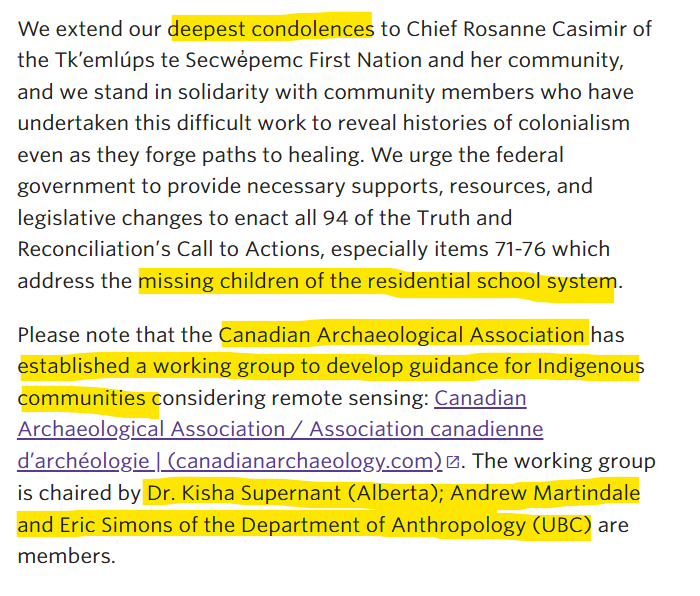
On June 1, 2021, UBC’s Department of Anthropology made a statement about the “missing children of the Kamloops Residential School”, and claimed that there was “tragic news of the discovery of the burial locations of 215 children”. The department has never retracted this statement.
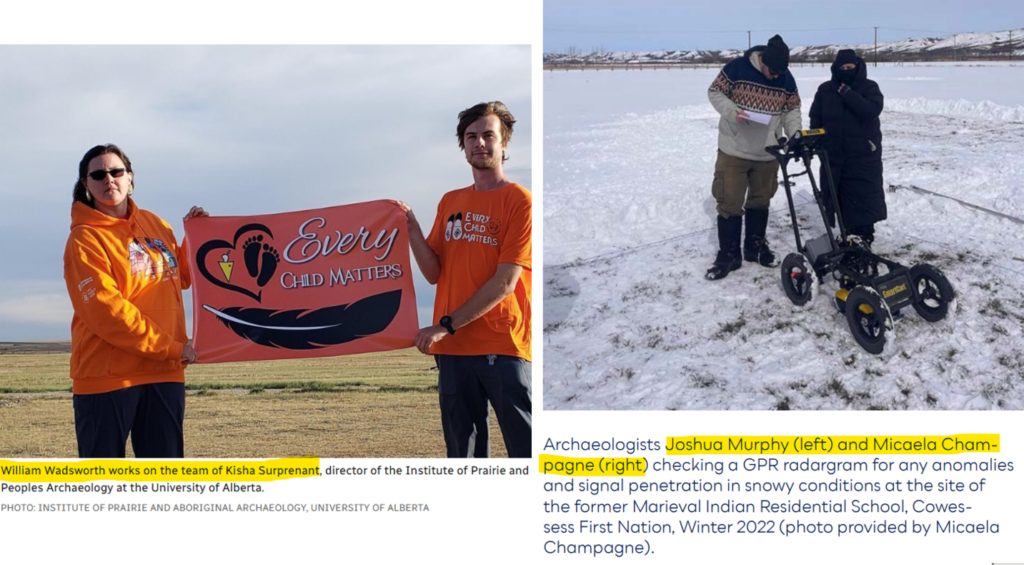
As of this posting, below is the list of the Canadian Archaeological Association’s “Working Group on Unmarked Graves”. The highlighted names are those who have a known connection to the “unmarked graves” cases in Canada. Kisha Supernant has fomented the falsehood of the Kamloops case, Sarah Beaulieu was the GPR operator for “The 215”, Michaela Champagne works with Terence Clark and Joshua Murphy and they have been involved in the cases in Saskatchewan and Sechelt, Scott Hamilton wrote the report for the TRC on “unmarked graves” in cemeteries (where it is noted that “Online research has not yet revealed the cemetery at the [Kamloops Indian Residential School]”), Lisa Hodgetts (along with Kisha Supernant) gave a presentation at the press conference featuring Beaulieu on July 15, 2021, Andrew Martindale is connected to the GPR work at Kuper Island and with the Musqueam, Talisha Chaput and William Wadsworth work with Kisha Supernant, and Adrian Burke and Colin Grier have made comments about GPR confirming remains.
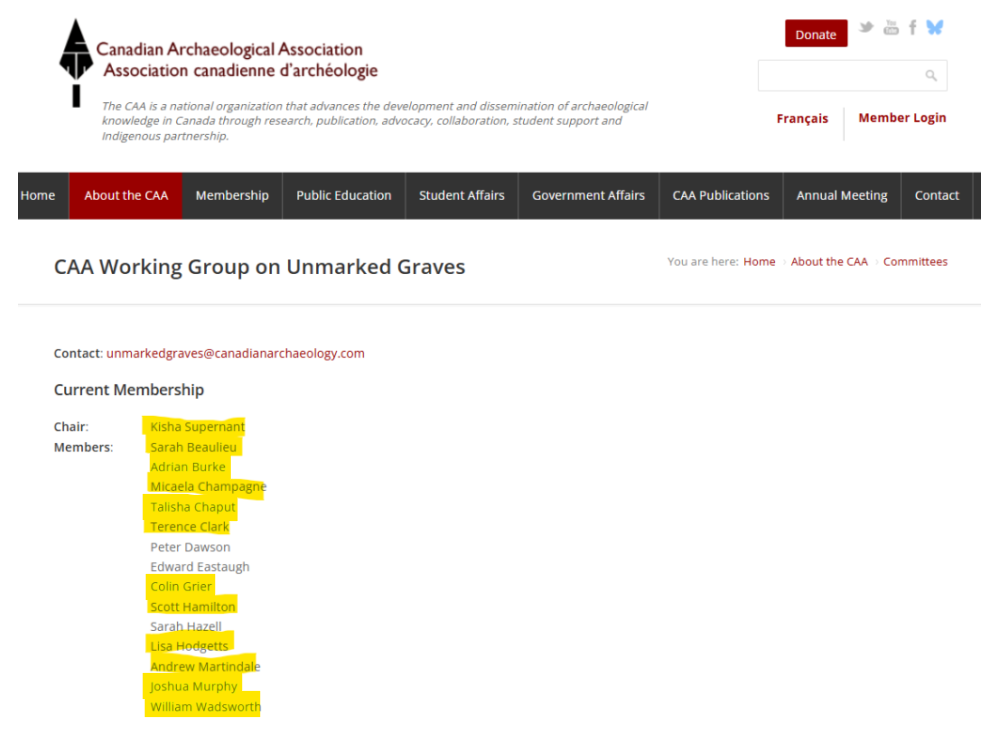
William Wadsworth works with Kisha Supernant and Joshua Murphy with Micaela Champagne.
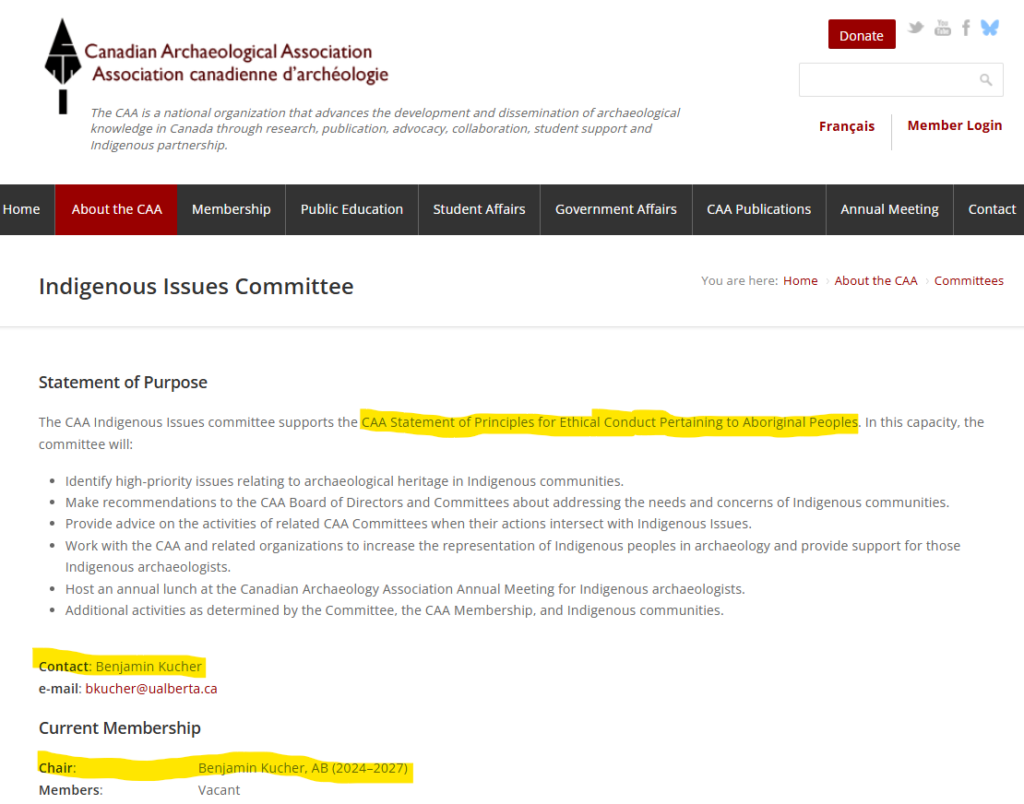
The Canadian Archaeological Association also has an “Indigenous Issues Committee”, which is Chaired by Benjamin Kucher (Kucher is a University of Alberta graduate student and is connected to Kisha Supernant. A previous post and video have been developed about Kucher). This Committee makes recommendations to the Canadian Archaeological Association about “ethical conduct pertaining to aboriginal peoples”. Kucher has given his “expertise” to Joely Viveiros, Associate/Acting Director of the First Nations House of Learning.
The kind of GPR work done by Supernant and Clark was documented in the documentary that Widdowson produced with Simon Hergott, “What Remains” (at 12:44).
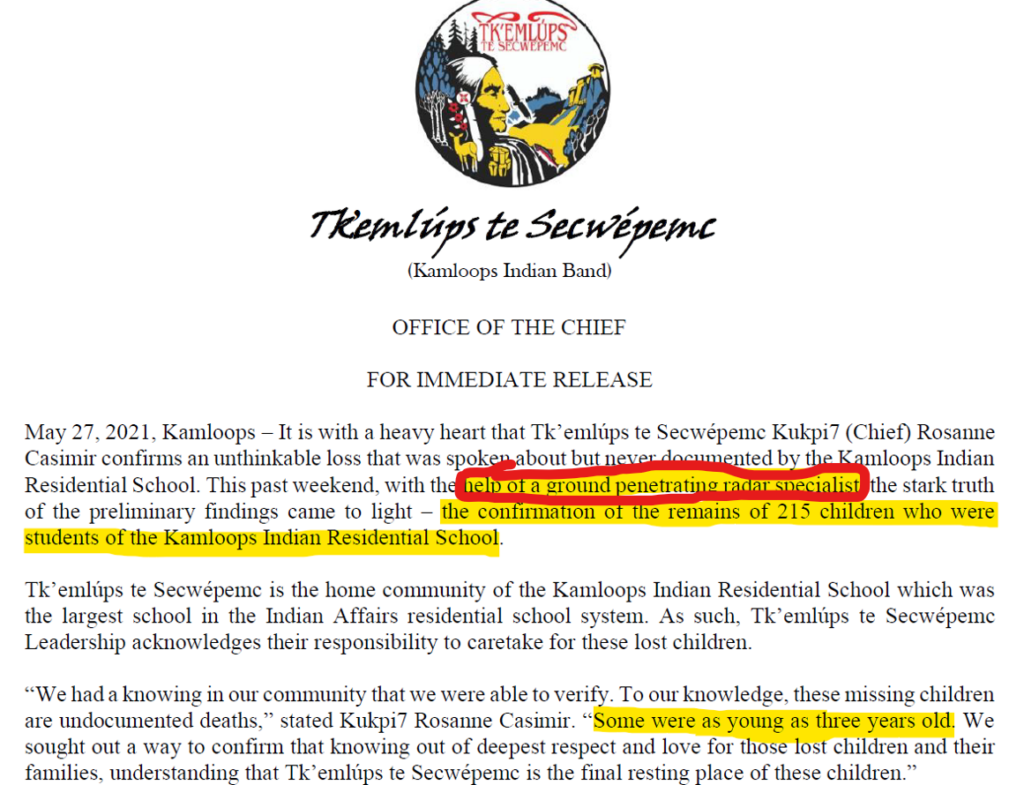
The UBC Department of Anthropology statement in June 2021 was presumably based on the Kamloops Indian Band’s press release, which declared, a few days earlier, that “the confirmation of the remains of 215 children…some…as young as three years old”, had occurred with the “help of a ground penetrating radar specialist”.
This press release was shown to be false on July 15, 2021, when Sarah Beaulieu stated that 200, not 215, anomalies had been detected, and the presence of remains could only be determined by excavation. The number “215” had been downgraded to “200” because of archaeologist reports from Simon Fraser University, which showed areas that had been previously excavated but no remains had been discovered. Beaulieu should have been aware of this before she began the survey.
In spite of Beaulieu’s incompetence in not doing the proper preliminary research, Lisa Hodgetts, the Chair of the Canadian Archaeological Association, congratulated her on her “excellent report” and her “heart” to “do the work in a respectful way and a way that’s culturally appropriate”. Instead of urging caution about making assertions about the remains of children being discovered, Hodgetts fomented the falsehood by asserting that she was there to “bear witness” and the “findings” of Beaulieu “has brought to the surface a lot of pain and trauma”.
Kisha Supernant, the Chair of the Working Group on Unmarked Graves, gave similar support to Beaulieu, arguing that “it’s clear from this that there’s been an accurate use of best practices” for GPR surveys. She was “very reassured by the results presented today and confident that these results indicate a number of highly probable burials and targets that definitely warrant further investigation”.
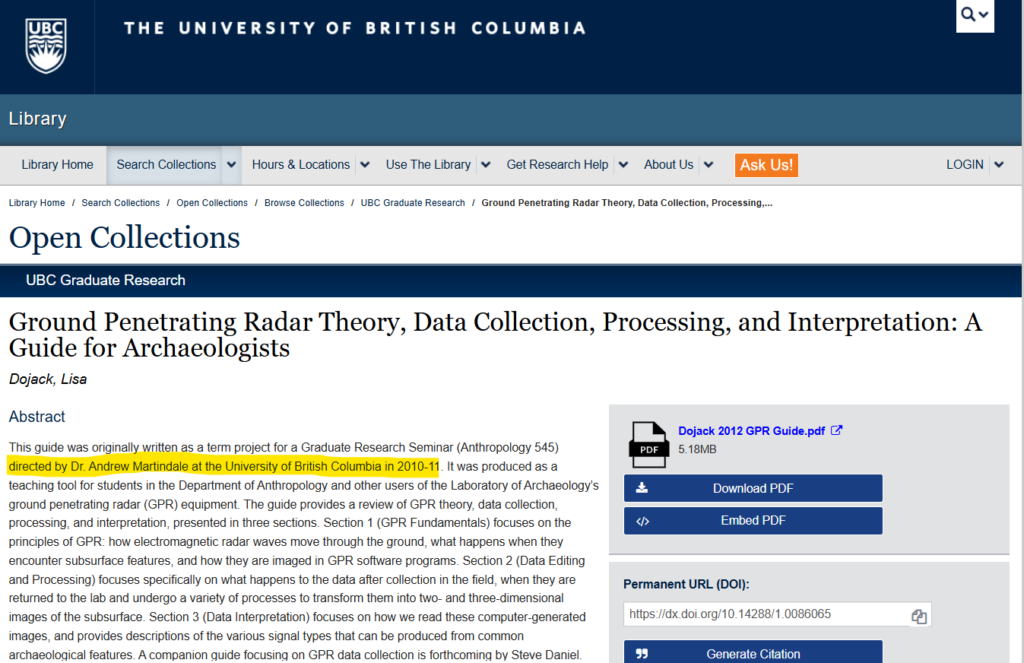
The Department of Anthropology at the University of British Columbia, as well, should have exercised caution, as it would have known that a “ground penetrating radar specialist” would not have been able to confirm remains. This is noted in its “Guide for Archaeologists” which was directed by one of its departmental members, Dr. Andrew Martindale. This was published in 2014.
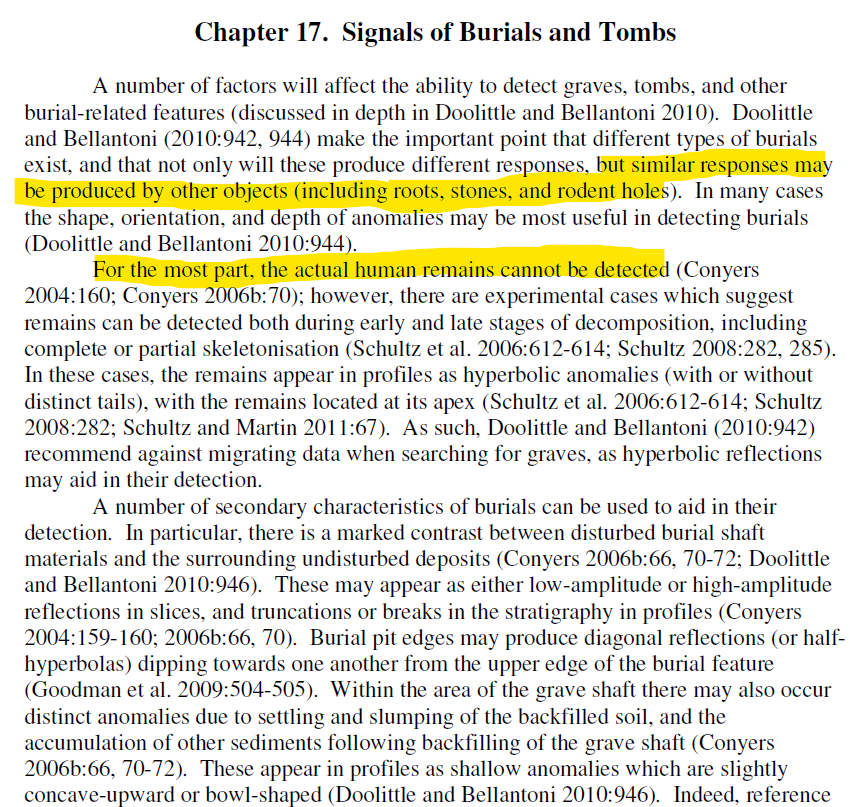
In a CTV News story about the “discovery of the remains of 215 children” at Kamloops, Andrew Martindale asserts that “Indigenous communities have known of this history for generations”.
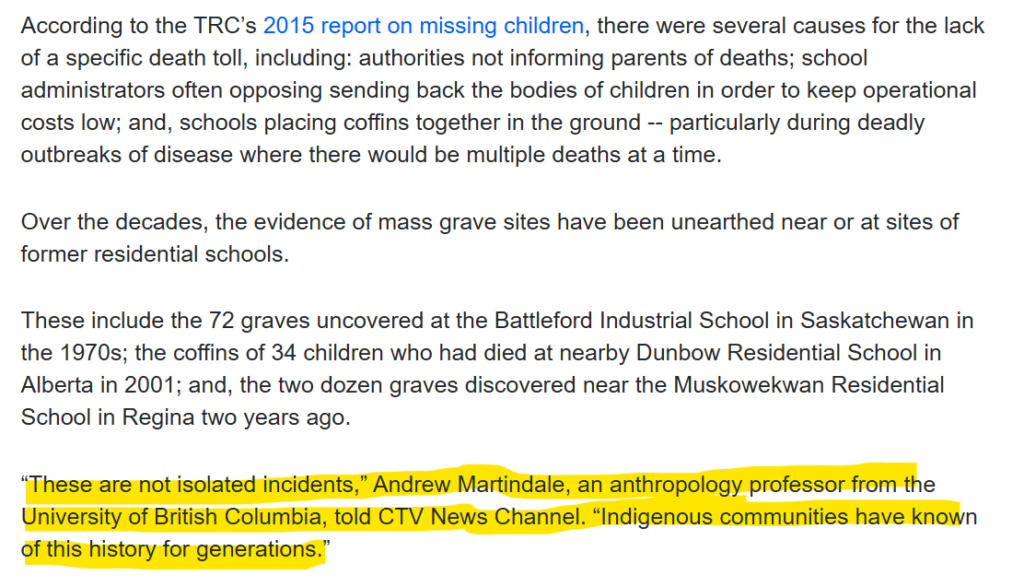
On August 2, 2021, Andrew Martindale asserted that he and the UBC anthropology PhD student Eric Simons “work in partnership with local leadership to bring scientific confirmation of a long-known truth among First Nations people”.
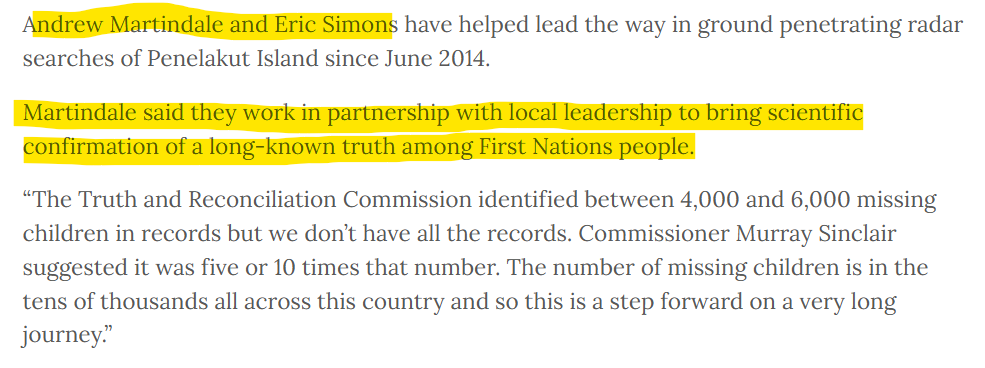
Another UBC associate of the Department of Anthropology is Brian Whiting. Whiting wrote a peer-reviewed article, where he noted his affiliation.
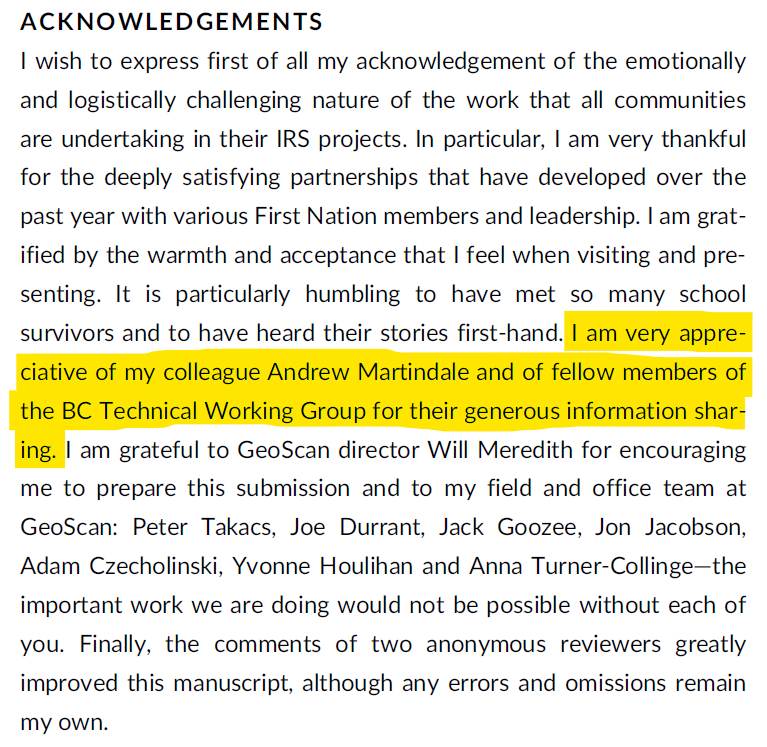
Whiting thanks Andrew Martindale in this article.
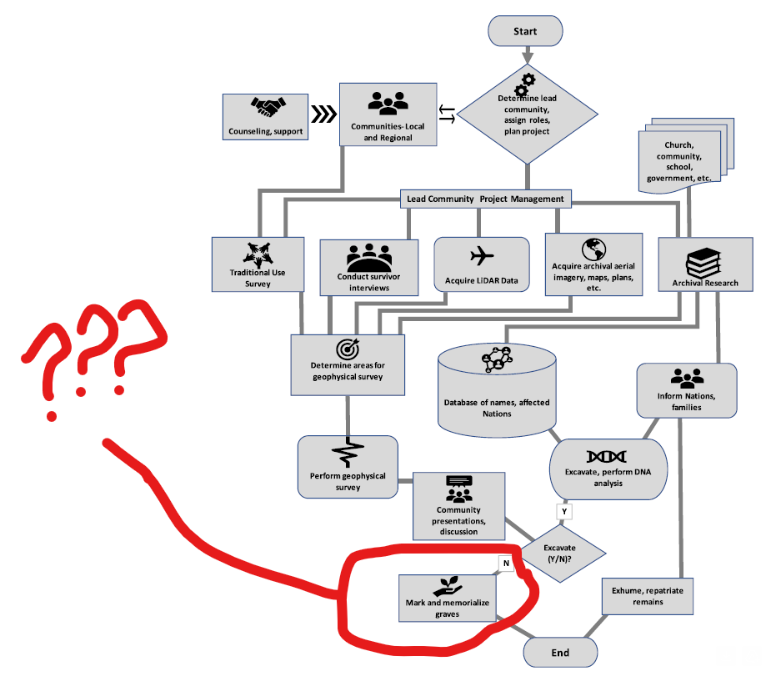
On page 13 of this article, the following flowchart is provided. This flowchart asserts that if aboriginal groups do not excavate the anomalies found, they would then “mark and memorialize graves”. How can one “mark and memorialize graves” if GPR cannot determine if the anomalies are graves, animal burrows, cobbles, boulders, or changes in soil density?
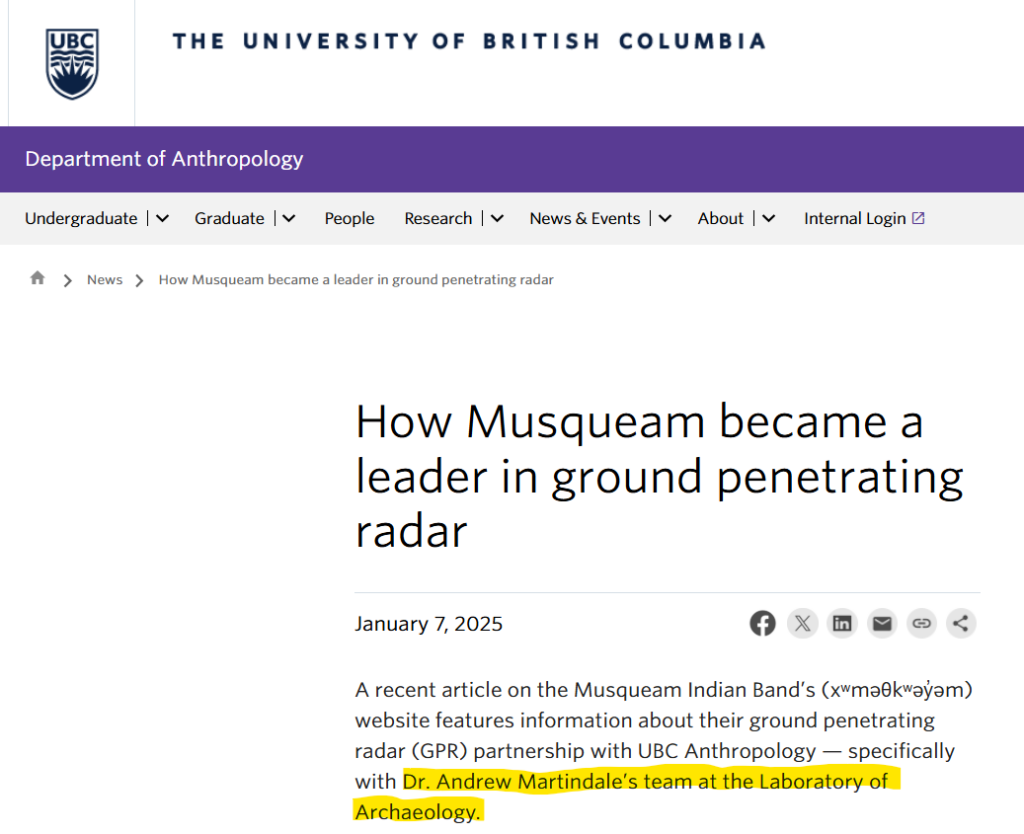
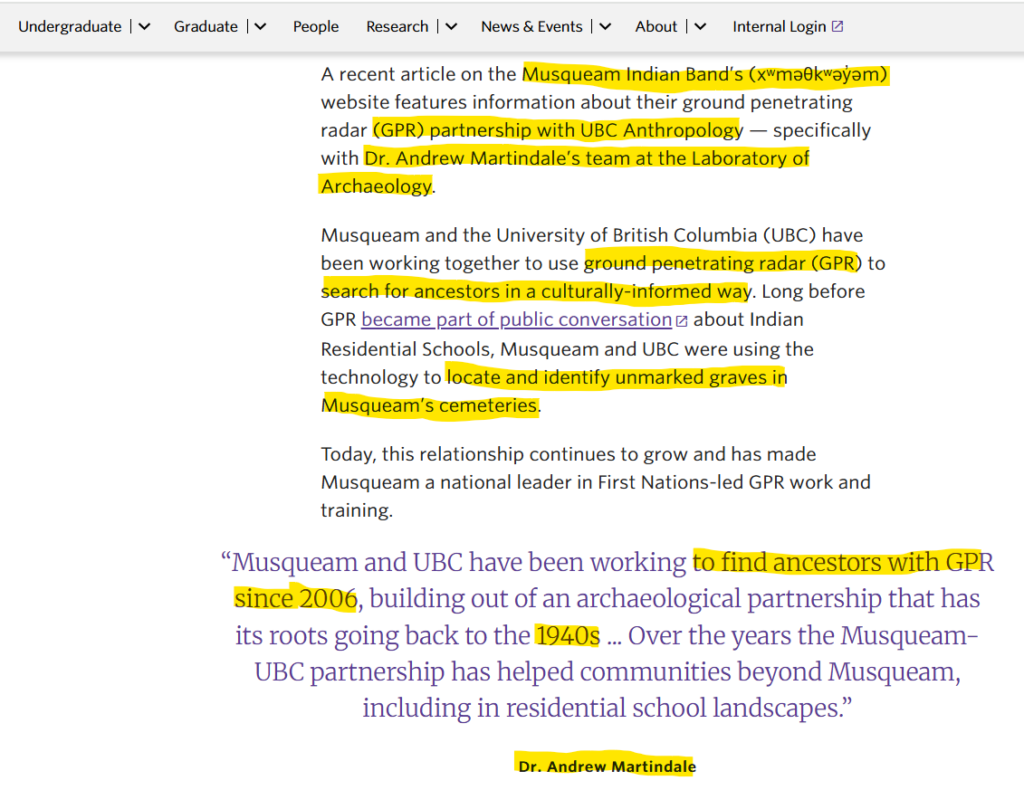
In January 2025, the Department of Anthropology at UBC posted a story (https://www.musqueam.bc.ca/musqueam-leading-fn-ground-penetrating-radar/) from the Musqueam about UBC’s Anthropological and Archaeological use of GPR. The “public conversation” linked by the Department of Anthropology was a story by the Aboriginal Peoples Television Network – “How ground-penetrating is used to find unmarked graves at residential schools” (https://www.aptnnews.ca/national-news/how-ground-penetrating-radar-is-used-to-find-unmarked-graves-at-residential-schools/).
Andrew Martindale has taken this approach in his own work on Kuper Island, where he argued that GPR hits had meant that “we have identified 342 unmarked graves”.
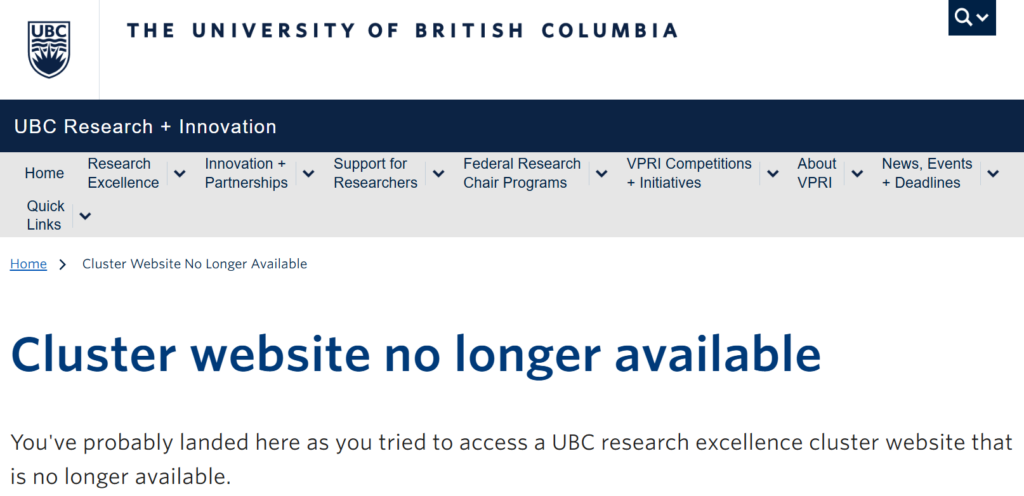
Because of all of these interactions of advocacy archaeologists, UBC had the following post on its website. This post is no longer available.
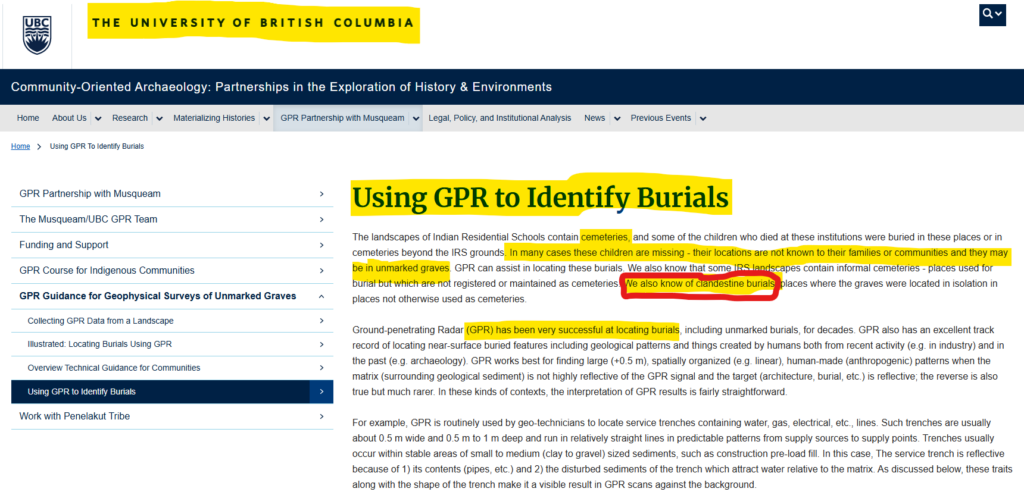
One of these “clandestine burials” referred to by UBC was reported by Andrew Martindale. This was a story that Martindale embellished from a deceased elder Monty Charlie. In a CBC podcast in 2022, Martindale first asserted that Charlie did not know how the child who was buried in a clandestine grave had died.
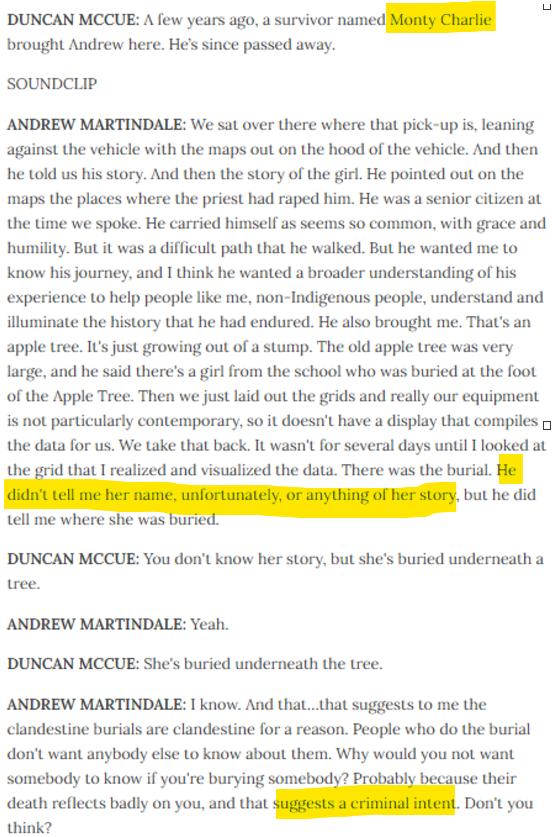
Then, on August 4, 2025, Andrew Martindale changed Monty Charlie’s story. This would not have been due to a revision from Charlie because he had died a number of years previously.
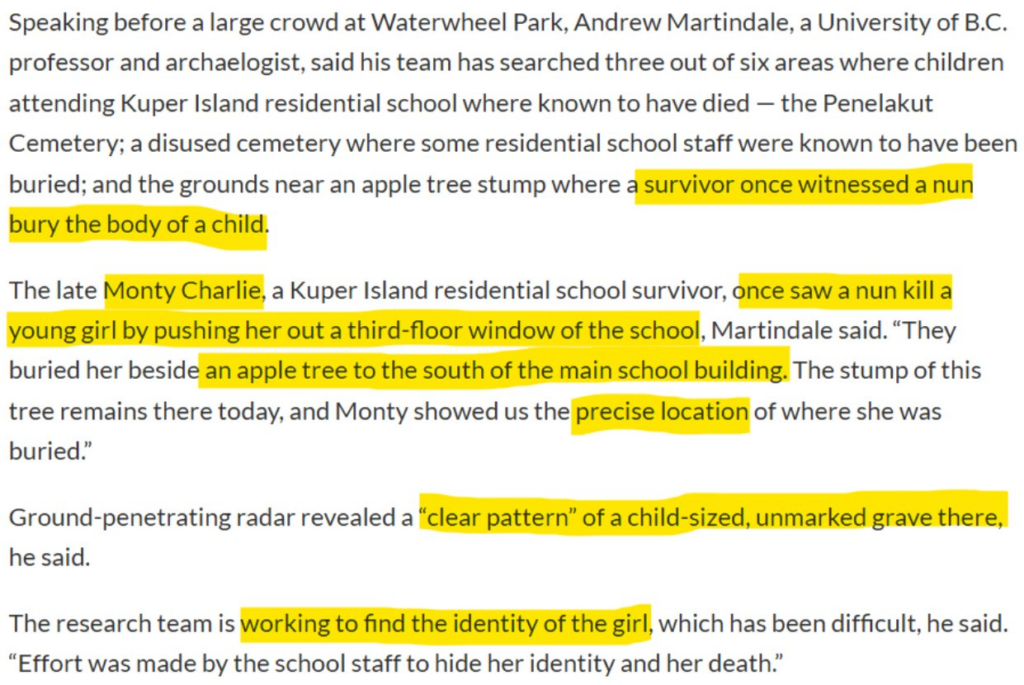
It should be noted that this story was also told by Kevin Annett in his film “Unrepentant: Kevin Annett and Canada’s Genocide” (at 25:00). The story comes from Bill Seward, who was reportedly a former Chief of the Nanaimo Indian Band, where he claims that his sister “Maggie” was murdered by a nun who pushed her out of a window at the Kuper Island Residential School. It should be noted that Nina Green has documented that Kevin Annett’s film “Unrepentant” is behind all the unsubstantiated “missing children” claims that emerged in the 2000s.
This testimony from Bill Seward is documented in Kevin Annett’s “Hidden From History: The Canadian Genocide”.
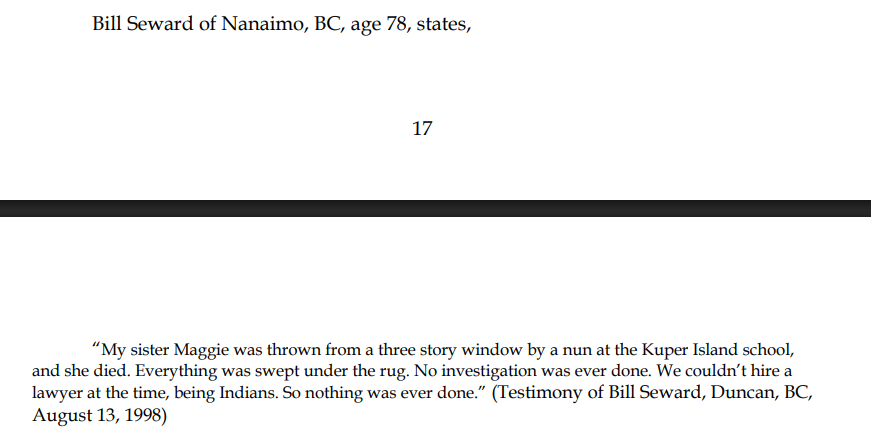
In looking at the NCTR Register for Kuper Island, Bill Seward’s sister “Maggie Seward” might have been Maggie Sayward, who died in 1931. What is needed is the death certificate of either “Maggie Seward” or “Maggie Sayward” to determine the cause of death.
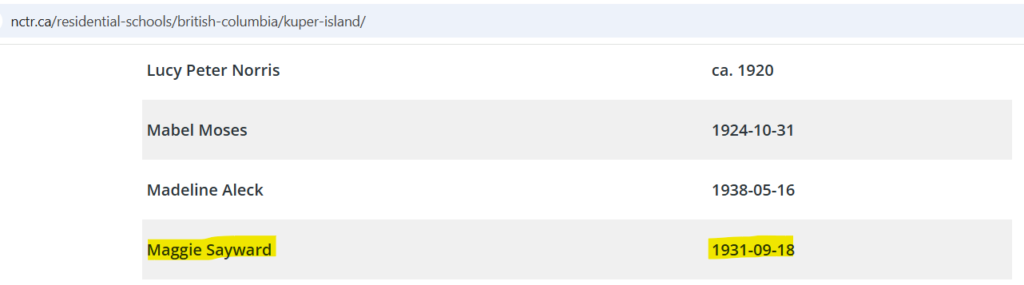
Nina Green has acquired the death record for “Maggie Seyward” who died in Nanaimo on the same date as “Maggie Sayward”, not Kuper Island, at the age of 16. Therefore, it is highly unlikely that Bill Seward’s claim is true.
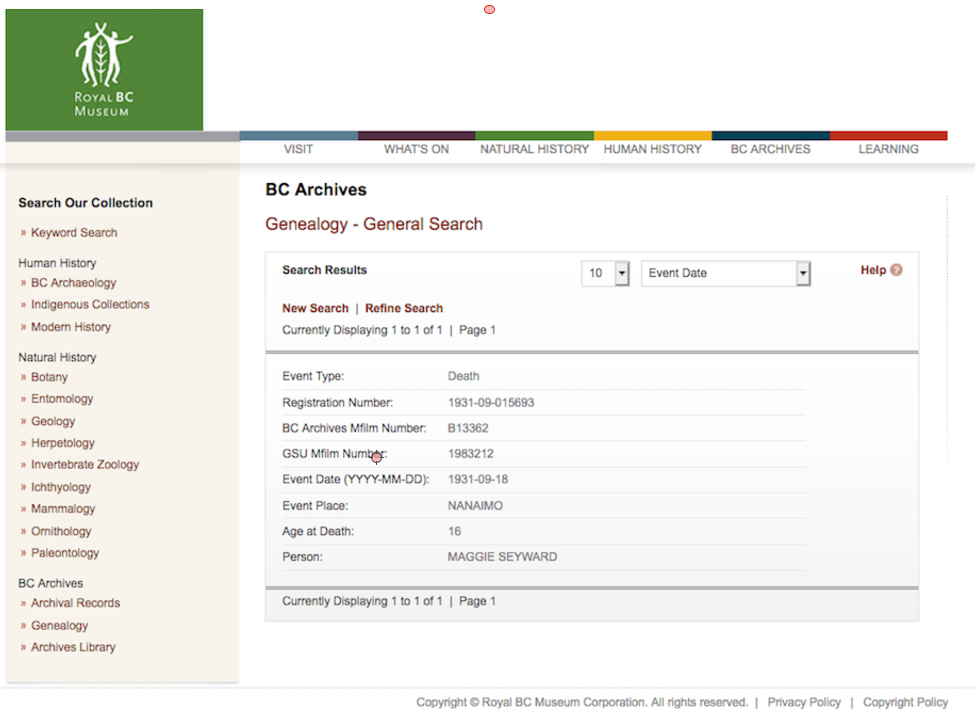
Another reason why Bill Seward’s account is questionable because he didn’t mention the murder of Maggie when he was interviewed for a documentary on Kuper Island, which aired in 1997. All he talked about was that he was prevented from speaking his language, and was deprived of food and had to kneel for long periods as punishment. So, in the space a a few years, perhaps because he was introduced to Kevin Annett, this new story about a murder was recounted.
This was also the story that Bill Seward told, apparently in 1996 (when he was 76) in a report about the Kamloops Indian Residential School. Again, in a report about residential school abuses, it is hard to understand why the murder of his sister would not have been mentioned.

Although Andrew Martindale’s embellishment of Monty Charlie’s story could have been the retelling of Bill Seward’s story, and Seward’s story is likely a false memory, isn’t Martindale, and by extension UBC, obligated to go to the RCMP and have this matter investigated? Shouldn’t the area by the tree stump be excavated, or DNA samples taken, so that the allegedly murderous nun can be brought to justice? Why isn’t the band excavating this small area if it believes it is a crime scene?
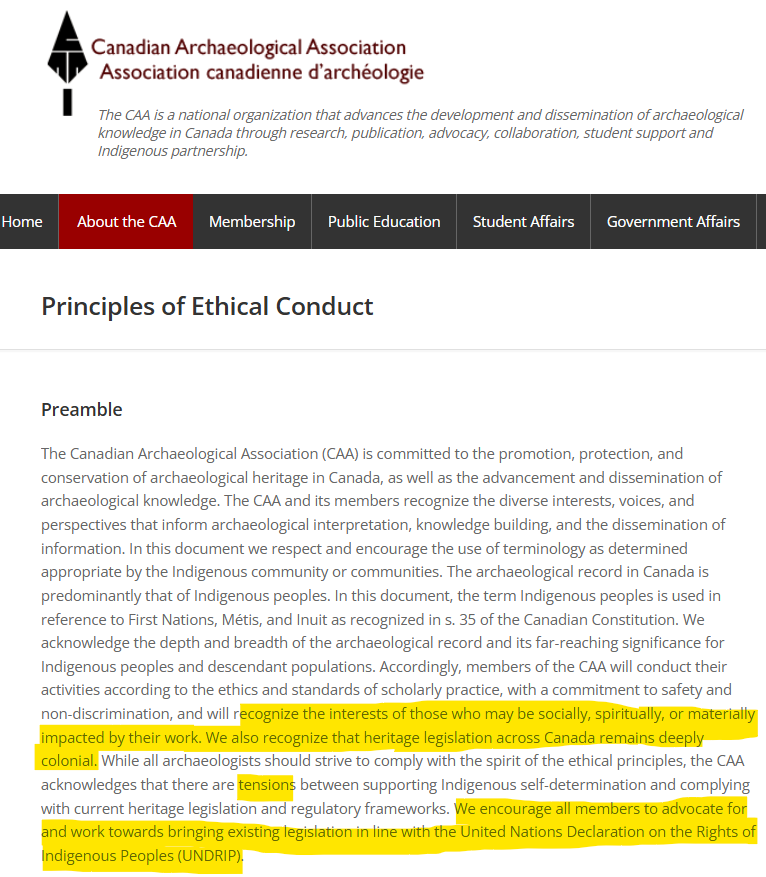
The actions of archaeologists with respect to the “grave error” deception are shocking when one considers that this discipline used to be the most scientific of all the social sciences. However, this is more understandable when one looks at the “Principles of Ethical Conduct” for Canadian archaeologists. These principles talk about the need to “respectfully balance” developing and disseminating knowledge with the “perspectives and interpretations that Indigenous peoples have about the past”.
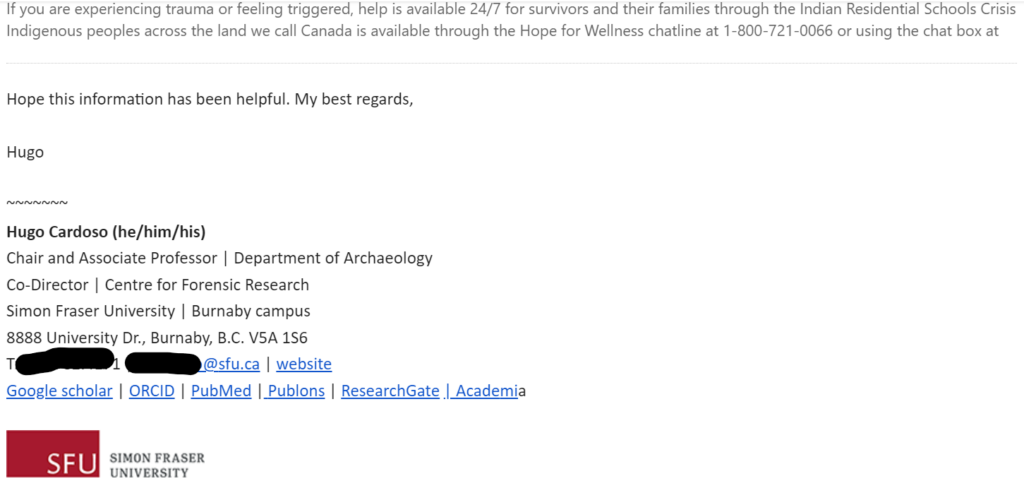
It was this deference to “respectful balance” that has resulted in the Simon Fraser University archaeology department not being able to discuss the Kamloops case. Initially, communication was occurring on July 27, 2021, when the chair of the department, Hugo Cardoso, sent the following email to Nina Green in response to her inquiries.
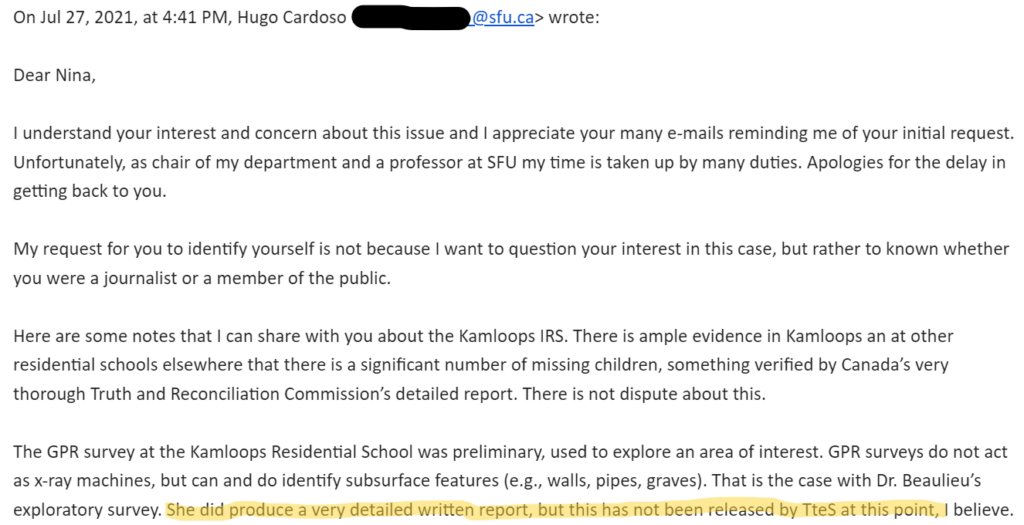
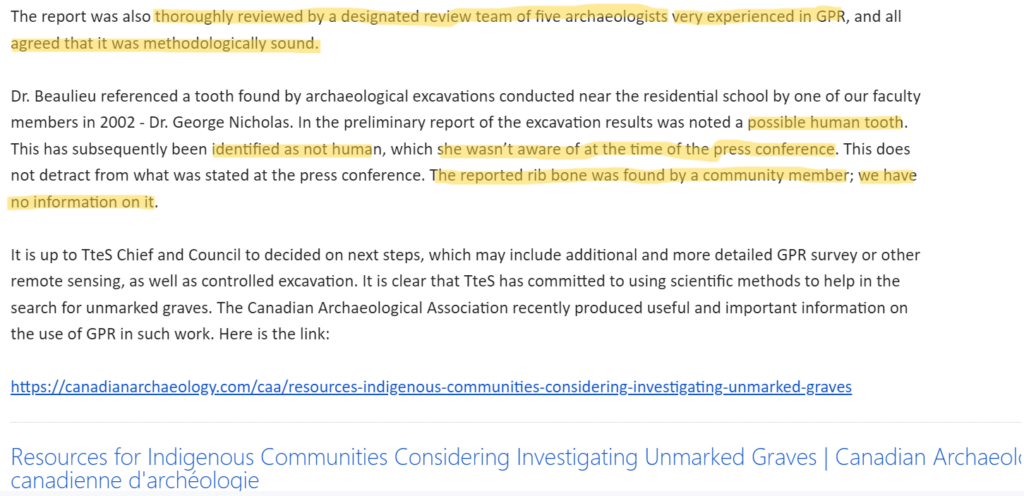
The next day, Green received another email, this time from SFU archaeologist George Nicholas. Nicholas told Green that “the [Kamloops Indian Band] legal team” had “strongly advised” the archaeology department “not to respond to any queries from the public regarding the search for unmarked graves in Kamloops”.
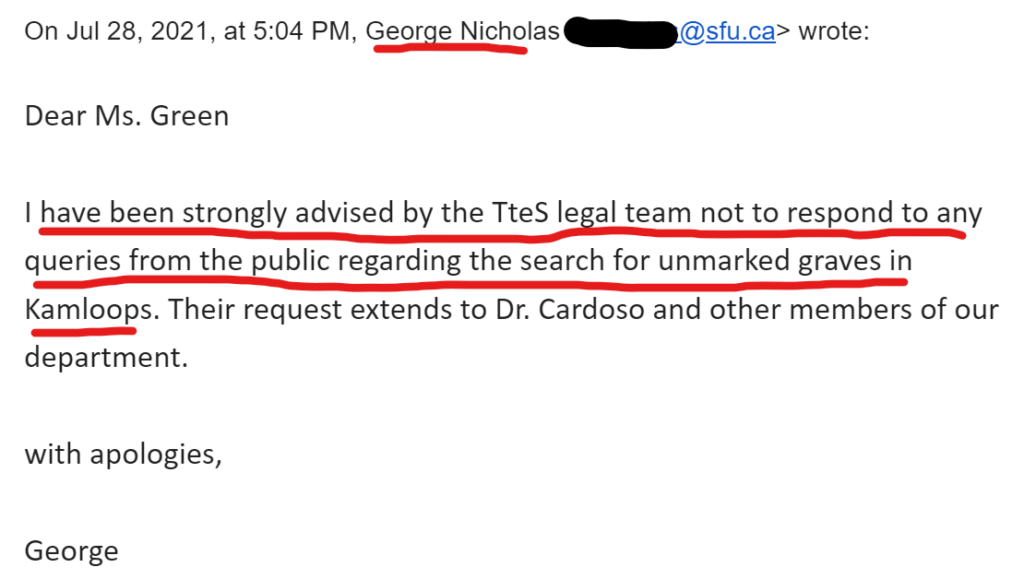
Because archaeologists have become activists and are no longer objective in their research pertaining to the “unmarked graves”, they have acted to legitimize the deception that has been occurring for almost five years. As we have seen with these three posts about UBC, its Department of Anthropology, and the activist archaeology associated with it, has made advocacy elements like that Indian Residential School History and Dialogue Centre and the First Nations House of Learning confident the the “remains of 215 children” have been “confirmed” at Kamloops.
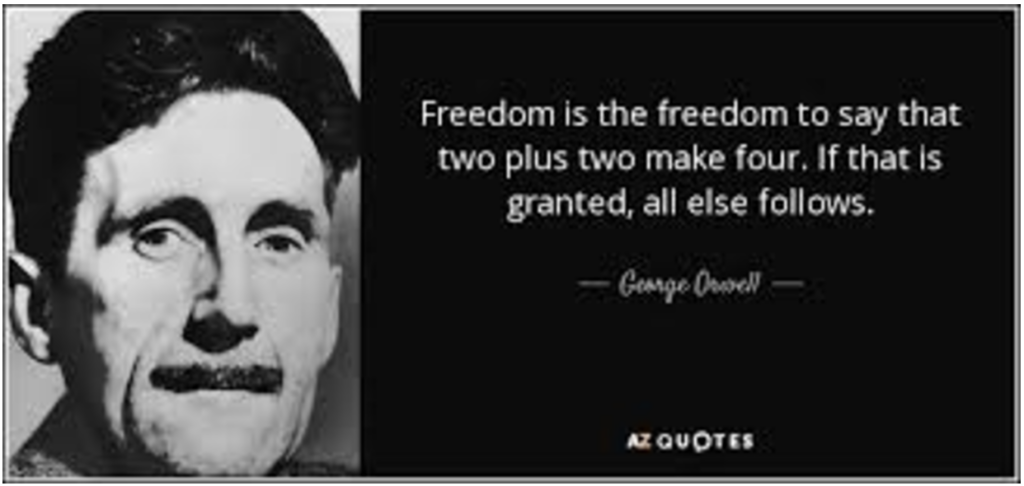
We MUST have the truth about Kamloops. Two plus two make four and the remains of 215 children have NOT been confirmed at the former Kamloops Indian Residential School. If we are not free to believe true things all is lost because we will no longer be living in a democratic society.

![UBC’s First Nations House of Learning [Coddling]](https://wokeacademy.info/wp-content/uploads/2026/01/first-nations-house-of-learning-150x150.png)
Well done Frances. Keep up the great work, you truly are a honey badger, courageous and always looking for TRUTH, using reason and logic instead of the inverted reality of the Woke parasitic mind virus that has affected so many in this article.