On the fifth Annual “National Day for Truth and Reconciliation”, Grande Prairie St. John Paul II teacher Amy Davidson reposted a comment by Maxime Bernier with the words “Hear, hear!” In the post, Bernier asserts that “no bodies were found in Kamloops” and “the residential-school ‘genocide’ claim is a hoax”.
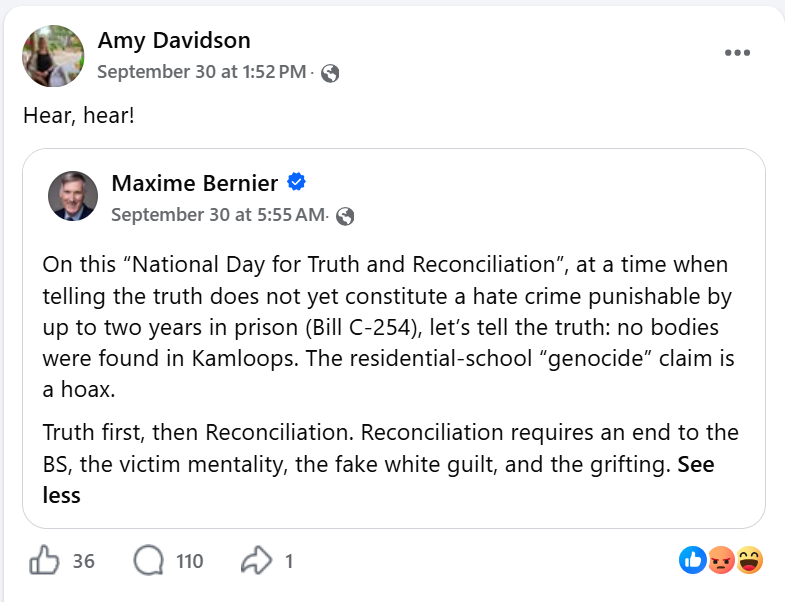
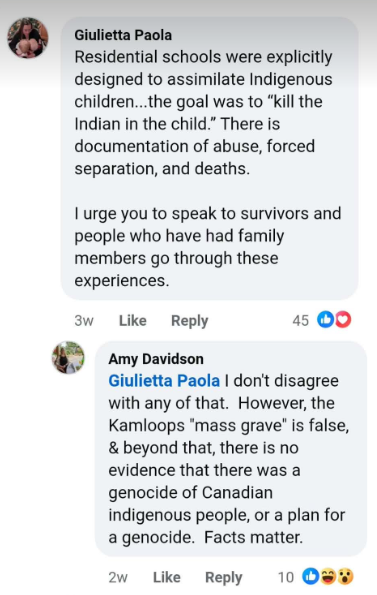
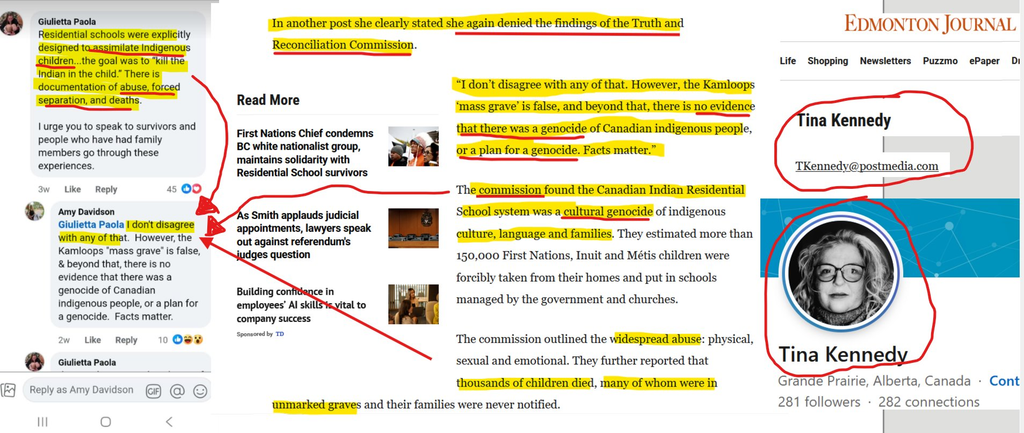
This led to an exchange with Facebook user Giulietta Paola, who asserted that assimilation, abuse, forced separation and deaths occurred in the residential schools. Davidson replied that she wasn’t disagreeing with this. Her concern was about the fact that there was no “mass grave” at Kamloops and no evidence of genocide.
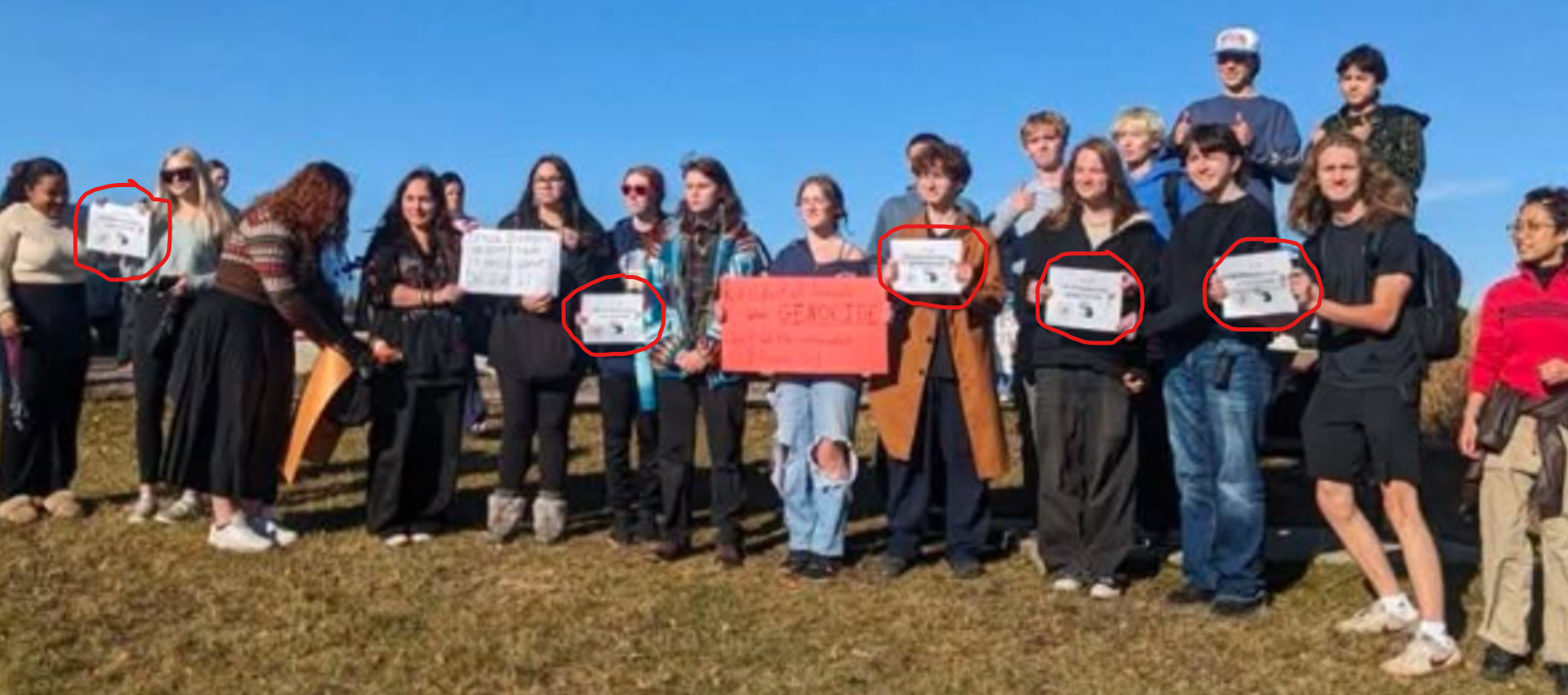
On October 13, a piece about a student protest that was occurring in response to Davidson’s posts was written by Tanner Smith in EverythingGP. An email was sent to the newsoom asserting that the protest was in response to “online comments by a teacher within the district denying residential schools and their harm”. Davidson had never “den[ied] residential schools and their harm”.
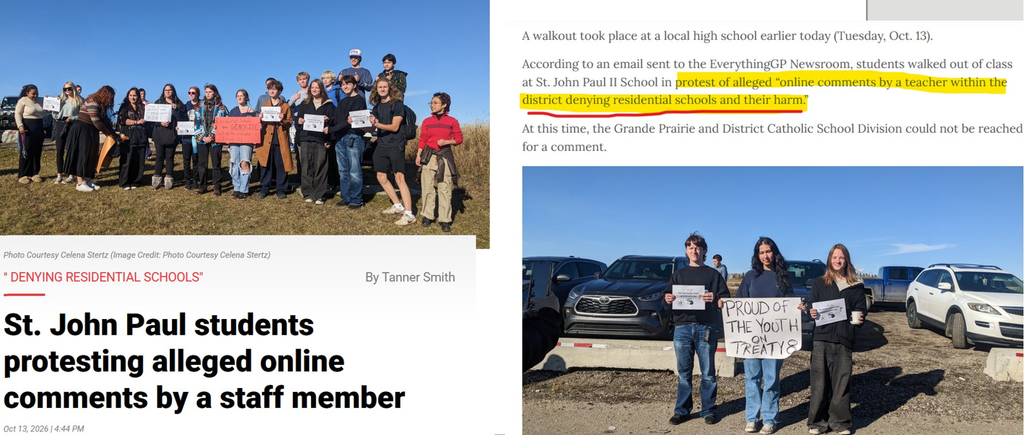
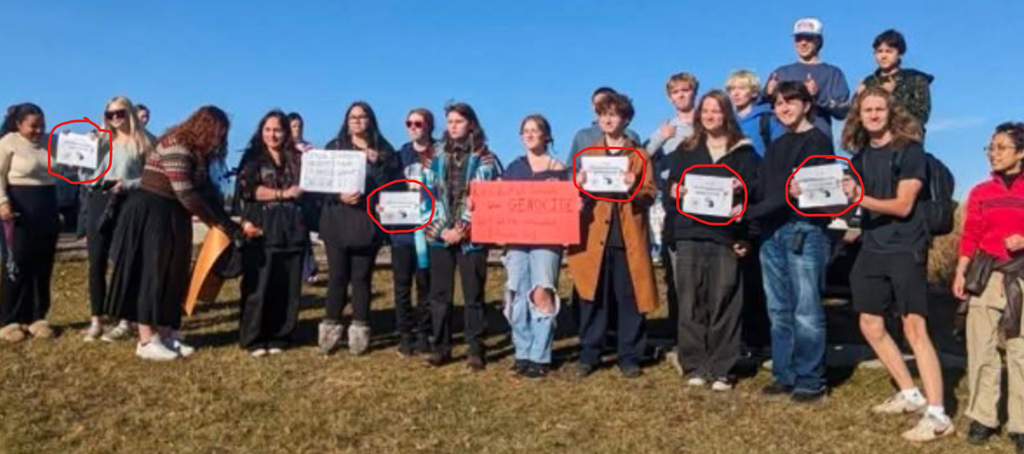
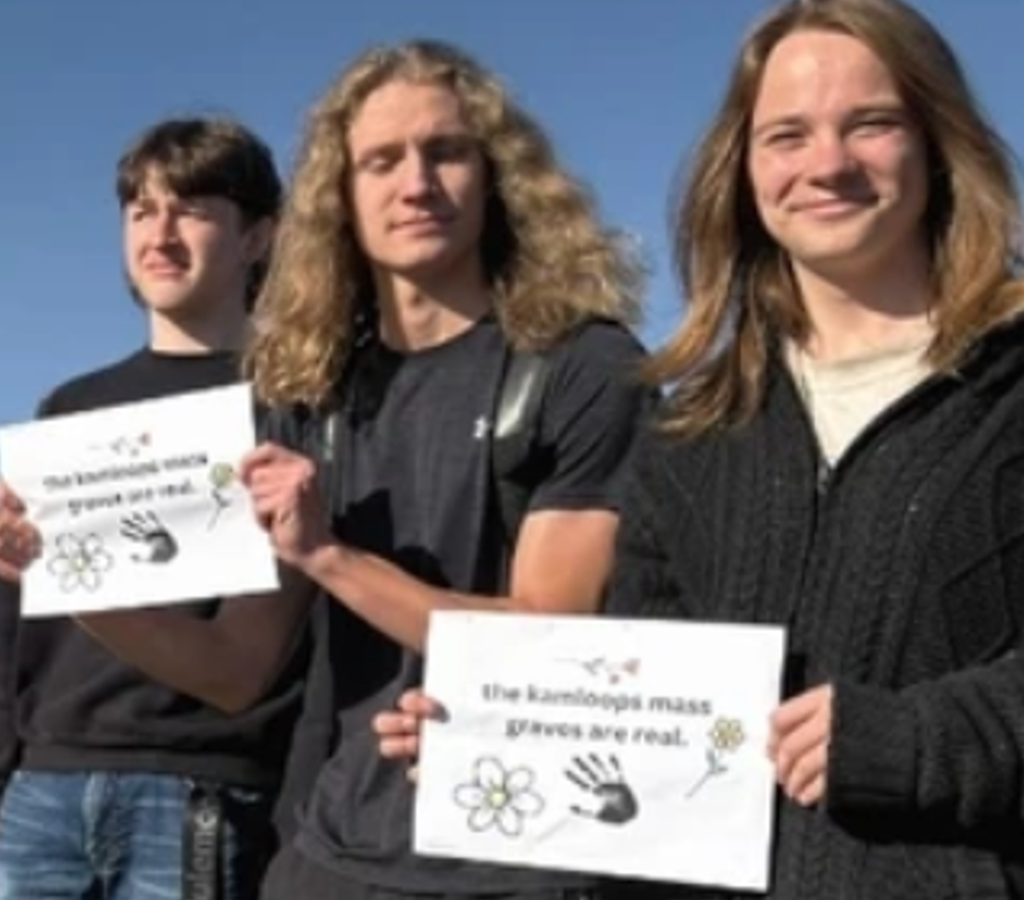
At this protest, five students held up a sign asserting that “The Kamloops mass graves are real”.
On October 17, 2026, Tina Kennedy, a journalist from the Edmonton Journal wrote a story on the student protest.
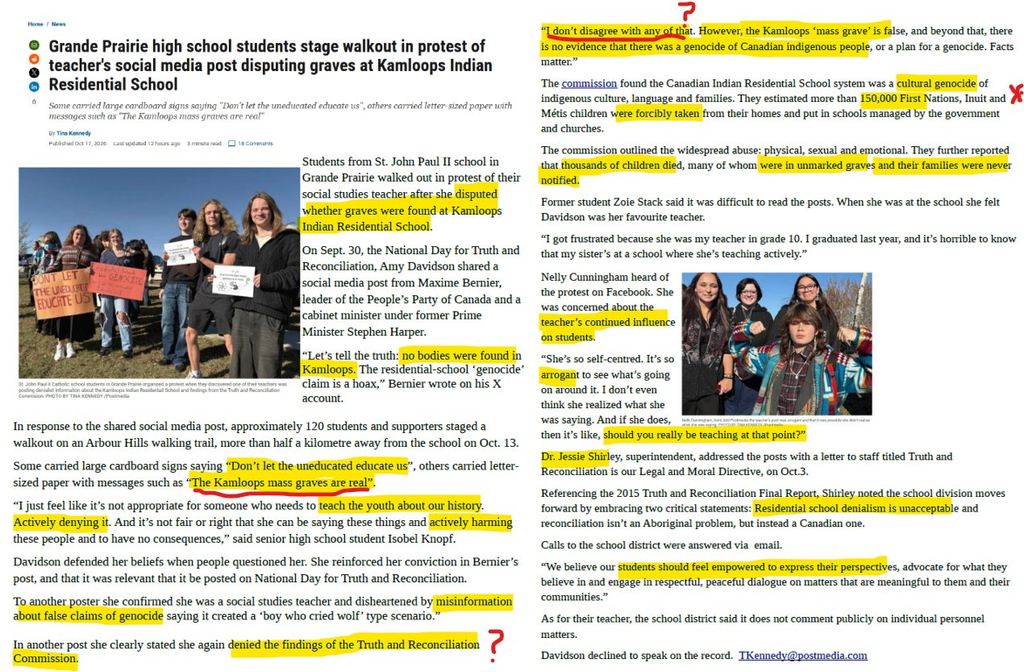
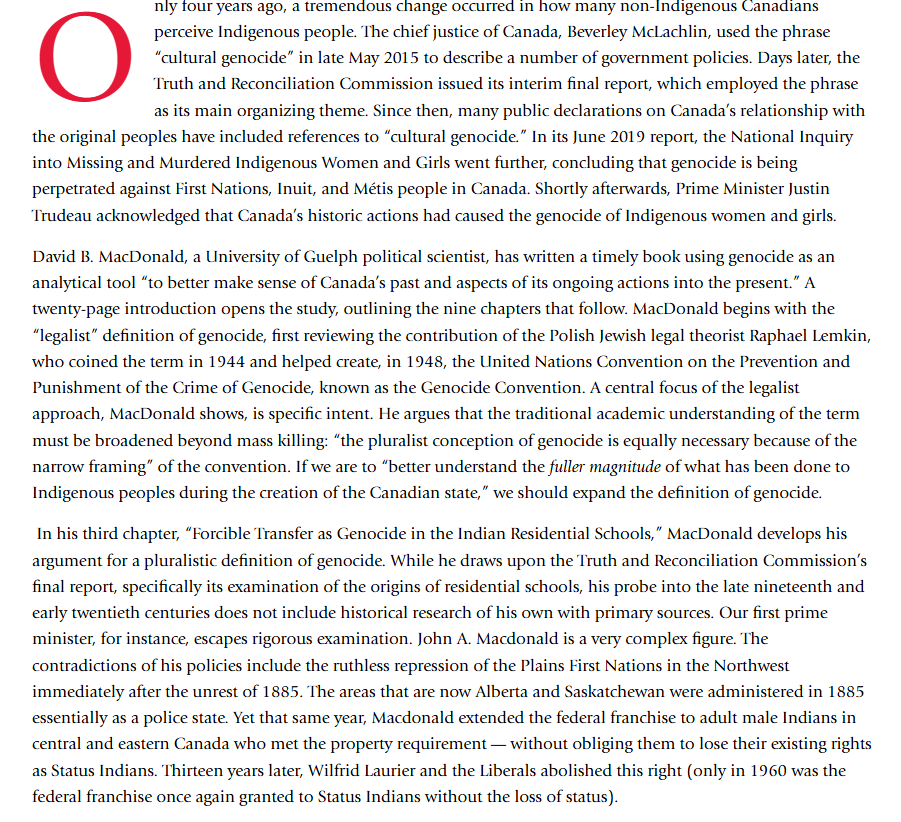
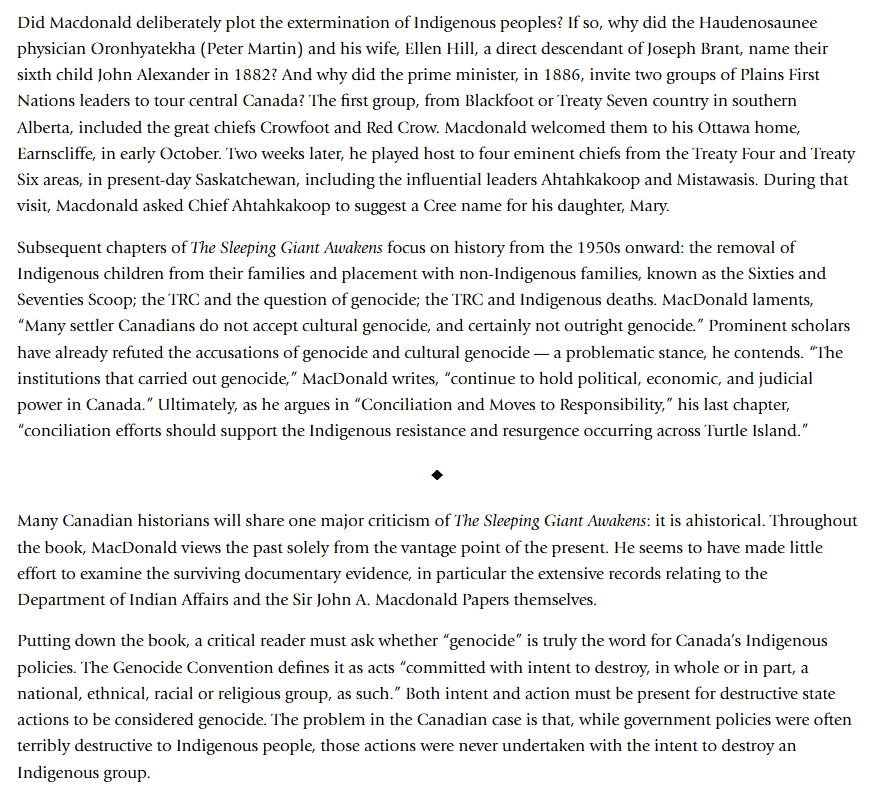
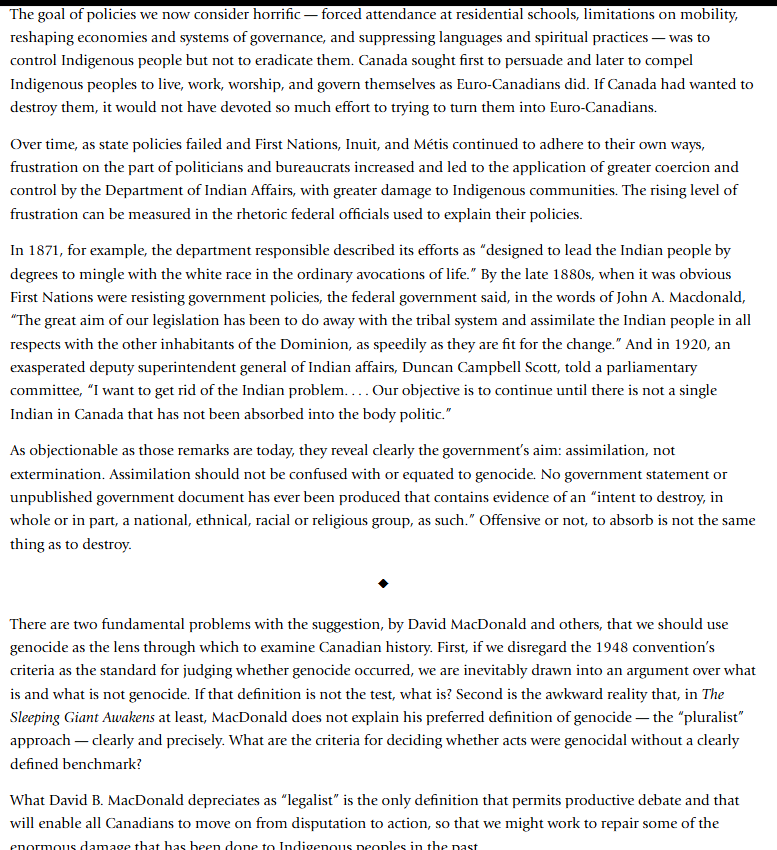
Tina Kennedy’s article misrepresented Davidson’s comments. Davidson did not “[deny] the findings of the Truth and Reconciliation Commission”. In fact, she was agreeing with the TRC about assimilation, abuse, forced segregation and deaths. The TRC also did not find that “genocide” had occurred. Instead, it referred to “cultural genocide” or what others call assimilation.
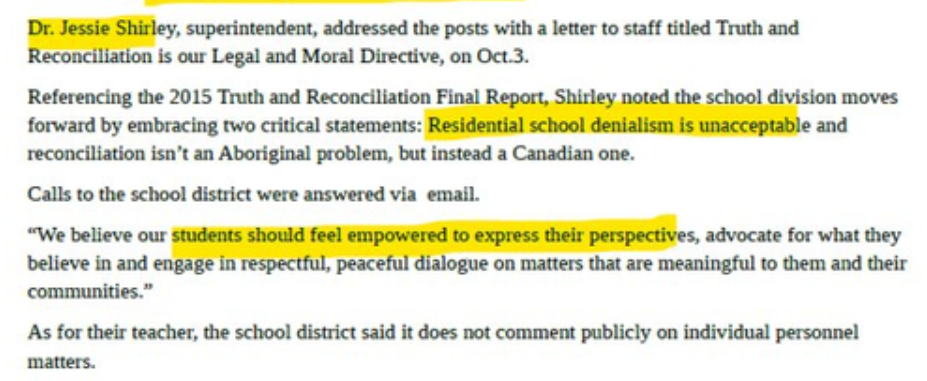
The Superintendent of the district in Grande Prairie, Dr. Jessie Shirley, sent out a letter to staff on October 3 entitled “Truth and Reconciliation is our Legal and Moral Directive”. This said that “residential school denialism is unacceptable” and “reconciliation isn’t an Aboriginal problem, but instead a Canadian one”. She went on to state that “students should be empowered to express their perspectives”. No where did Shirley make any attempt to define “residential school denialism” or address the falsehood accepted by the students that “The Kamloops mass graves are real”.
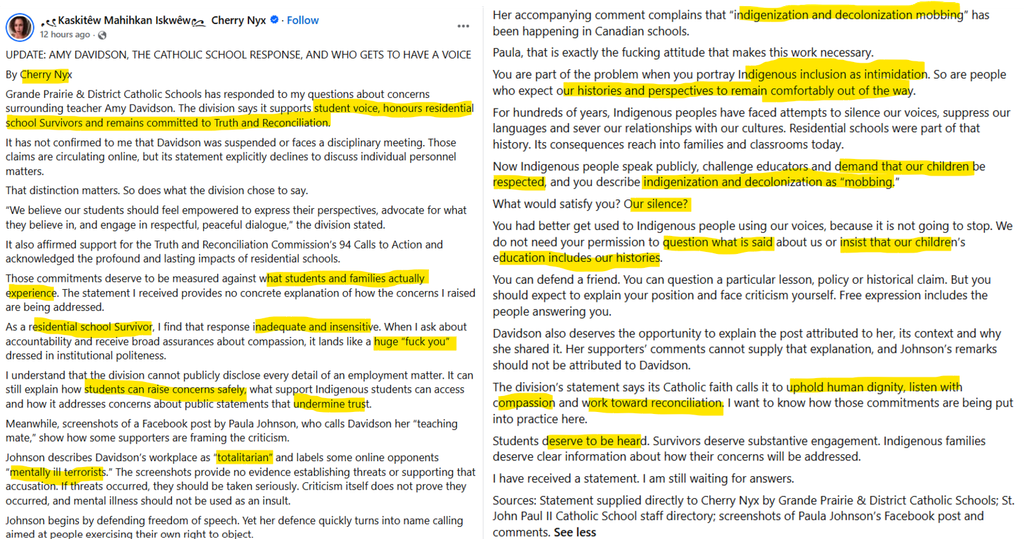
The kinds of complaints that Superintendent Shirley received are exemplified by the post below.
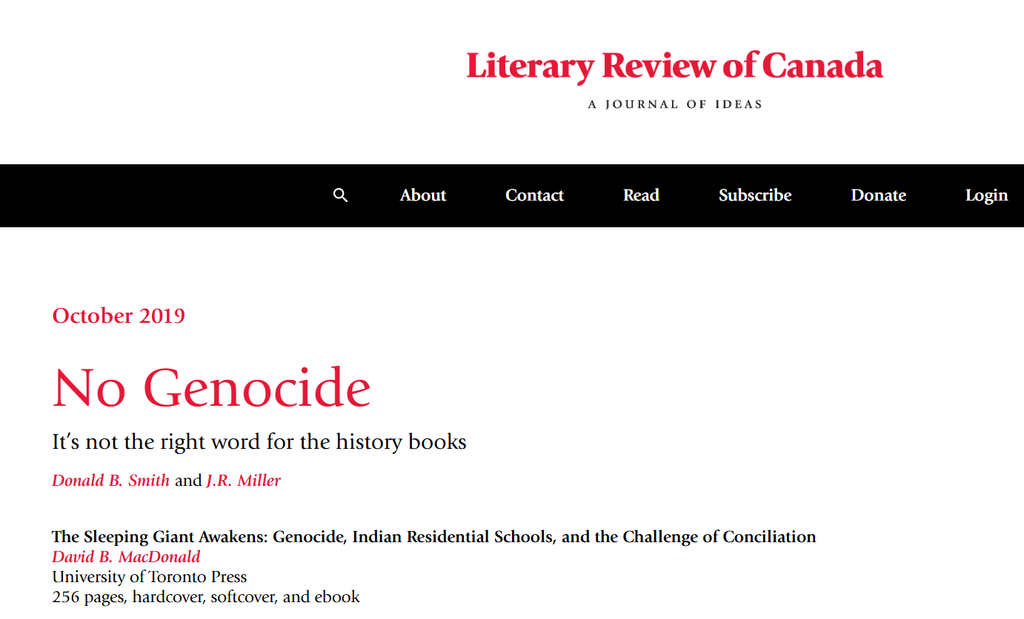
In terms of Davidson’s comments about “genocide”, it is important to point out that two of the most prominent historians on the residential schools – Donald B. Smith and J.R. Miller – have argued that the residential schools were not genocidal. This is a matter of contentious political and academic debate, but accusations of “residential school denialism” have prevented this from unfolding.