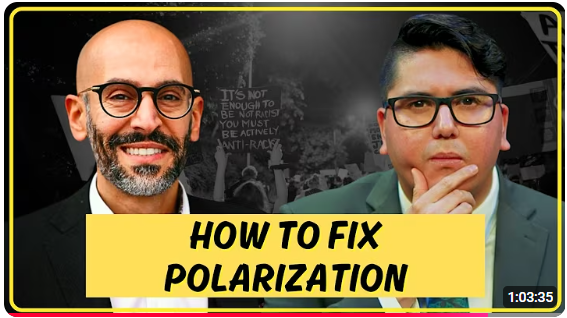
On February 17, 2026, Aaron Pete, Chief of the Hope Band, interviewed Marten Youssef, Associate Vice President at the University of British Columbia and the leader behind UBC Debates.
Frances Widdowson was very interested in this interview because she has great admiration for Pete as a good faith aboriginal leader, who is interested in pursuing the truth about the “unmarked graves” claims. Widdowson had a great interview with Pete herself.
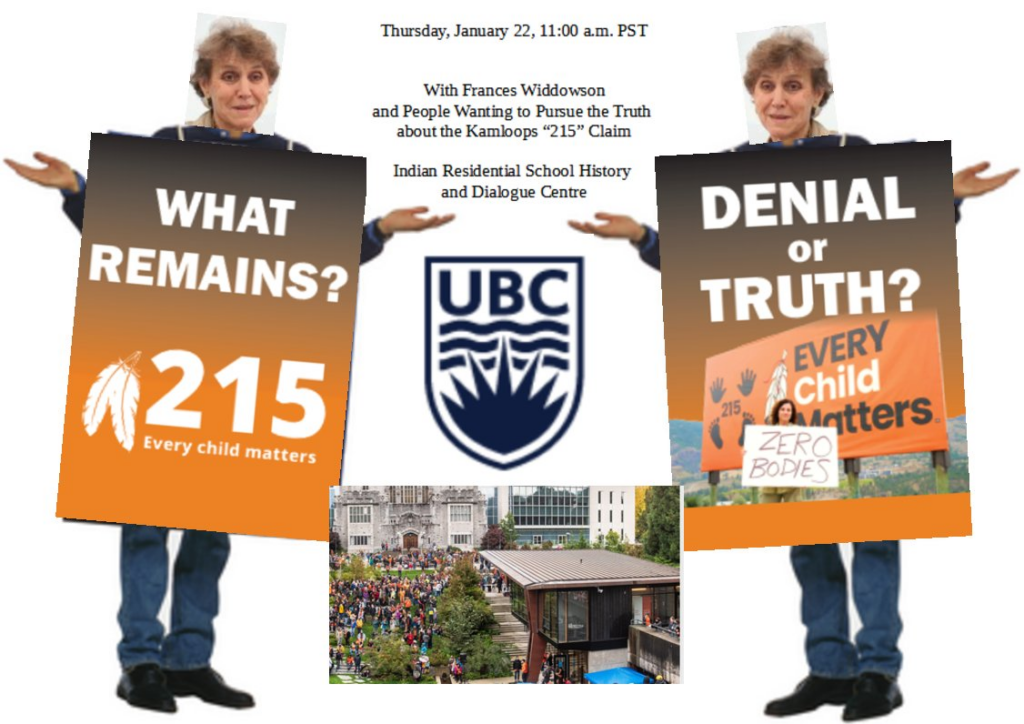
In the interview about UBC’s debates, Youssef and Pete discussed the riot that occurred at UBC on January 22, when Frances Widdowson was trying to discuss the question “Have the remains of 215 children” been “confirmed” at the former Kamloops Indian Residential School. Widdowson was met by a violent mob, but the police arrested her for “trespassing” and being a “nuisance” simply for trying to discuss these questions.
In this discussion, Youssef first asserted that it was important for university administrators to adopt the principle of “neutrality”. The “campus is a forum for free inquiry and not itself an arbiter of what truth is”, according to Youssef.
Then, Aaron Pete asked Youssef about Widdowson being mobbed and arrested at UBC. Youssef stated that Widdowson was engaged in a “protest” at UBC, and the reason why the violence occurred because there was a “lack of a mechanism” to discuss this claim. Youssef said that there should be civil debate on this issue, and that the university should play a role in facilitating it.
Pete then asked about the fact that the reason why Widdowson was engaged in this “protest” was because universities would not let her in to present her arguments in a formal setting. Pete pointed to the fact that people like Widdowson have suffered ostracism because their approach is perceived as being “too brash”, and he asked how people who started the conversation but had sticks and stones thrown at them should be responded to. Youssef avoided the question, and said that universities “had a responsibility to model civil discourse”. He talked about the problem of one person “yelling” at people on campus, implying that Widdowson had engaged in this behaviour. He said that universities could be “course corrected” by the faculty and students and researchers “who care deeply about a university in seeking the truth”.
Pete then asked how participants were selected for the debates. He pointed out that Widdowson had done a great deal of research on Indigenization, and this had resulted in her being pushed out of Mount Royal University. Again, Youssef never really addressed Widdowson’s ostracism. There is a “duty of listening” that comes with freedom of speech, Youssef asserts. Is Youssef suggesting that Widdowson was not listening?
Pete asks Youssef whether the university would avoid having certain people present information at a debate, even if the content were good. Youssef said it would not, but, in the case of “indigenous issues”, he would ask Aaron Pete to present because he was nuanced. The university was not “after provocation for the sake of provocation”. Is Youssef implying that this is what Widdowson was doing at UBC?
Pete also asked about the pursuit of truth at universities, and whether this was a key piece of the debates. At 2:42, Youssef states the following: “I don’t think the place of having debate again is to just pursue the topic that the sort of key individuals are sort of pushing. I think, for example, you talked about the 215 graves. In my view I think the bigger issue that’s more important to have is reconciliation. Have we gotten reconciliation right as a country? Are we doing the right things?” Here Youssef is getting to the heart of the matter: the university wil not officially discuss the “215 graves” because he claims that there are more important issues to discuss. What could be more important than countering the anti-intellectualism that happened on January 22 and UBC?
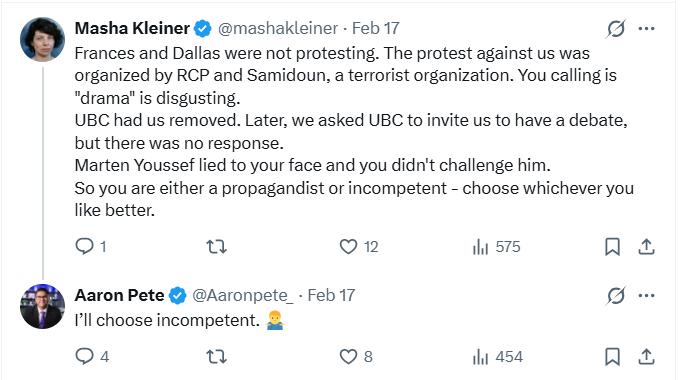
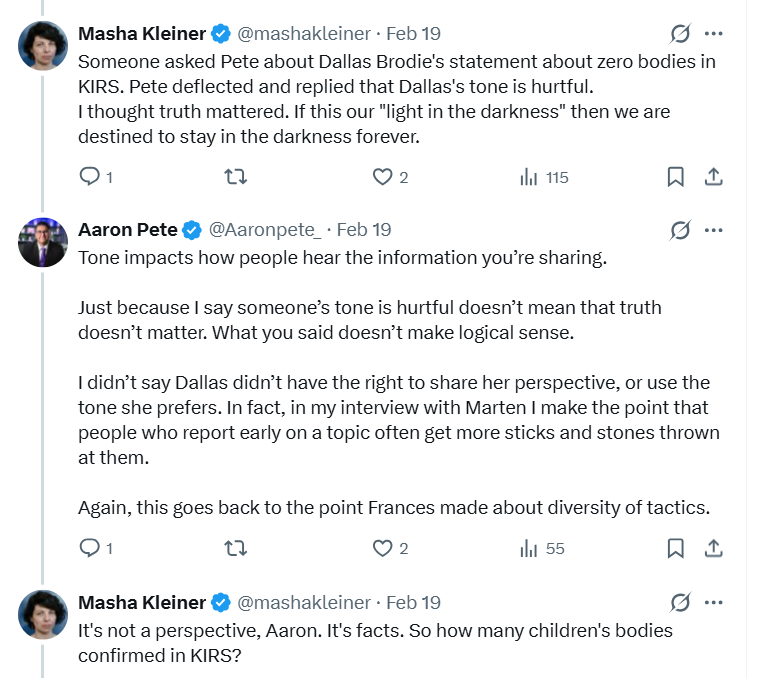
After giving this interview, Pete was criticized by Masha Kleiner and Wyatt Claypool, both staff members of OneBC’s Dallas Brodie.
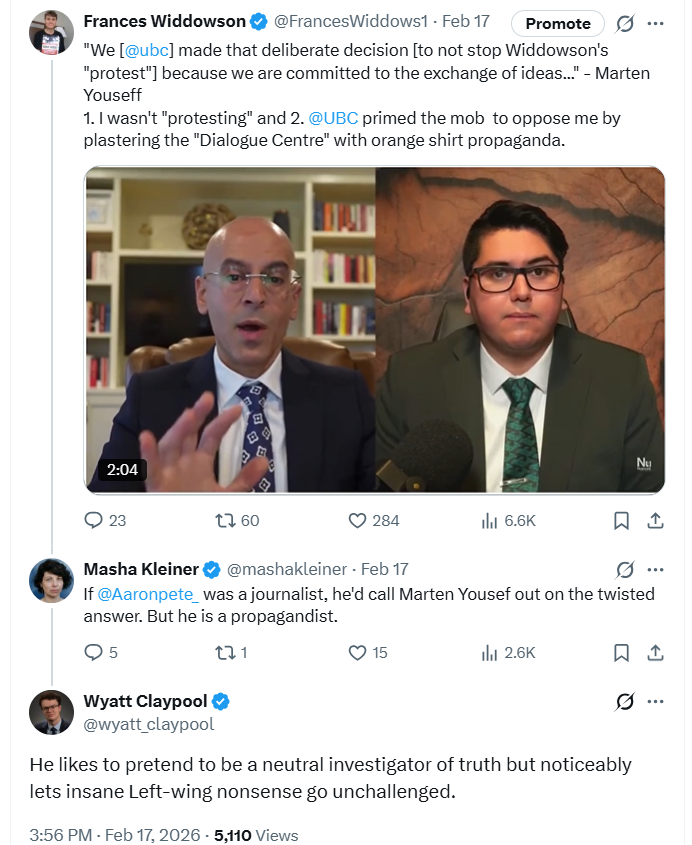
Kleiner was also critical of Pete’s comments on the “Vancolour” podcast a few months before, where he stated that it was hurtful for Brodie to be holding up a sign with “zero bodies” in front of the Penticton Indian Band’s sign about the “215”.
In addition to these criticisms, Youssef still needs to be taken to task for his comments on “neutrality” at UBC. As is seen from the clip below, UBC fomented the mob by plastering its “History and Dialogue Centre” with orange shirts and Orwellian slogans.
This rejection of the principle of neutrality in Indian Residential School History and Dialogue Centre has been present since its inception.
UBC also has not been netural because of its statements that the remains of 215 children were confirmed. It has an obligation to correct the record, and not avoid the issue as Youssef has suggested.
UBC’s First Nations House of Learning is also another advocacy element that undermines administrative neutrality at this institution. All of these advocacy entities should be defunded because they obstruct the academic mission of the university.
The failure for UBC to hold a debate on the “unmarked graves” claim resulted in Dallas Brodie demanding accountability from UBC. So far, this demand has been ignored.