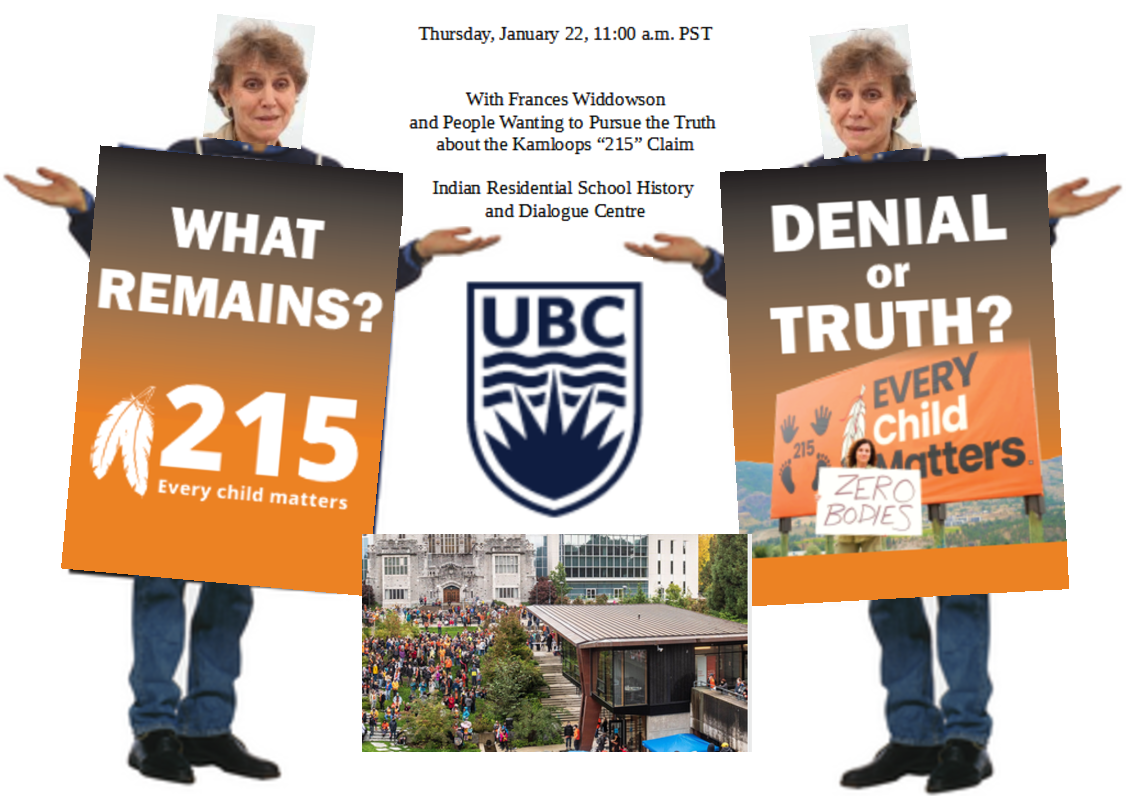
On December 16, 2025, Tom Flanagan discussed Frances Widdowson’s upcoming visit to the University of British Columbia. He described Widdowson as the “sharp end of the spear”.
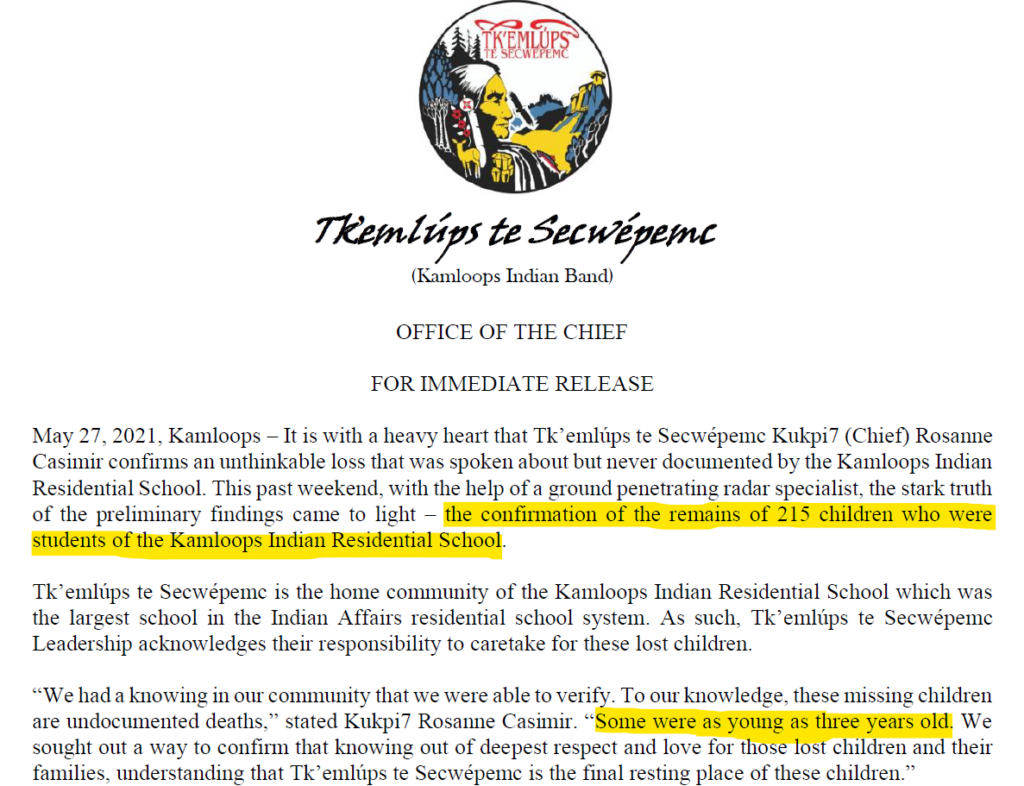
This is a very apt description, as the University of British Columbia is where it is likely that we will finally have a reckoning on the false claim of the Kamloops Indian Band on May 27, 2021 that the “remains of 215 children” had been “confirmed”, and that “some [of these children] were as young as three years old”. This announcement was not about “potential graves”, as many have argued recently.
UBC is an important institution to have this reckoning because it is one of the most prestigious universities in Canada, but has been one of the worst offenders in perpetrating the “grave error” at Kamloops. There are three main culprits in the perpetration: 1) the First Nations House of Learning; 2) the Residential School History and Dialogue Centre; and 3) the areas of archaeology and anthropology.
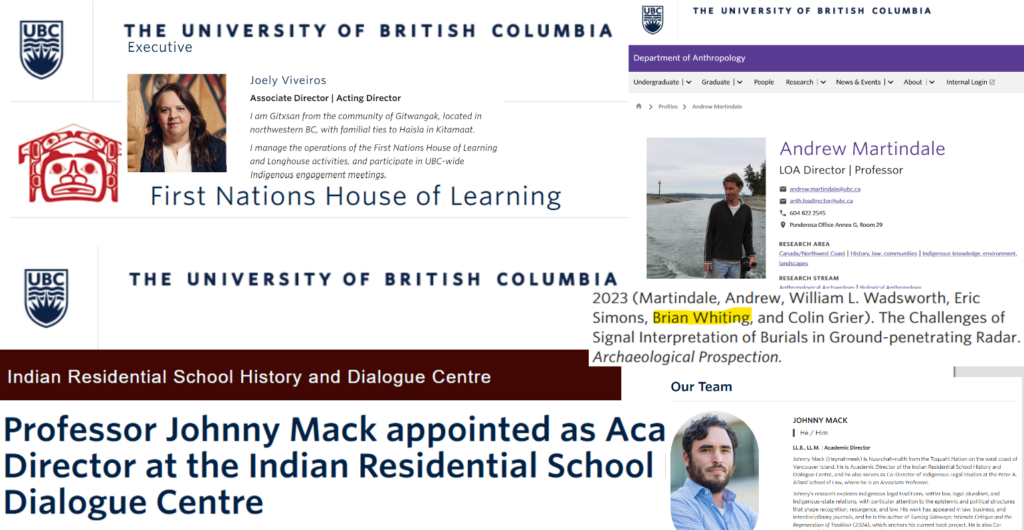
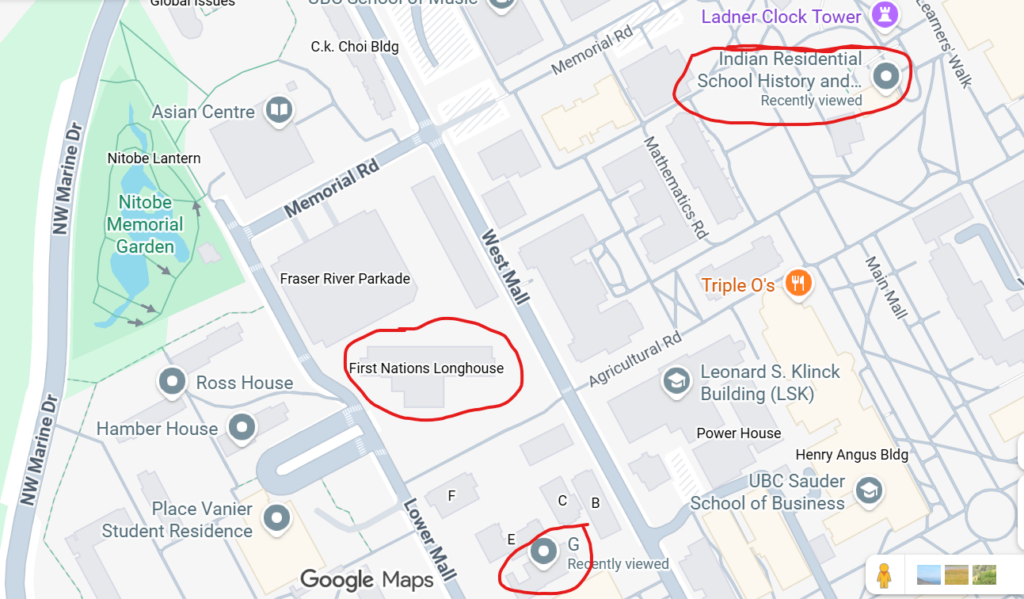
- The First Nations House of Learning
UBC’s First Nations House of Learning is headed by Joely Viveiros. Widdowson has done a video previously about her.
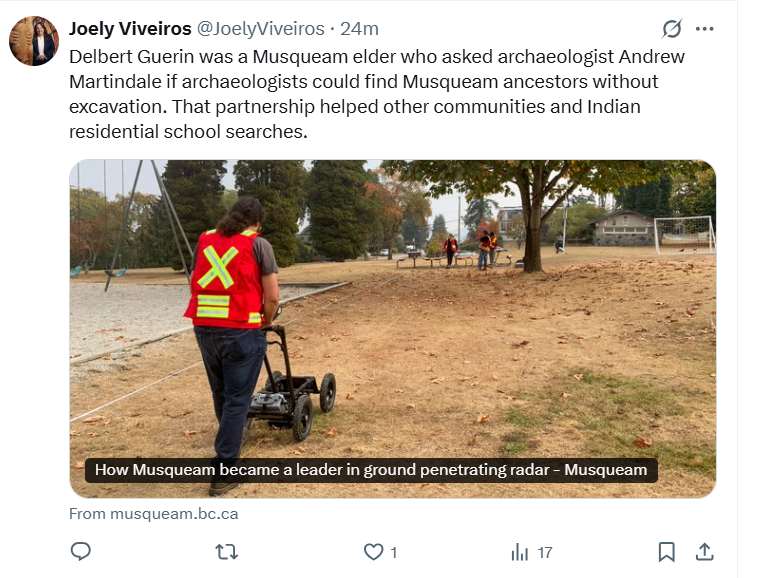
The video discussed a post Widdowson developed about Viveiros. In her examination of Viveiros’ Tweets, it was found that she based her claims about GPR confirming remains on the assertions of UBC professor Andrew Martindale.
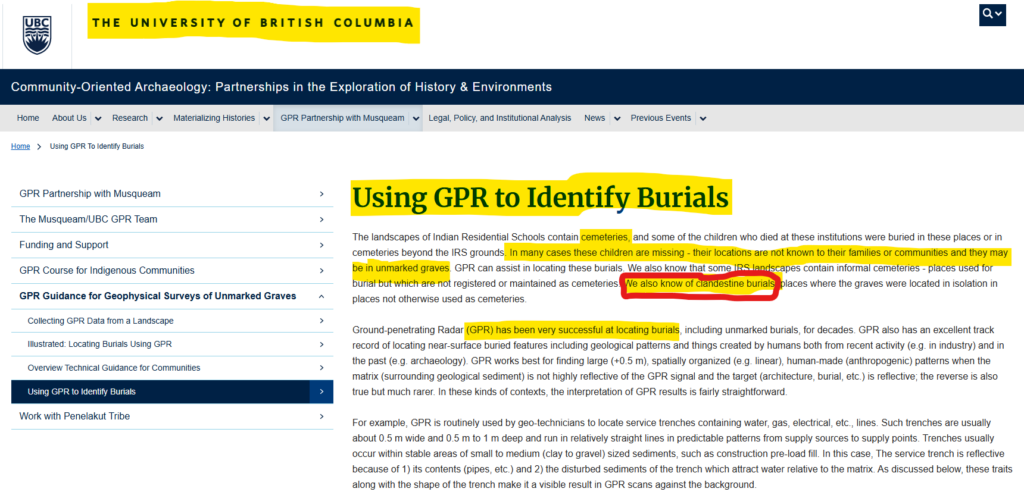
This understanding is also available on UBC’s website, which has a post about “Using GPR to Identify Burials”.
2. The Indian Residential School History and Dialogue Centre
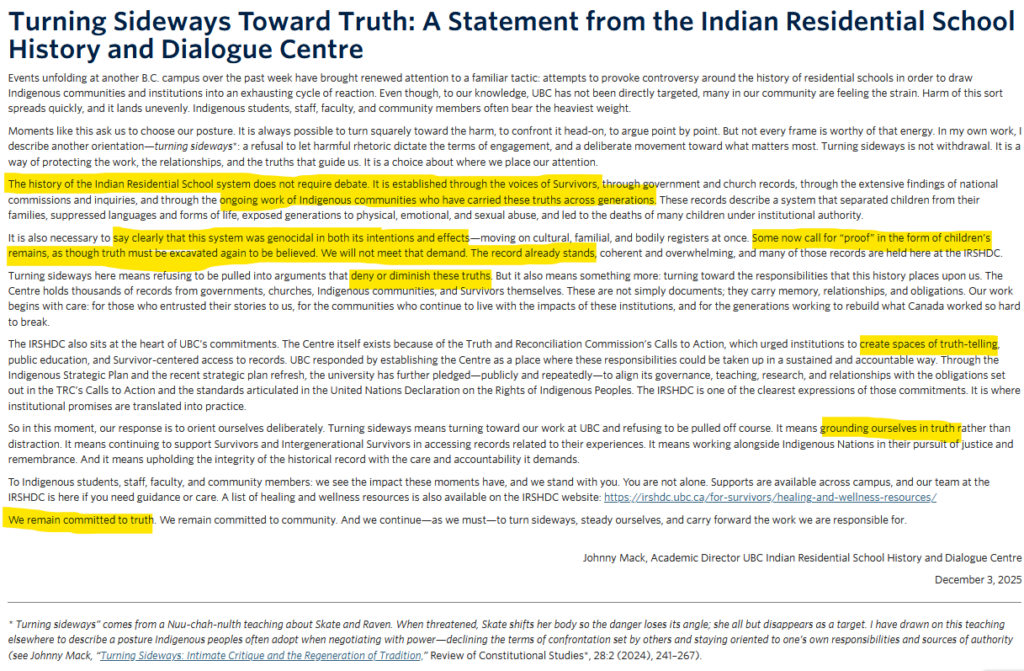
The Centre is run by Johnny Mack, a law professor at UBC. Mack responded to the December 2, 2025 University of Victoria meltdown withe the comment that “The history of the Indian Residential School system does not require debate” – a strange comment from someone who is supposedly an “Academic Director” at a university.
3. Archaeological and anthropological research at the University of British Columbia
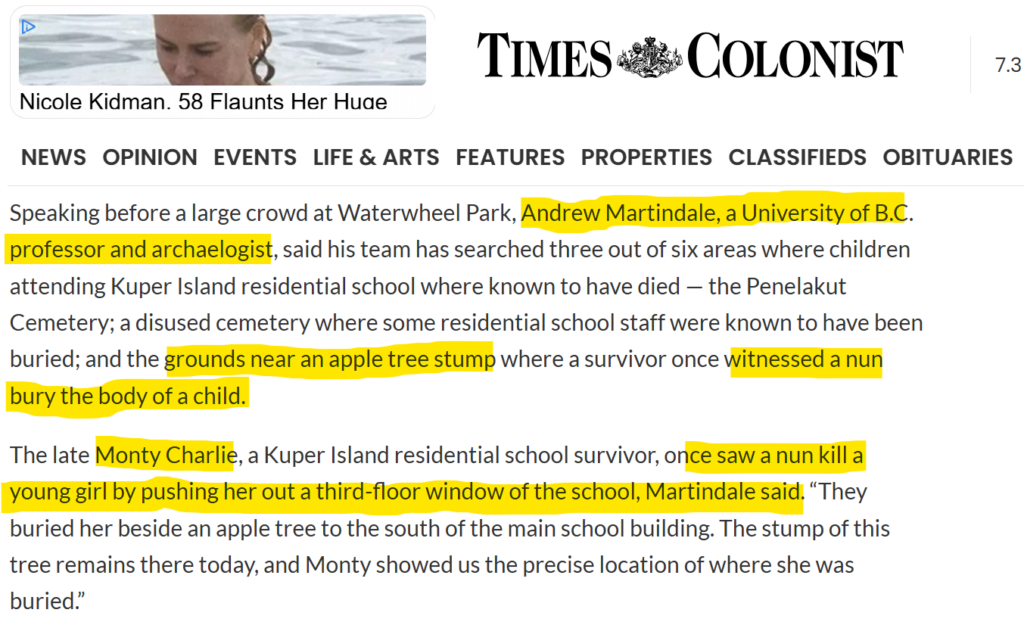
These areas seem to have been ideologically captured with respect to research about the “unmarked graves” claims. Andrew Martindale, an archaeologist who is a professor in the department of anthropology, recently has become known for his work on Kuper Island.
Martindale is also notable because he appears to have embellished a story of elder Monty Charlie’s, that a child was buried next to a stump. In a CBC podcast in 2022, Martindale first asserted that Charlie did not know how the child died.
Then, on August 4, 2025, Andrew Martindale told the journalist Michael John Lo that Monty Charlie had recounted a different story (Charlie could not have changed his story because he had died before the CBC broadcast three years earlier). He maintained that Charlie had said he “saw a nun kill a young girl by pushing her out of a third-floor window of the school” and then bury her.
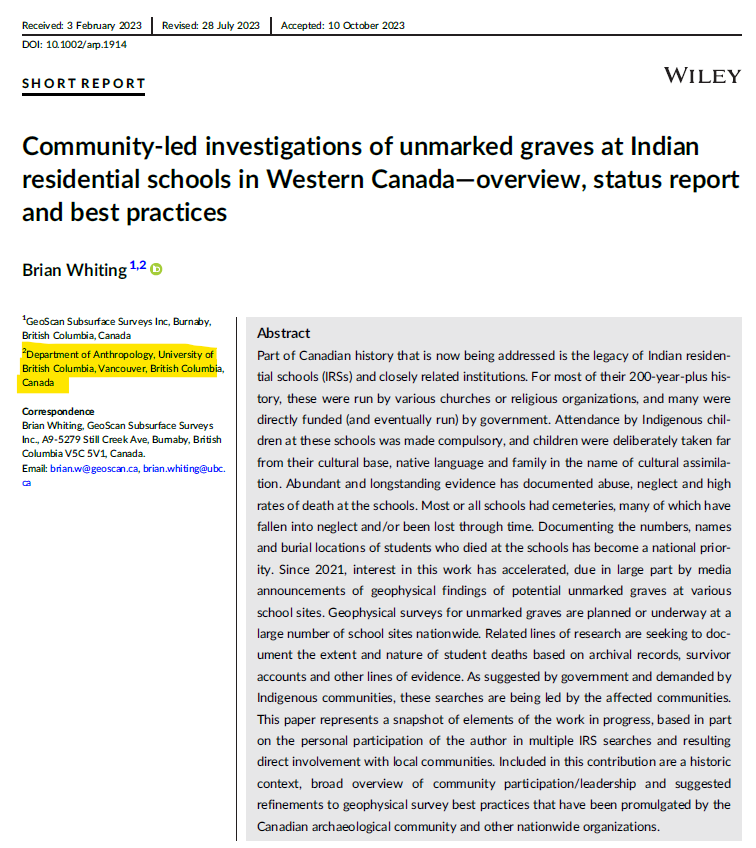
An associate of Martindale’s is Brian Whiting. Whiting wrote a peer-reviewed article, where he noted that he is associated with the Department of Anthropology, University of British Columbia.
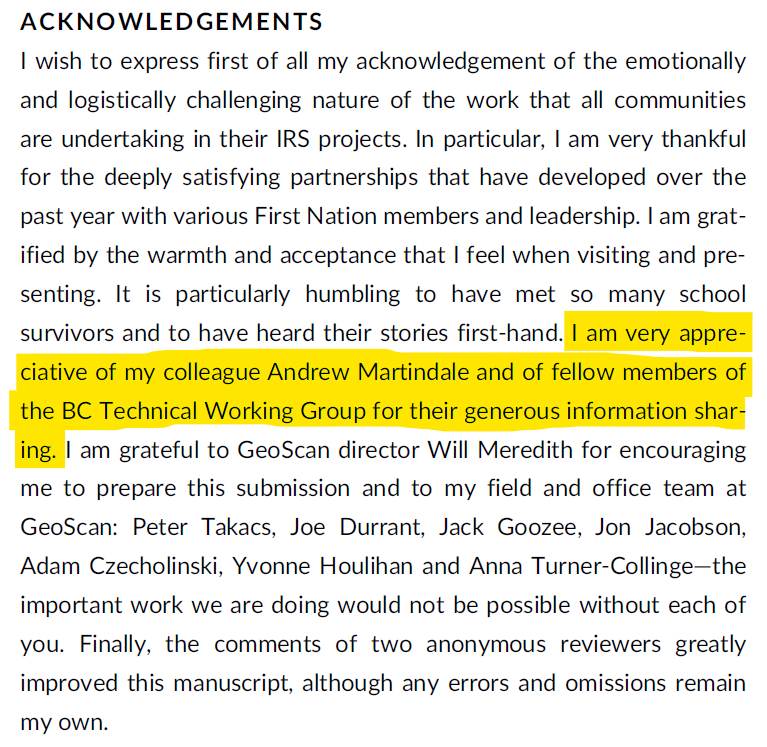
Whiting thanks Andrew Martindale in this article.
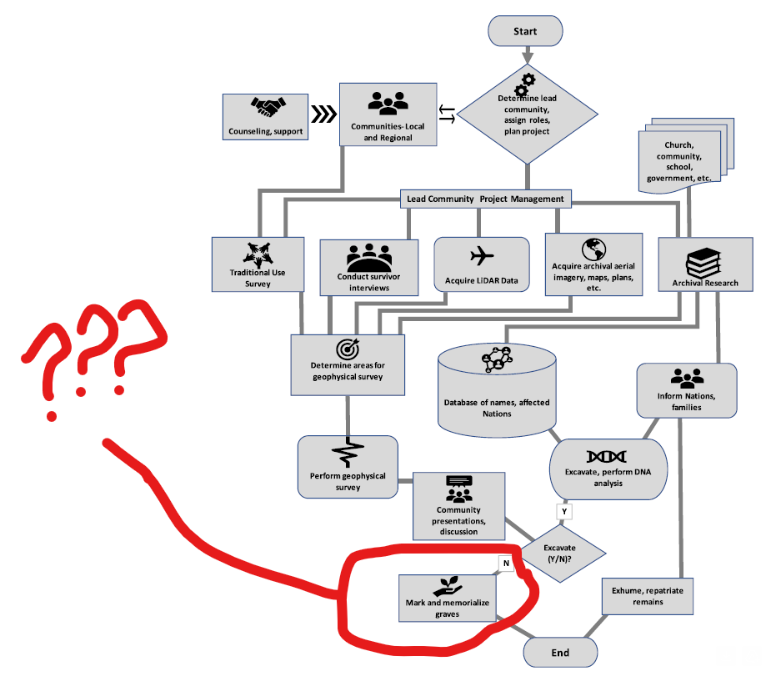
On page 13 of this article, the following flowchart is provided. This flowchart asserts that if aboriginal groups do not excavate the anomalies found, they would then “mark and memorialize graves”. How can one “mark and memorialize graves” if GPR cannot determine if the anomalies are graves, animal burrows, cobbles, boulders, or changes in soil density?